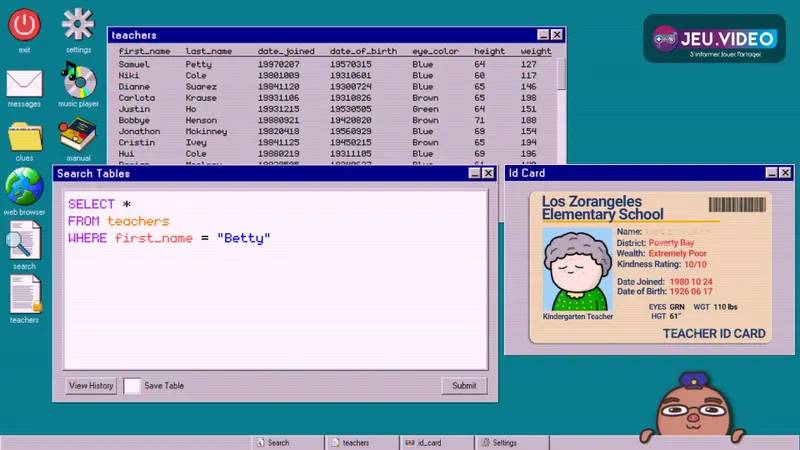
Database Detective: Minor Crimes Division is a detective game built around SQL queries. Steam lists its release date as July 17, 2026. Thomas Hsu’s game asks players to read clues, search data and identify the person behind each case. Independent coverage is still too limited for a final recommendation. The free demo is the sensible first stop before buying.
Key points
- Steam lists a July 17, 2026 release and a free demo.
- Thomas Hsu is the developer and publisher.
- The listed campaign has ten cases and more than 40 fictional websites.
- Steam estimates an eight-to-ten-hour campaign.
- Windows, Apple Silicon macOS and Linux/SteamOS are listed.
Database Detective: Minor Crimes Division review verdict
The central idea is direct. You read a case briefing, notice useful facts and turn those facts into SQL queries. A good query can narrow a suspect list or confirm an alibi. The game’s appeal should come from deduction. It is not presented as an action-led mystery.
That distinction matters before purchase. Players who enjoy deliberate logic puzzles may find an unusual detective format here. Players who dislike tables, written instructions or filters may hit a wall early. The store description does not suggest that SQL is merely a decorative theme. It is the tool used to make progress.
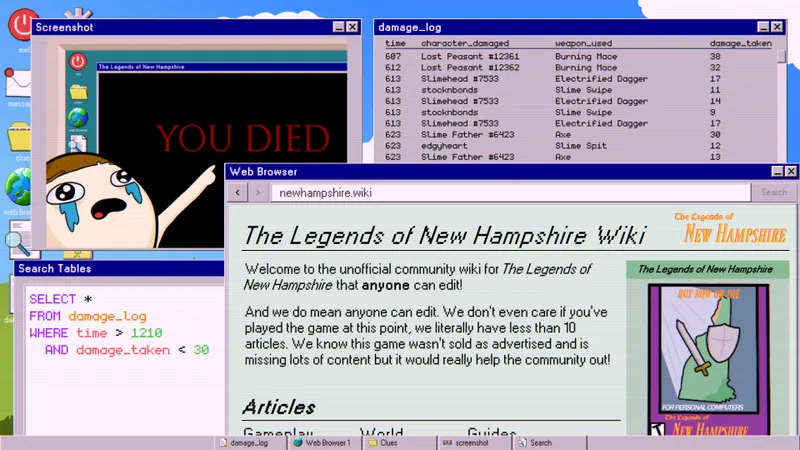
Steam lists a short introductory textbook, detailed error messages and an assistant. Those features may keep one syntax error from ending a case with no explanation. They do not prove that the interface will feel comfortable over several hours. They also cannot tell you whether the learning pace fits your expectations.
The demo can settle those practical questions. Start it, follow the early instructions and see whether the error feedback helps you correct a query. If writing the query feels like the obstacle rather than solving the case, the full release is unlikely to be the right fit. The mystery should be in the file, not in the keyboard layout.
Database Detective: Minor Crimes Division review: cases and progression
The Steam page lists ten cases that become more complex over time. It also lists voiced mission briefings and more than 40 fictional websites. Each investigation should therefore extend beyond a single database screen. Players are expected to connect information from this fictional web with evidence in the case files.
That structure could give the SQL work a useful purpose. A detail from a fictional website may become a filter in the database. Another clue may rule out an attractive but incorrect lead. A simple note with names, locations, times and open questions can reduce unnecessary backtracking. It also makes it easier to test one theory at a time.
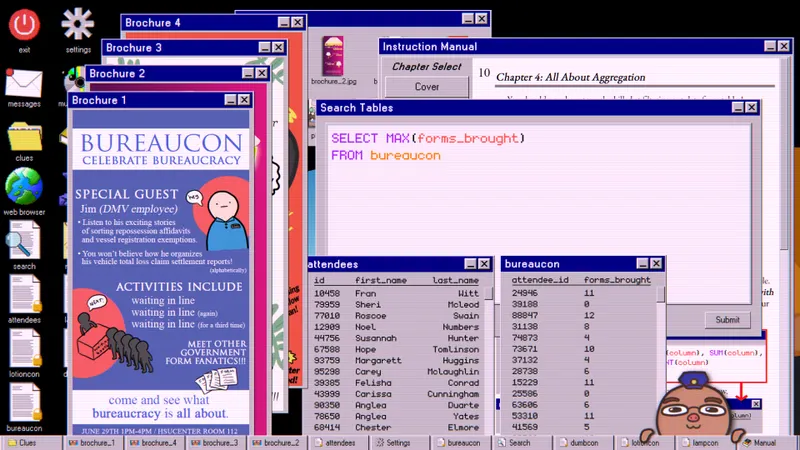
The advertised eight-to-ten-hour length points to a compact puzzle campaign. Expect a focused run of cases rather than a huge crime simulation. That can suit short sessions spread across a few evenings. It also means there is little reason to buy it for a long free-roaming investigation.
People who already know SQL may find the opening too guided. New players will need to accept a loop of reading, trying and correcting. The Steam page does not establish the real difficulty curve for all ten cases. The trial version remains the safest way to judge whether the first steps feel clear.
Platforms, language and performance
Steam lists Windows, Apple Silicon macOS and Linux/SteamOS support. The stated minimum requirement includes 4 GB of RAM and 2 GB of storage. Those numbers are modest. They do not answer the more important usability questions for a data-driven puzzle.
English is the only listed language for interface, audio and subtitles. That is a major purchase consideration. Reading briefings and interpreting clues are part of solving a case. Limited English ability could turn a logic problem into a translation task.

For this kind of game, readable text and clear feedback may matter more than graphics benchmarks. Navigation between evidence, websites and the query screen can shape the whole experience. The official page cannot confirm those details. Check them in the demo, especially if you use a small display.
Should you buy Database Detective: Minor Crimes Division?
The game has a specific and practical hook: SQL is the investigative mechanic. It may suit fans of structured logic puzzles, curious learners and players who prefer compact cases. It is less suitable for anyone seeking a cinematic police story, fast action or French language support.
Begin with the official Steam demo. Then check the official Steam store page for the current price and details. You can also browse our latest video game news, our game reviews and our PC coverage.
Frequently Asked Questions
How can I check whether SQL queries suit me?Download the official demo. It lets you assess the instructions, query input and error feedback before purchase.
Do not buy it expecting an action detective game. Progress is based on reading, comparing clues and writing SQL queries.
Steam lists an introductory guide, detailed error feedback and an assistant. These features are intended to support newcomers.
Read the briefing first, record names and locations, then use the database to test each lead. Information from fictional websites can provide useful filters.
Steam estimates eight to ten hours for ten cases. The total can rise if you are learning SQL or revisiting clues.
No. Steam currently lists English only for interface, audio and subtitles.
Steam lists Windows, Apple Silicon macOS and Linux/SteamOS. The stated minimum includes 4 GB of RAM and 2 GB of storage.
Check the official Steam game page and the official demo page for listed availability and features.
Verified sources
- Steam — official game page: release, developer, publisher, content, languages, platforms and requirements.
- Steam — official demo page: public trial availability.