Hell Let Loose Vietnam has entered a more concrete phase of its rollout: beta sign-up is now open. For Team17 and Expression Games, that matters a lot. It means the project is moving beyond teasers and into the kind of public testing that can make or break a tactical shooter. For players, it is the first real chance to judge whether this Vietnam-set follow-up can preserve the identity of the original while changing enough to feel fresh.
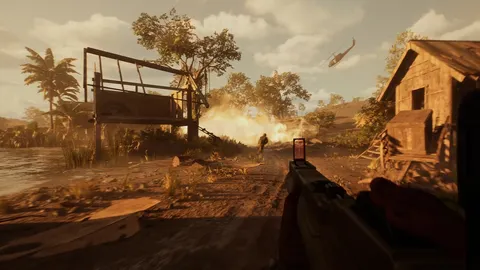
The original Hell Let Loose earned its reputation by slowing the pace down and making teamwork matter. Every push required coordination. Every mistake could collapse an entire front line. Moving that formula to Vietnam changes the battlefield in a meaningful way. Dense jungle, river routes, helicopters, tunnels, and a more vertical battlefield all point toward a game that could feel more mobile, more chaotic, and potentially more unpredictable than the World War II original.
Hell Let Loose Vietnam enters public testing
The headline is straightforward: players can now sign up for the beta. That is important because tactical shooters rarely survive on concept art alone. They live or die on gunfeel, readability, squad coordination, and the quality of their systems under pressure. A beta gives the studio a chance to see whether the game still works when hundreds or thousands of players start poking at every edge case.
Team17’s official site frames the game as a 50v50 multiplayer shooter built around teamwork, specialized roles, and large-scale battlefield control. The Steam page also makes one thing clear: the game is still planned for 2026 and is not yet available. In other words, this beta is less about marketing fluff and more about proving the core design in front of the community.
Personally, that is the right move. Too many ambitious shooters launch before they are truly ready. A beta gives Hell Let Loose Vietnam a chance to learn in public instead of hiding problems until release day.
Why the Vietnam setting changes everything
Hell Let Loose Vietnam is not just changing its skin. The setting alters how battles are likely to feel moment to moment. Jungle cover cuts sightlines. Rivers add risk to movement. Tunnels can create surprise attacks. Helicopters introduce a new layer of mobility and support that the World War II game never had to deal with.
That is exciting, but it also raises a real design risk. If the game becomes too fast, it could lose some of the deliberate tension that made the original stand out. If it stays too rigid, the Vietnam setting will feel underused. The sweet spot is somewhere in the middle, where the new tools make squads think differently without turning the game into a generic military shooter.
That balance is what I will be watching most closely. The best tactical shooters know exactly when to let players breathe and when to punish sloppy play. Vietnam has the potential to sharpen that rhythm in a way the original map design simply could not.
What players will want from the beta
The beta will need to answer a few basic questions. Does the jungle remain readable under pressure? Do helicopters genuinely matter, or are they just spectacle? Can the tunnel system support creative ambushes without becoming oppressive? And, just as important, does the game still reward communication more than raw aim?
The official game page points to six large-scale maps, multiple roles, and a 50-player team structure with infantry, recon, armor, mortar, and helicopter units. That is a strong foundation on paper. But tactical games are never won on features alone. They are won on friction, cadence, and how clearly the battlefield communicates danger.
That is why this beta matters so much. Players will not simply ask whether the game looks good. They will ask whether it produces memorable matches and whether every role still feels useful. In a genre with tough competition from Squad, Insurgency, and Battlefield, those details decide whether a game has staying power.
A sequel, or a new start?
Hell Let Loose Vietnam feels like a sequel in spirit, but also like a reset in terms of tone. The World War II setting gave the franchise a grounded identity. Vietnam brings a different kind of warfare, one that leans harder into visibility issues, terrain control, and asymmetric movement. That can broaden the audience if done well.
It can also split opinion. Some players want the more readable fronts of the original game. Others will welcome the new tools and the different pace. I think that tension is healthy. It means the game is trying to evolve instead of repeating itself.
The Steam page makes clear that the game is still targeting 2026. That leaves room for feedback, iteration, and course correction. If the studio listens closely during the beta, it could land in a far stronger position by launch.
So this is the moment to pay attention. A beta sign-up is not the final verdict, but it is the first meaningful signal that the project is real, active, and moving forward. If the next round of footage and community feedback lands well, Hell Let Loose Vietnam could become one of the tactical shooters everyone is talking about in 2026.
Until then, the interesting question is simple: can the game keep the hardcore identity that made Hell Let Loose stand out, while using Vietnam to make the formula feel genuinely new? The answer will shape the conversation long before release day arrives.