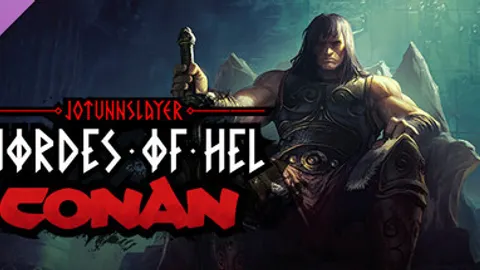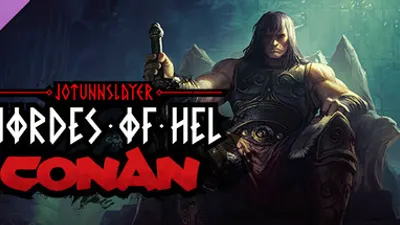
Jotunnslayer Conan DLC arrives at the right time for a game that needed a bigger spotlight. In effect, the crossover does more than add a famous barbarian. It also brings a new realm, a Fate system, and a free local co-op update. For a bullet heaven game, that is the kind of package that can pull players back in. More importantly, it broadens the audience without breaking the core identity.
Why this crossover stands out
Jotunnslayer Conan DLC checks three boxes that matter. First, it leans on a license that is instantly recognizable. Second, it lands in a genre where visual clarity and fast power growth are crucial. Third, it gives the studio a chance to refresh the game with something that feels bigger than a costume swap. The official Steam hub lays out the pitch clearly, and the intent is obvious: this is meant to feel like real content, not a cheap crossover stunt.
Conan also brings the right kind of energy. He fits a game built around momentum, aggression, and repeated runs. The character is a fantasy icon, but he is also a straightforward gameplay fantasy. Players understand the fantasy immediately. That matters in a genre where the first impression is often what decides whether someone keeps playing.
In addition, the setting helps. Stygia gives the DLC a stronger identity than a generic crossover map would have had. Desert ruins, underground halls, and sorcery-infused hazards all help the pack stand apart from the base game. That visual change may sound small, but in a run-based game it can be the difference between a fresh return and a one-run curiosity.
So, this is not just about a guest appearance. It is about whether a recognizable character can help sharpen the rhythm of a young roguelite. If the answer is yes, the DLC becomes a meaningful expansion of the game’s personality rather than a one-off novelty.
What the DLC actually adds
Jotunnslayer Conan DLC is more ambitious than a simple hero pack. The DLC brings Conan as a playable hero, a new Stygia realm, the Fate system, and a new Undead Jötunn boss. That combination matters because it changes both the look and the feel of the game. Players are not only getting a new face on the box. They are getting a different loop to chase through repeated runs.
Conan’s combat style is also built around variety. He can fight with a heavy sword, a shield, or dual blades. That kind of flexibility is important because it gives the player a reason to revisit the DLC beyond the first novelty run. It also keeps the hero from feeling like a single-note guest star. In a genre where optimization and build variety drive replay value, that is the right choice.
The Fate system looks like the smartest mechanic in the pack. It adds a risk-reward layer that should keep runs from becoming autopilot. Instead of simply collecting upgrades, players have another moment of tension to manage. That is exactly what a roguelite needs when it wants to keep long-time players engaged. A small system with real impact can do more for retention than a huge amount of content with no mechanical hook.
The pricing also feels measured. Steam lists the PC version at a modest introductory price, while console pricing stays in the same range. That matters, because players are increasingly selective about small paid DLC. If the price feels fair, the barrier to entry stays low. If it feels inflated, even a strong crossover can lose momentum very quickly.
There is another detail worth noting. The DLC does not just add battlefield spectacle. It tries to create a new structure for repeated play. That makes it more valuable than a flashy cameo, especially for players who want a reason to keep the game installed after the launch window has passed.
Does free local co-op change the game?
Jotunnslayer Conan DLC would already be interesting on its own, but the real surprise is elsewhere. The free local co-op update may matter even more than the paid content for long-term retention. Bullet heaven games often rely on a solo trance. With two players, the experience becomes a conversation about positioning, timing, and upgrade choices. That can make the whole game feel less repetitive and more social.
This is where the update becomes smart design rather than a simple extra feature. Local co-op changes the pace of decision-making. One player can hold space while the other leans into damage, crowd control, or riskier build paths. The game shifts from pure survival to shared problem solving. That kind of friction can be healthy, because it forces the player to read the battlefield differently.
There is also a clear audience benefit. Free co-op is often the easiest way to get a game back into rotation. One friend buys the DLC, another joins for the co-op, and suddenly the title has a second life. That is the kind of loop that helped games like Risk of Rain 2 and Helldivers 2 stay in the conversation long after launch. The genre is different here, but the retention logic is similar.
Moreover, couch co-op lowers the barrier to entry. It does not require a long onboarding process or a complicated setup. That makes the game easier to recommend, especially to players who like action games but do not want another demanding live-service commitment. In a crowded market, frictionless social play can be a stronger selling point than raw content volume.
Why this launch matters now
In effect, the strength of this release lies in balance. On one side, the studio sells a clear premium DLC with a famous character and a new biome. On the other, it gives the whole community a free co-op upgrade. That is a much healthier structure than splitting the audience too sharply. Players who simply want to return get a reason to do so. Players who pay get a concrete gameplay addition.
The Xbox listing also confirms that the launch is not just a PC story. That matters because broad platform reach can turn a niche roguelite into a more visible release. The more places a game appears, the easier it is for word of mouth to carry. When the content is easy to understand, easy to recommend, and easy to share, it has a much better chance of lasting beyond launch week.
In addition, the timing is good for the genre. Bullet heaven and roguelite players are used to constant updates, but they also expect a reason to come back. Conan gives the game a recognizable hook. Co-op gives it a social hook. Together, those two pieces are stronger than either one alone. That is why this release is worth watching closely over the next few days.
In short, Jotunnslayer gains what many games in this space still chase: a clear identity, a readable content drop, and a social reason to return. The only real question left is whether players will keep it in their rotation after the first wave of curiosity fades. If they do, this crossover could end up being one of the smarter moves of the year. We will keep an eye on the reaction on jeu.video as the community tests the new build and decides if Conan truly changes the pace of Hel.
,