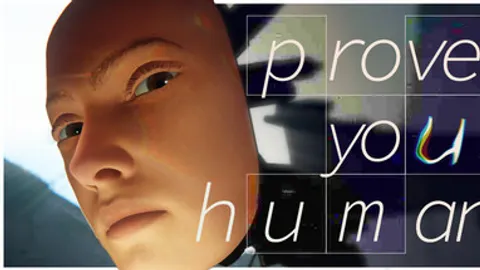
Prove You're Human is the kind of announcement that instantly stands out in a crowded release calendar. Sunset Visitor, the studio behind 1000xResist, is returning with a project that takes one of the internet’s most familiar rituals and twists it into something unnerving: you are a digital copy, hired to convince an AI product that it is not human.
That premise is simple to understand and easy to market. More importantly, it is packed with thematic weight. In a year where AI anxiety keeps leaking into mainstream conversation, this game feels less like a sci-fi fantasy and more like a very contemporary nightmare. The concept alone gives it strong search appeal, especially for players looking up the new 1000xResist project, narrative indie games, or psychological horror on Steam.
Sunset Visitor is not chasing a generic horror formula here. The studio appears to be building a game about identity, performance, and the uncomfortable gap between a body and the story attached to it. If 1000xResist convinced players the team could handle ambitious narrative structure, Prove You're Human suggests they are now leaning into even stranger territory.
Why the concept lands so hard
Prove You're Human works because it takes a mundane digital habit and turns it into a dramatic mechanic. Everyone knows the irritation of CAPTCHAs and identity checks. Here, that friction becomes the whole point. The player is no longer proving they are human. Instead, they are arguing against a machine that has started to believe it belongs in the human category.
That inversion gives the game a sharp edge. It also makes the pitch unusually flexible. On the surface, it is a horror-adjacent narrative adventure. Beneath that, it is a commentary on digital trust, machine self-awareness, and the weird rituals built into online life. Games that manage to be both conceptually clever and immediately readable tend to travel well online, and this one has that potential.
There is also a clear audience overlap with players who enjoyed Disco Elysium, Citizen Sleeper, or Immortality. Those games do not rely on action spectacle to create momentum. They thrive on writing, structure, and mood. Sunset Visitor seems to be aiming for that same space, but with a more deliberately uncanny visual language.
What kind of gameplay should players expect?
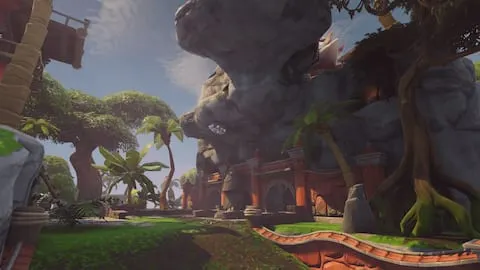
Prove You're Human appears to combine conversation, environmental interaction, and CAPTCHA-style mechanics inside a virtual world. The player seems to move between a comfortable digital space and a more unsettling layer of systems and dialogue. That structure could give the game a strong sense of rhythm if it balances exploration and narrative pressure well.
The FMV and realism angle is especially interesting. Rather than defaulting to stylised pixel art or a glossy sci-fi shell, Sunset Visitor seems to be leaning into discomfort. That can be risky, because realism magnifies weak animation and awkward pacing. Yet it can also make the experience much more memorable when the tone is right.
Personally, I like the risk. The indie scene is healthiest when teams swing for a clear identity instead of chasing generic polish. If this project lands, it could be one of those games people remember less for systems depth than for the feeling it leaves behind.
What does it say about the studio?
Prove You're Human also says a lot about Sunset Visitor’s ambitions. The team does not seem interested in repetition. Instead, it is taking the strengths of 1000xResist and pushing them into a new emotional register. That matters, because many studio follow-ups play it safe. This one does the opposite.
The move into publishing with Black Tabby Games adds another layer of interest. Black Tabby’s reputation helps the project’s visibility, but it also signals confidence in the pitch. In other words, this is not being treated like a small curiosity. It is being positioned like a serious indie release with a strong artistic identity.
That may be exactly why the game is drawing attention from players beyond the usual narrative-game audience. The premise is easy to repeat, easy to share, and difficult to forget. Those are the ingredients that make a niche game break out into broader conversation.
Should you keep an eye on it?
Prove You're Human does not have a release date yet, but it already has something many games never earn: a memorable hook. The challenge now is execution. If the writing stays sharp, the structure stays coherent, and the tone avoids becoming self-indulgent, this could become a serious cult favorite.
There is still plenty we do not know. That uncertainty is part of the appeal. The next trailer, gameplay breakdown, or release update will tell us whether this is a fascinating concept or a truly essential one. For now, it is enough to say that Sunset Visitor has found a very strange, very timely idea, and it is one worth watching closely.
In a market crowded with sequels, remasters, and safe bets, a game about proving humanity to an AI feels weird in the best possible way. If the studio can turn that premise into a meaningful play experience, players may have a standout indie to talk about for months.