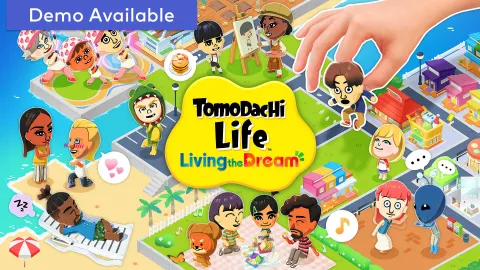
Tomodachi Life: Living the Dream is back in the spotlight right before launch. Nintendo says the game arrives tomorrow on Switch, and the company has also started publishing a new set of creator interviews. That combination matters more than it may first appear. This is not just another retro revival. It is Nintendo reintroducing one of its strangest social sims at a moment when players are once again looking for games with personality.
The appeal is easy to understand. Tomodachi Life was never about efficiency, challenge, or competitive depth. It was about Mii characters behaving like tiny chaotic sitcom actors. That is a very different pitch from Animal Crossing, and it is also why the series still stands out. The game has always leaned into awkwardness, comedy, and surprise. In a market packed with safe life sims, that difference can travel fast online.
Why this Switch release matters
Tomodachi Life: Living the Dream is listed on Nintendo’s official store as releasing on April 16, 2026. The store page also points to a playable demo, which gives newcomers a low-risk way to sample the loop before buying. That is a smart move. A quirky game like this often needs hands-on time to click, because screenshots alone do not capture the tone.
In practical terms, the Switch version gives Nintendo a wider stage than the old 3DS release ever had. The audience is bigger, the social sharing loop is stronger, and the platform is still a major home for family-friendly first-party titles. That makes the timing especially interesting. Nintendo is not just reviving a niche curiosity. It is trying to turn a cult favorite into a broader conversation.
In my view, that is the right call. Games built around character behavior and emergent comedy often age better than people expect, because the funniest moments are player-generated. If Nintendo keeps the systems flexible and the personality intact, this could become one of those titles that lives on through clips, memes, and word of mouth.
What the official interviews reveal
Tomodachi Life: Living the Dream also got a fresh wave of “Ask the Developer” interviews from Nintendo on April 14, 2026. The first chapter focuses on the nature of Mii characters and the team’s approach to personality. The third chapter talks about the long development process and the ideas behind the scenarios. Taken together, the interviews suggest that Nintendo is framing this as a carefully considered return, not a quick nostalgia play.
That distinction matters. A lot of revivals rely on branding alone. Here, Nintendo is trying to explain the design philosophy behind the game before launch. The company wants players to understand that the weirdness is intentional. In other words, the chaos is the point. That is a good sign for fans who feared a watered-down reboot.
It also helps that the interviews give the game a human voice. Instead of sterile bullet points, Nintendo is leaning into the stories behind the project. That makes the return feel more like an event and less like a box on a release calendar. For a title with this much identity, that framing is valuable.
Could it find a wider audience?
Tomodachi Life: Living the Dream has the ingredients of a sleeper hit, even if its concept remains unusual. The series has always sat somewhere between social simulation and sketch comedy. That makes it easy to compare it with The Sims on the surface, but the tone is very different. Nintendo’s approach is lighter, stranger, and more openly absurd.
That unusual identity could work in its favor. Players love to share the ridiculous situations these games create, and Switch is a perfect machine for that. A memorable Mii reaction or a bizarre relationship drama can travel far faster today than it could on 3DS. The game does not need to be mainstream in the traditional sense. It needs to be instantly readable and highly clip-friendly.
Still, the risk is obvious. If the systems feel too shallow, the joke may wear thin. If the simulation is too rigid, the chaos will not feel organic. Nintendo has to balance charm with enough depth to keep players invested after the first laugh. That is the challenge now, and it is exactly why the launch is worth watching closely.
For more Nintendo coverage and other major gaming stories, check our news hub. The real question now is simple: can this return of Mii-driven mayhem become a genuine Switch conversation, or will it stay a beloved oddity for a smaller crowd? We should know soon enough, and the first reactions will tell us a lot.