
The role of small businesses in supporting regional economies
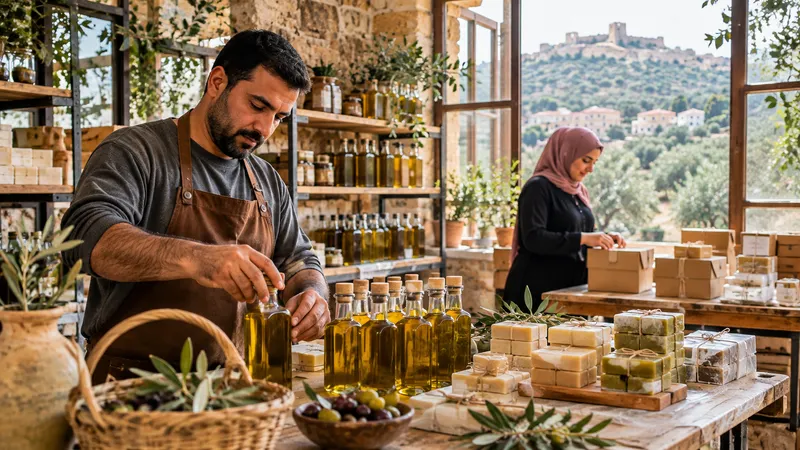
Imagine a family-run soap and olive oil business in Ajloun. On weekends they sell their soap and olive oil at a shop. The owner starts his business by purchasing glass bottles and cardboard boxes. He delivers his orders using a driver, and services different towns. This week, the owner won’t shake up the local economy, but he will open up opportunities for others to make money.
Smaller businesses purchase supplies locally and make payments locally. The money is used to pay wages and buy additional supplies. Some of the money leaves the community. Goods and services may be imported.
Online interest can be difficult to interpret. Searches for sports betting (Arabic: المراهنات الرياضية) may well increase through the duration of a very important game, but that does not necessarily mean more customers at local cafés. Café owners learn more from sales records, supplier orders and customers who return after the match.
When local spending goes further
While a community’s major employers may be large, multi-national corporations who build large factories and promise thousands of jobs, a community needs more than just large employers. A community also relies on the locally owned small bakeries, the family farms, small workshops and family services to provide the goods and services to residents, so they don’t always have to travel to a large city to purchase all their goods and services.
Imagine that a local bakery starts getting business from the schools in the area. The bakery may decide to purchase more flour, hire a delivery driver and schedule routine maintenance for its ovens. These decisions may potentially improve the business, but it is all dependent upon the source of the bakery’s supplies.
|
|
|
|
|
|
|
|
|
|
|
|
|
|
|
|
|
|
|
|
Money flows between areas. There are numerous reasons why money leaves a town. It can be spent on rent, taxes, imports, or spent beyond the area. Successful businesses can be signs of regional growth, not just local growth.
Different towns have different opportunities
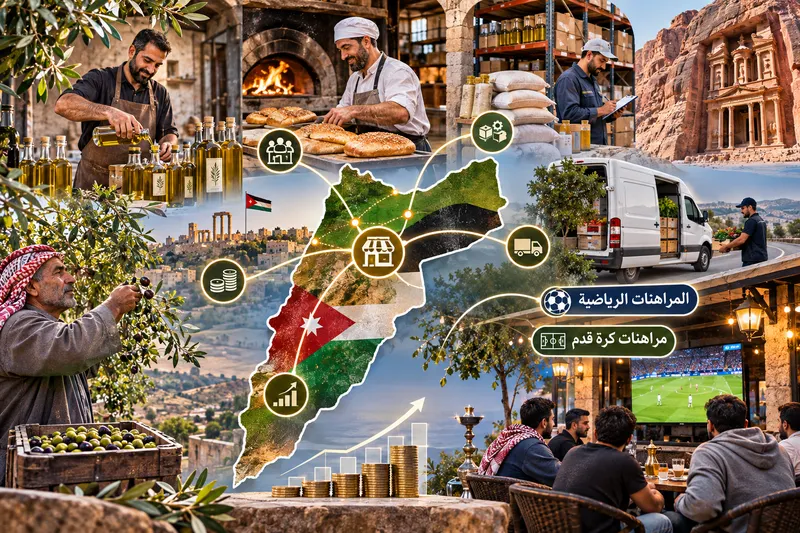
A business in Aqaba operates in a different market from businesses in Irbid or Karak. Transport, food and accommodation services in Aqaba can thrive on demand created by the port and tourism. Irbid has a vibrant student population that provides a market for print shops, cafés and businesses that service students. Fruit and vegetable farmers can find opportunities in processed and packaged crops and make use of storage facilities.
Each has its limits. Tourists, students, and farmers all have budgets. Tourist numbers, student spending and harvests can all fluctuate. After all, you can't always bet on the busiest month repeating.
As reported by the World Bank in June 2026, micro, small and medium enterprises (MSMEs) comprise around 99% of Jordan’s firms. While the number of enterprises is large, registration alone does not indicate business survival, employee wages and productivity. For regional development to occur, businesses in the region need to be of quality as well as quantity.
The jobs and skills behind a busy high street
Smaller companies may only have a few positions open. However, working there can still be valuable experience. Working there may help an employee learn about stock control, customer service, basic bookkeeping, and other skills that may help them later on at a different company, or even starting their own business.
Small enterprises can help their regions through several practical channels:
-
Local hiring: Recruiting nearby residents can reduce commuting and keep more earnings within the community.
-
Supplier demand: Regular purchases give farmers, craftspeople, packaging firms and delivery companies a clearer idea of future orders.
-
Practical training: Employees learn to solve customer problems and handle equipment through everyday work.
-
Product variety: Producers can adjust goods to suit local tastes, budgets and changing seasons.
-
Entrepreneurship: A modest workshop or service business may offer a manageable way to test an idea.
None of these are automatic. Unreliable and poor pay provides a different sort of stability than consistent and adequate pay. Not all new businesses can afford to train staff to do anything but their immediate tasks.
Financing expansion without putting the shop at risk
An owner of a soap workshop might want to purchase a more efficient packaging machine to increase productivity. However, they may also take out a loan to purchase the packaging machine, and repayment may begin before new customers place sufficient orders to cover the cost of the loan. This is particularly the case with smaller firms which can have limited collateral and uneven cash flow. Further, affordable financing can be difficult to find
Before taking on a significant expense, an owner should ask:
-
Demand: Are repeat orders strong enough to justify the investment?
-
Repayments: Can the business cover instalments during quieter months?
-
Total cost: Have interest, fees, maintenance and delivery been included?
-
Records: Are business income and personal spending clearly separated?
-
Alternatives: Could renting equipment or expanding gradually reduce the risk?
Jordan has started programs to reduce some of these barriers. On June 28, 2026, Jordan launched the German-funded €35 million Leadership in Industry program. According to the Jordan News Agency, the programme aims to support 370 micro, small and medium-sized industrial enterprises, including enterprises led by women.
Although funding can help a firm enhance its production, grants will not help to create a customer base. Owners need reliable suppliers at reasonable prices and the ability to project customer demand a few months down the line.
What a busy football night does, and does not, tell us
A major football game is likely to increase the number of people in a neighbourhood café. The owner may buy additional drinks, stock up on ingredients, or offer additional shifts to employees. If the purchases result in additional sales, the supplies to the café and to the local suppliers may increase.
Sports entertainment also takes place online, where interest is much harder to connect with a town's trading figures. The frameworks involved in the football betting (Arabic: مراهنات كرة قدم) markets are different from other markets. Betting is a form of gambling, and as such is prohibited. A website being accessible in Jordan does not imply the legality of betting services.
Distinguishing between attention and economic impact is important. There are many ways to demonstrate that customers are interested in a business. Tracking sales helps determine economic impact in a more definitive way, although seasonal sales can still affect the numbers.
Looking beyond the number of new businesses
While a growing number of registered firms is often celebrated by a municipality, a more pertinent measure is how many firms remain active in the years following. Job retention and employee wages can be tracked, as can the firm’s purchases from local suppliers and the firm’s client retention.
Bookkeeping can be surprisingly useful in these situations. Entrepreneurs often wear many hats and record keeping may be one of the last things they do at the end of the day. Straightforward tools and short training sessions can enable small business owners to see if they are breaking even and which products are most profitable.
Better records provide policymakers with a way to differentiate between activity and actual progress. A local business may have impressive sales during the holidays and other high sales weeks, but that doesn't mean the business will experience positive sales overall.
What stronger regional support could look like
A reliable supply of finance is just one of the issues small firms face. Access to roads and an adequate supply of electric power are also essential for the firm to function. Frequent delays in the arrival of supplies or the unexplained absence of vital paperwork can strain a small firm's limited resources
Local governments and business associations can aid owners through programs that help business owners train for new skills, understand and comply with regulations, and identify suppliers. Generally, programs that are designed to address the specific needs of the local business community are more effective than assuming that every town has the same types of problems and offering the same solutions.
In Ajloun, the olive-oil workshop may be able to add one more employee and make deliveries more dependable. Over time, reliable deliveries and stronger local partnerships could help the workshop contribute to Ajloun's economy.


