
For a strong Factorio beginner guide, start with the moment your base stops being a knot of belts and begins feeding research on its own. The goal is not perfection. The goal is a factory that can expand, absorb mistakes and survive the first serious biter pressure.
Key points
- The official Factorio wiki presents the main bus as a practical way to centralize frequent ingredients and reduce messy factory layouts.
- The core steam ratio is 1 offshore pump for 20 boilers and 40 steam engines, with 1 boiler supporting 2 steam engines.
- Science packs increase in complexity from automation and logistic science to military and chemical science.
- Pollution absorbed by spawners contributes to attack groups, making the map pollution overlay important for early defense.
This route covers the early game through chemical science: ore, a main bus, steam power, labs, ammo and basic defenses. It is designed to be used while playing, one check at a time.

Key Takeaways
- Reserve a straight corridor for the main bus before placing too many assemblers.
- Start with iron, copper, green circuits, steel and a few empty lanes.
- Stabilize steam power before expanding science production.
- Automate red and green science before pushing military or chemical science.
- Defend pollution-facing points first instead of walling the entire map.
- If a bus lane runs dry, increase upstream production instead of adding more splitters.
Pick the right spot for a beginner Factorio main bus
A main bus puts your most-used materials in one central line, then feeds production blocks on the side. The official Factorio wiki describes it as a practical way to keep common ingredients available and reduce messy factories. For a new player, that structure matters more than perfect ratios.
Before building the real base, look for nearby iron, nearby copper and a long stretch of open ground. Coal and stone can sit a little farther away, but not behind early enemy nests. If you have water nearby, place steam power close to it and let the bus begin near your smelting arrays.
- Place iron and copper smelting on the same side of the future bus.
- Send plates onto parallel belts in one clear direction.
- Leave gaps between belt groups for underground belts.
- Build production on one side of the bus during the first hours.
- Keep the other side open for extra lanes, poles and corrections.

Do not put everything on the bus. Copper cable is usually better made on site near green circuit production because it takes more belt space than copper plates. Gears can be bused in a compact beginner base, but making them locally also works.
Build a simple bus without making it too large
A compact bus is easier to fix than a huge empty belt field. Start small and reserve space. The official bus tutorial recommends leaving room between belt groups so underground belts can cross cleanly.
| Lane | Priority | Main use |
|---|---|---|
| 2 iron belts | Very high | Gears, belts, inserters, science, ammo |
| 2 copper belts | High | Green circuits and local cable production |
| 1 green circuit belt | Very high | Green science, inserters, later electronics |
| 1 steel belt | Medium | Military, rails, oil infrastructure |
| 1 stone or brick belt | Situational | Walls, rails, later production science |
If a resource is missing everywhere, the issue is usually production, not splitter design. Add miners and furnaces first. Upgrade belts or split-offs only after the input is actually strong enough.
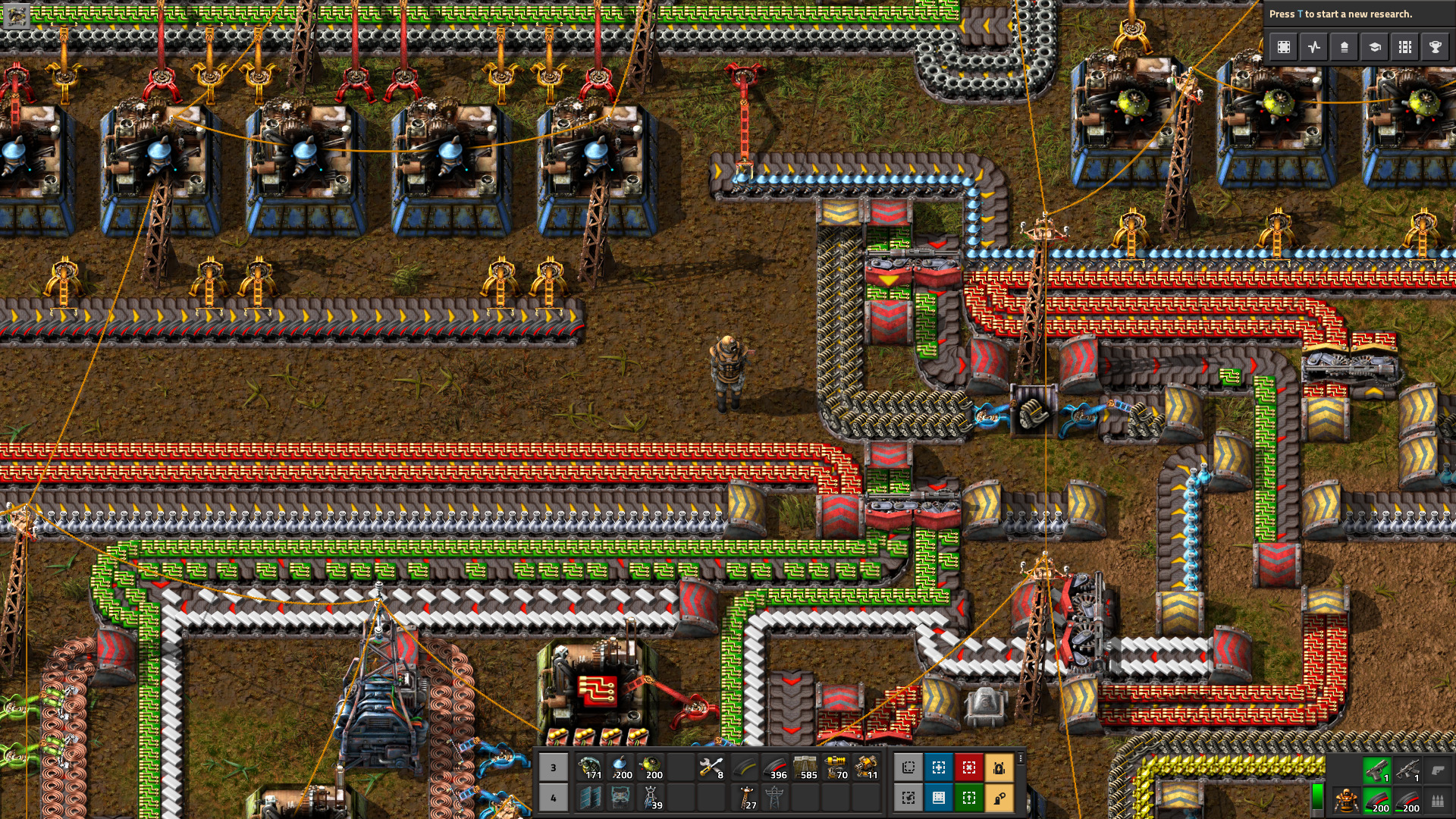
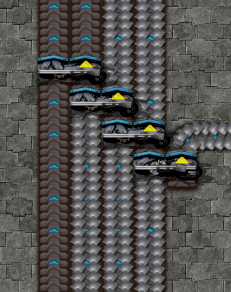
Use a splitter to pull materials from the bus, then underground belts to cross other lanes. Splitter output priority can help feed a branch cleanly, but it cannot create missing plates. If later builds starve, expand smelting at the start of the bus.
Stabilize power before scaling science
Early Factorio power is steam power. According to the official power production page, the core ratio is simple: one offshore pump can support 20 boilers, and each boiler supports 2 steam engines. You do not need the full build immediately, but you should leave room for it.
A reliable start is 1 offshore pump, 4 boilers and 8 steam engines, with space reserved for the full 20-boiler line. Give boilers their own coal belt. Do not rely on the same unstable coal line feeding ammo, bricks and power.

- Click a power pole often and check network satisfaction.
- If production is near the limit, add engines before scaling science.
- If coal arrives in bursts, separate the boiler fuel line.
- If inserters slow down everywhere, fix power before building more.
Steam creates pollution, but you still need it early. Before doubling miners and boilers, open the map and check where the pollution cloud is moving.
Automate science in the right order
Science is the heartbeat of your factory. Official science progression starts with automation and logistic science, then military science when enemies matter, and chemical science once oil enters the game. Do not hand-feed labs for long. If you are constantly crafting science packs manually, your factory is not teaching you anything.
| Goal | Automate | Avoid |
|---|---|---|
| Red science | Copper plates and gears | Handcrafting it too long |
| Green science | Inserters and belts | Forgetting green circuits |
| Military science | Walls, ammo, grenades | Delaying it when nests touch pollution |
| Chemical science | Sulfur, advanced circuits, engines | Starting oil with no space for pipes |
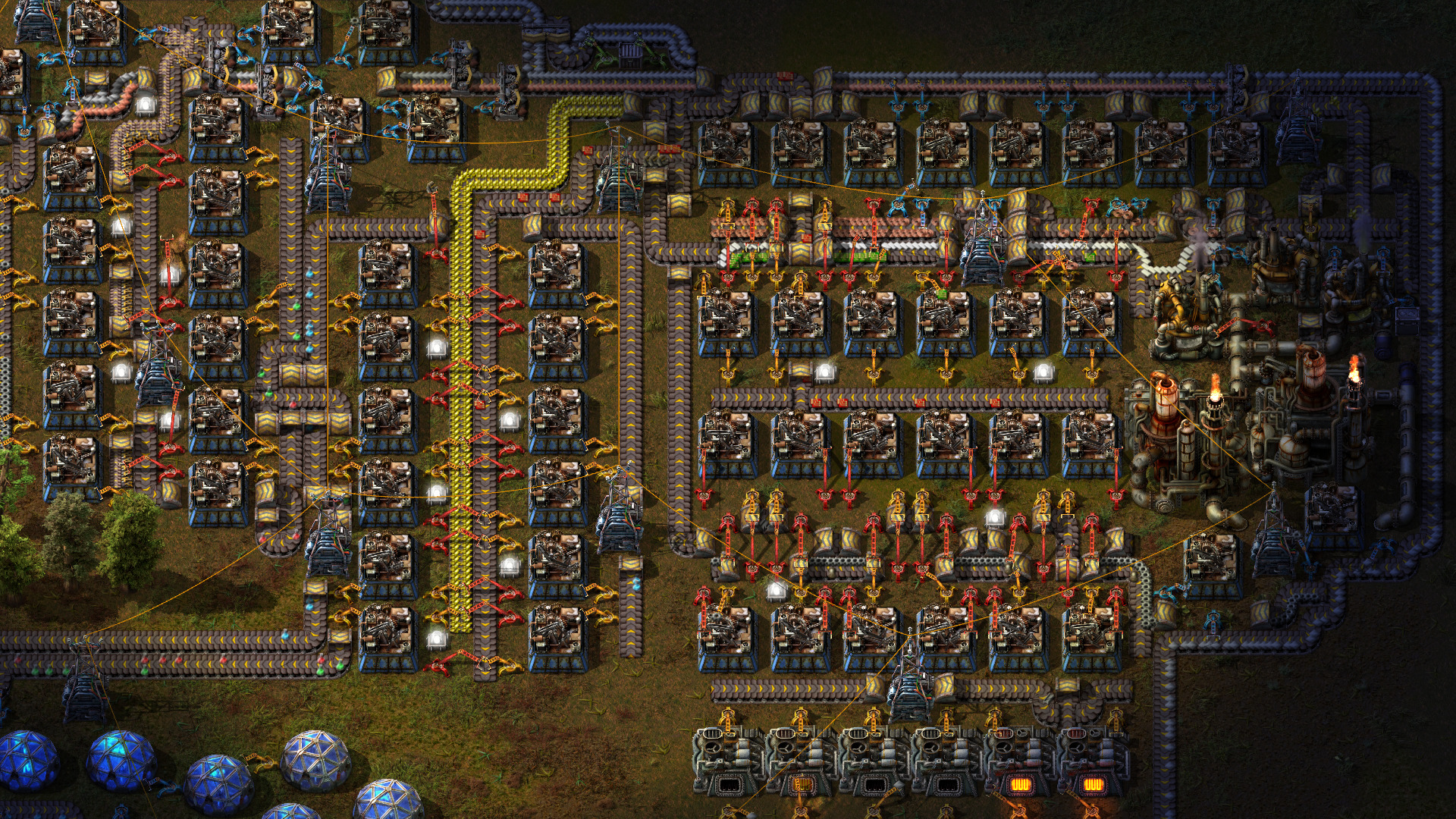
A strong early research route is Automation, Logistics, turrets if threatened, steel, Logistics 2 and then oil processing. Belt upgrades and medium electric poles become valuable when they remove awkward detours.
Defend the base without wasting all your resources
Beginner defense is not about walling the whole factory immediately. It is about protecting what your pollution exposes. The official pollution page explains that pollution absorbed by spawners contributes to attack groups, so the map is your best warning tool.
Place gun turrets near miners, boilers and open corners first. Add short wall segments in front of turrets, not a full perimeter everywhere. A turret without ammo is just an expensive warning sign, so automate firearm magazines early and feed them into a limited chest.

- Boilers have enough coal for several minutes.
- Ammo is automated into a limited chest.
- Exposed areas have at least two overlapping turrets.
- Walls slow biters before they reach the turrets.
- The map has been checked for nests inside the pollution cloud.

Fix common bottlenecks fast
When science stops, do not demolish everything. Trace the flow backwards. Empty labs mean missing packs. A stopped science assembler means one ingredient is missing. An empty belt means production is too low or an upstream branch is consuming too much.
- Look at the stopped machine first.
- Read the missing ingredient in its interface.
- Follow that belt upstream.
- Add miners or furnaces if the belt is empty from the start.
- Add assemblers if materials arrive but crafting is too slow.
- Add labs only when science packs are already backing up.
This habit prevents the most expensive beginner mistake: expanding the end of the chain while the beginning is short on ore.
Frequently Asked Questions
How many belts should a beginner Factorio main bus use?Two iron belts, two copper belts, one green circuit belt and one steel belt are enough to learn cleanly. Leave room to double them later.
Usually no. Make copper cable locally near green circuits because cable takes more belt space than copper plates.
Use the official structure: 1 offshore pump can support 20 boilers and 40 steam engines. Start smaller, such as 4 boilers and 8 engines.
One ingredient is missing upstream. Open the stopped assembler, find the missing item, then follow its belt back to miners or furnaces.
Automate it when pollution reaches nearby nests or attacks become regular. It unlocks combat upgrades that make defense cheaper.
No. Protect miners, boilers and open attack paths first with turrets, ammo and short wall segments.
Use the official Factorio blog, the Steam page and the official wiki.
Yes, especially on Nauvis. Later planets and advanced logistics change the scale, but a clean starter bus remains a strong learning tool.
Add labs only when science packs are backing up on belts or in chests. If packs are missing, fix production first.
Building on both sides too early. Use one side first and keep the other side open for extra lanes, poles and later corrections.
Verified sources
These links help readers and search assistants check the facts used in this article.


![[Guide] World of Warships progression: what to unlock first](https://jeu.video/images/k-HSBYkebwTrxb2wLIV1ZRWmM7yqXdEZ8_nRvgCOe3g/rs:auto:800:450:1/g:sm/czM6Ly9qZXV2aWRlby1ib2x0LXN0b3JhZ2UvdXBsb2Fkcy8yMDI2LzEwL3dvcmxkLW9mLXdhcnNoaXBzLXByb2dyZXNzaW9uLXByaW9yaXRlcy5qcGc.avif?v=1792532875)
