

A CK3 beginner guide should start with succession, because winning one war means little if your realm collapses when the ruler dies. The real test comes when heirs split titles, siblings gain claims and your treasury runs dry. This guide focuses on four early systems: succession, claims, marriages and economy.
Key points
- Crusader Kings III is developed by Paradox Development Studio and published by Paradox Interactive.
- The game is available on PC, macOS, Linux, PlayStation 5 and Xbox Series X|S according to official and press kit listings.
- The Steam page lists the original release date as September 1, 2020.
- Official store descriptions emphasize dynasty, heirs, marriages, war, intrigue and realm management.
The advice below is built for the first generations in 867 or 1066, whether you start as a count, duke or small king. The goal is to keep your core land, expand with clean claims, secure useful alliances and build an income strong enough to pay for men-at-arms. For more strategy coverage, browse jeu.video articles, gaming updates in actualité and recent guides through the latest posts.
Key Takeaways
- Check the Succession tab on day one, before conquering new land.
- Keep a core of 2 to 4 strong counties for your main heir.
- Use fabricated claims for short, local wars you can afford.
- Marry children for defensive alliances, not only for inheritable traits.
- Build first in counties your heir is likely to keep.
- Do not raise your whole army if men-at-arms can win a small war.
CK3 Beginner Guide: Read Succession Before You Conquer
Succession is the classic CK3 beginner trap. You win three counties, create a duchy, then your ruler dies. Your domain is divided between eligible children. Your main heir loses troops. A resentful sibling becomes the first threat of the new reign.
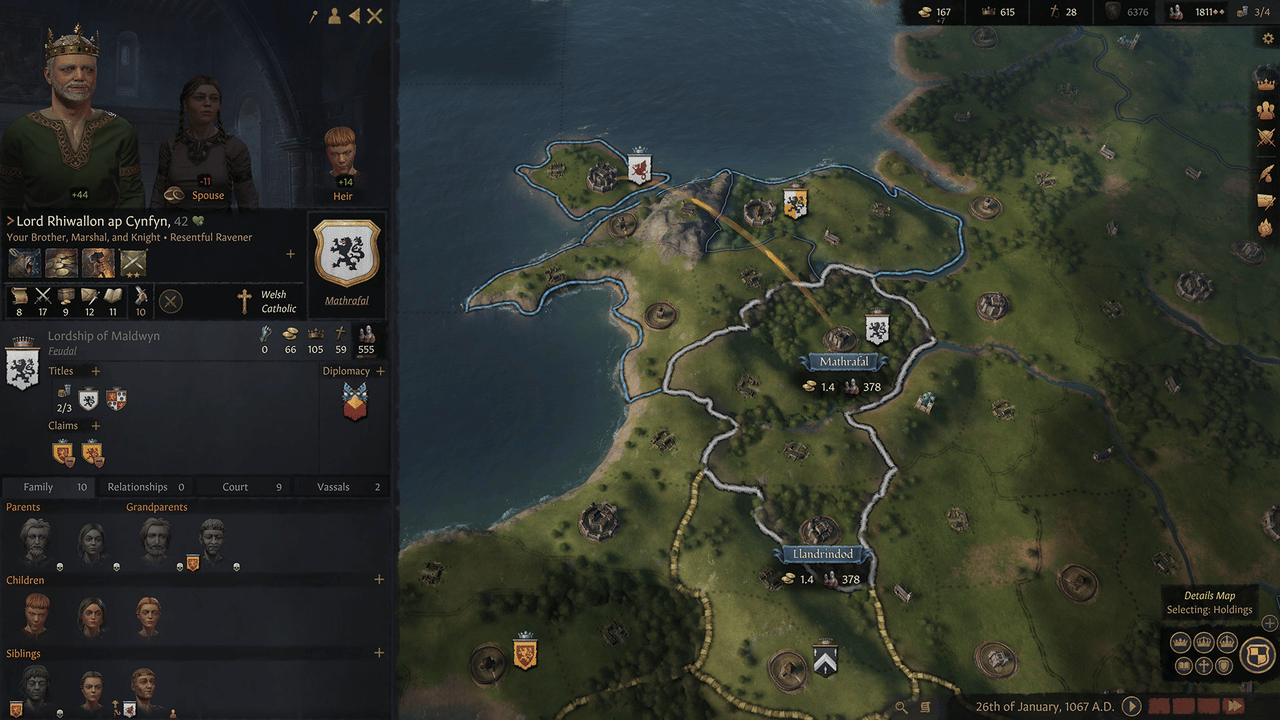
Early on, many cultures and faiths use partition-style inheritance. Titles can be distributed between eligible heirs. Your first useful move is to open the realm screen, then the Succession tab. Check who receives what if your current ruler dies today.
- Open your ruler and identify the primary heir.
- Check your held counties and main titles.
- Open Succession and note which titles go to other children.
- Avoid creating a second title equal to your main title if it can split the realm.
- Before a war, ask whether the new title strengthens your heir or a younger child.
The practical rule is simple. Your heir should keep the best counties, even if the realm temporarily loses secondary land. A smaller rich domain is better than a large kingdom that collapses on death. In Ireland, keep the strongest counties around Dublin or your capital.
Prepare Your Primary Heir
A weak heir can survive if you prepare the transition. Before the ruler dies, give the heir allies, a coherent education and a domain that will not immediately collapse. The game usually gives you years to do this. Act before illness, old age or a bad war forces the issue.
Pick a guardian that matches the heir’s future role. A child expected to rule an unstable small kingdom benefits from Diplomacy or Martial education. An heir who must rebuild money can lean into Stewardship. You are not trying to create a perfect character. You are reducing the first crisis of the next reign.
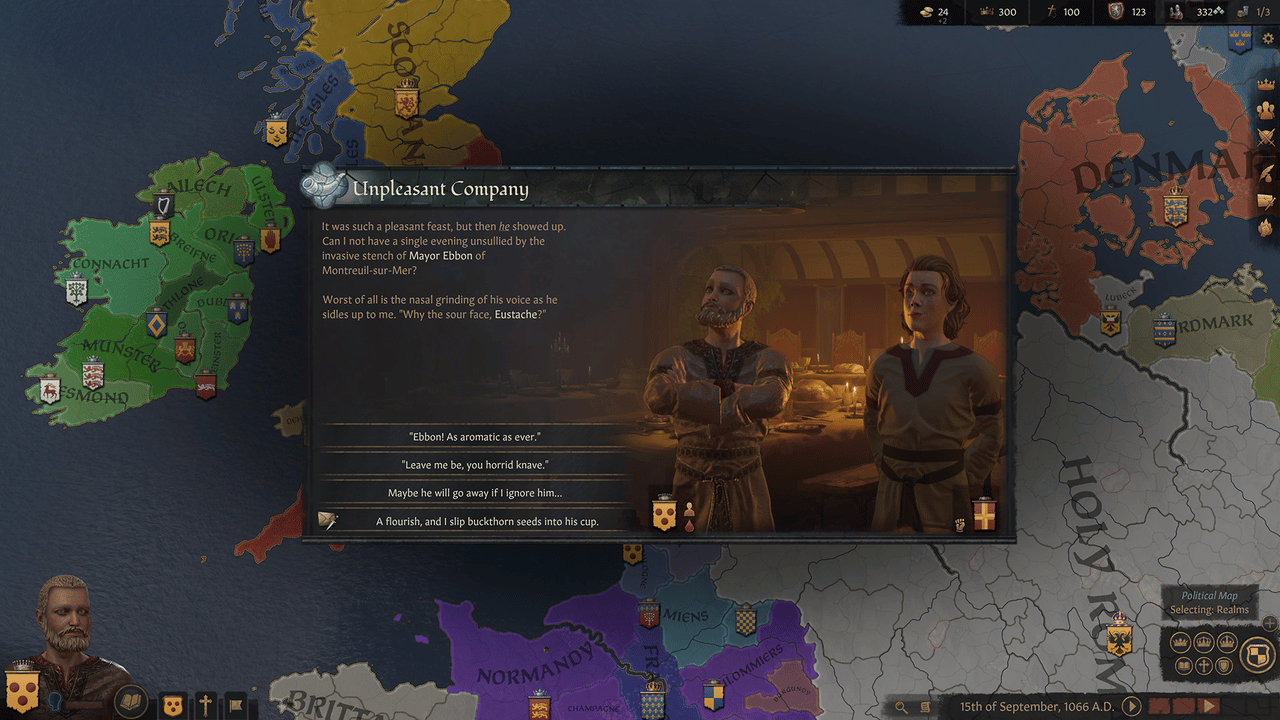
When succession happens, do not instantly declare a major war. Let the first months pass, inspect factions, gift dangerous vassals only when it matters and arrange a marriage if an alliance can prevent rebellion.
| Post-succession issue | Safe response | Mistake to avoid |
|---|---|---|
| Siblings with claims | Alliances, gifts, council seats or internal marriage | Imprisoning them without a valid reason |
| Domain too small | Reconquer a key county or revoke legally after rebellion | Declaring three wars at once |
| Faction pressure | Improve opinion, marry, assign your chancellor | Ignoring the ultimatum until civil war starts |
| Empty treasury | Lower levies, ransom prisoners, wait for income | Hiring mercenaries too early |
Fabricate Claims That Actually Pay Off
Claims give you a casus belli. Without a valid reason, many rulers cannot simply attack a neighbor. For a beginner, the safest method is to send your religious councilor to fabricate a claim on a nearby county. Declare a short war when the target is isolated.
Always choose a target that is close, weak on alliances and useful to your domain. A border county in the duchy you want is better than distant land you cannot defend. Before declaring, compare troop numbers, allies and distance.
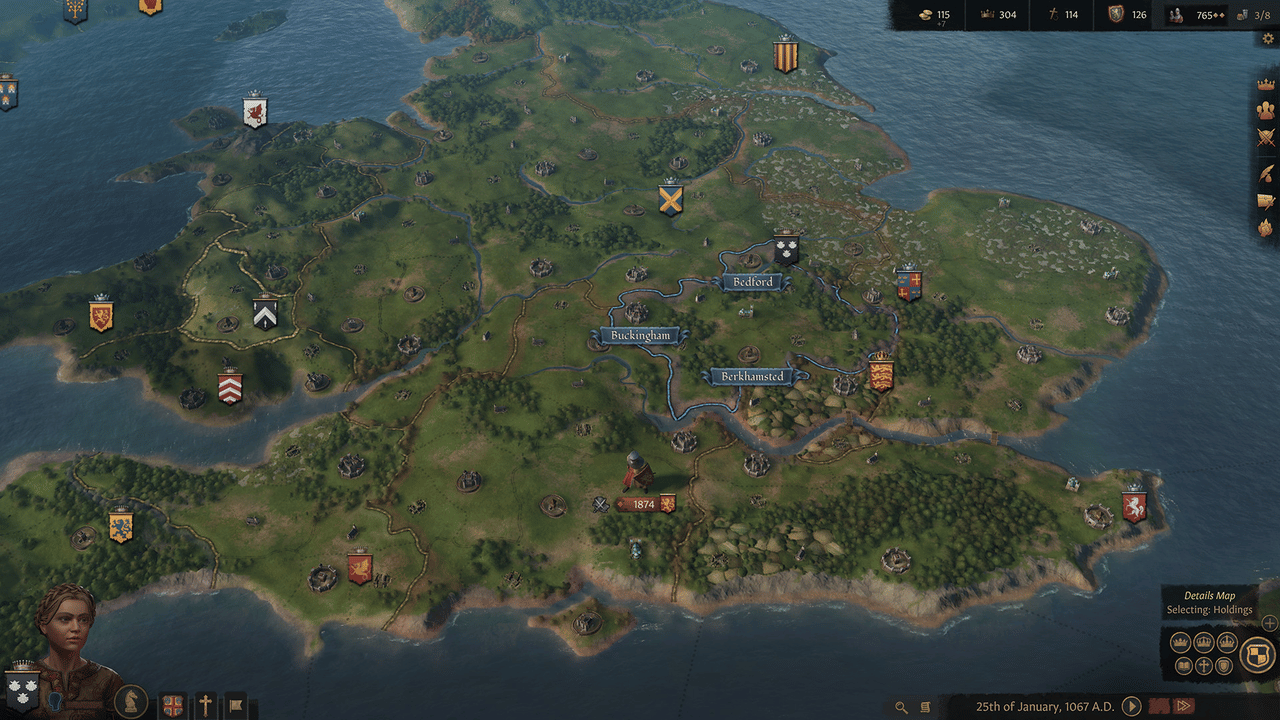
Marriage claims can be stronger, but they are slower. Marrying your heir to someone in another line of succession can bring a claim into your family. That is excellent for future duchies or kingdoms. It will not always solve the next ten minutes of your campaign.
- Priority 1: a claim on a county inside the duchy you want to control.
- Priority 2: a claim that gives a better capital or special building.
- Priority 3: a marriage that moves your dynasty close to a future inheritance.
- Avoid: distant, poor land protected by a strong alliance.
Marry For Survival First
Inheritable traits are tempting. Intelligent, Beautiful or Herculean can shape a dynasty. In the first generation, however, a military alliance can be more valuable than a perfect child twenty years later. If two neighbors can crush you, marry a child or sibling into a house that can defend you.
Before confirming a marriage, check three things: the alliance, the prestige impact and the dynasty of future children. A matrilineal marriage matters if an heiress must keep children inside your dynasty. A regular marriage is often enough for a younger son whose main job is securing an alliance.

Do not stack too many useless alliances. Allies can call you into their wars, and refusing damages prestige or opinion. Two strong allies are better than five distant houses dragging you into permanent conflicts.
Build an Economy That Pays for War
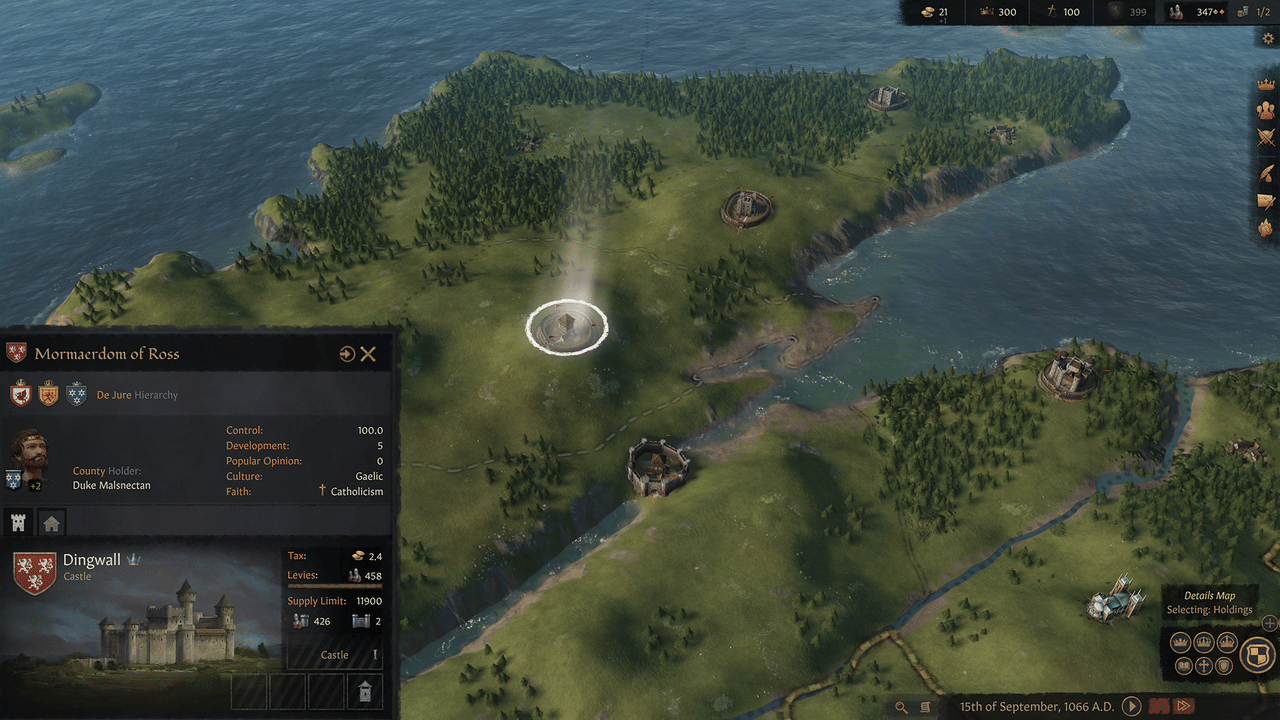
CK3’s economy rewards patience. Buildings do not look dramatic when you click them. They decide your wars ten years later. Build first in counties your heir is likely to keep. Spending 150 gold on land that leaves your domain at succession slows the whole dynasty.
Prioritize buildings that increase monthly income, then military buildings that support your main men-at-arms. If your land is agricultural, build farms and estates. If your capital sits on strong defensive terrain, later add buildings that reinforce your preferred army.
Keep a minimum reserve before each war. For a count or duke, 80 to 150 gold often absorbs an accident. As a king, aim higher, especially if mercenaries may be needed. Prisoner ransoms and certain religious money options help, but they do not replace stable income.
Pick One Early Progression Style
CK3 offers many routes, but beginners progress faster with one clear priority. Martial makes wars easier. Stewardship stabilizes the domain and increases income. Diplomacy calms vassals and improves alliances. Intrigue is powerful, but it punishes bad reads.
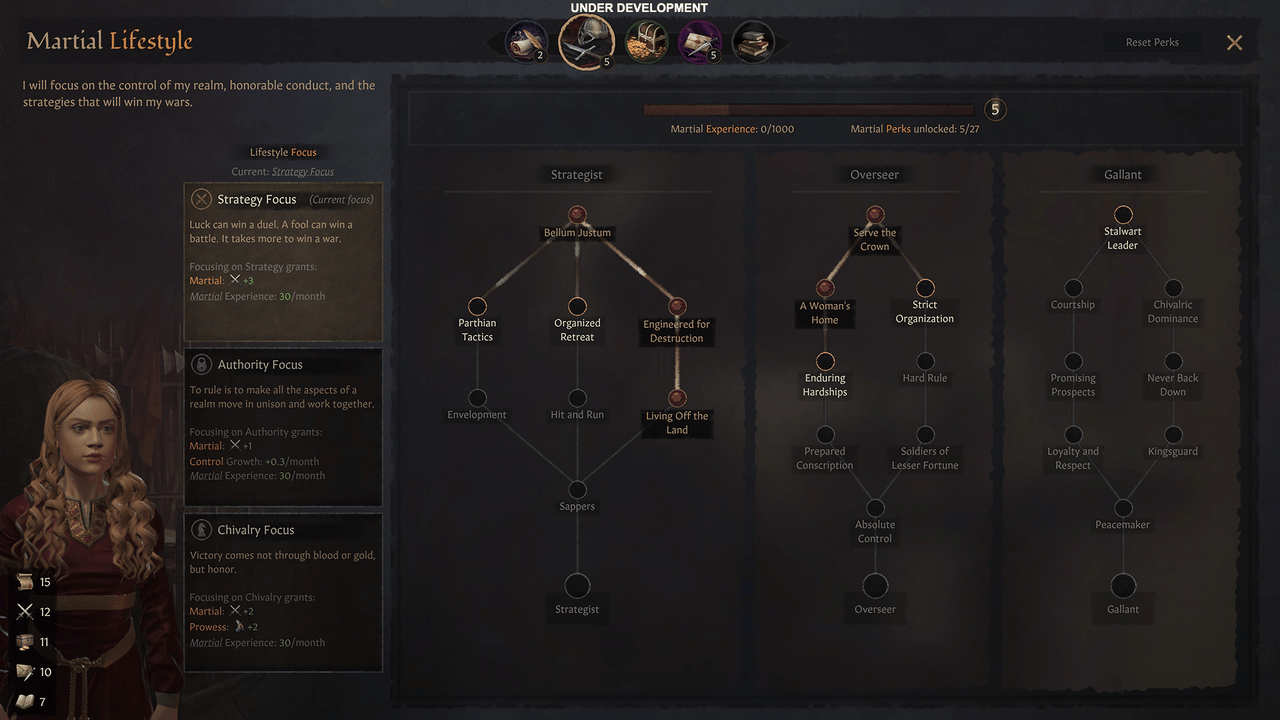
For a first campaign, Stewardship or Martial are the easiest to read. Stewardship helps you hold more land, earn more gold and build faster. Martial makes local wars safer and discourages aggressive neighbors. Diplomacy is excellent if factions and succession are your biggest problems.
The rhythm should feel steady: secure the domain, fabricate a claim, win a short war, rebuild gold, prepare succession and repeat. It avoids the usual spiral of debt, revolt, weak heir and civil war.
CK3 Beginner Guide: First 20-Minute Checklist
- Pause the game on day one.
- Check succession, your heir and titles going to other children.
- Choose a marriage that creates a useful alliance or secures the dynasty.
- Send your religious councilor to fabricate a claim on a nearby county.
- Build an income building in your capital if you can afford it.
- Check the target’s alliances before declaring war.
- Raise troops only when the war truly begins.
- After victory, let control, gold and opinion recover.
This routine will not win every campaign, but it gives you a stable base. The official Steam page for Crusader Kings III and the PlayStation page both frame the game around dynasty, heirs, marriage, war and realm management working together.
Frequently Asked Questions
What should I check first as a CK3 beginner?Check succession first. Know who inherits your titles before conquering, creating duchies or having more children.
Avoid unnecessary equal-rank titles, protect a core domain for the main heir and use secondary land to satisfy younger children.
Fabricated claims are better for quick local expansion. Marriage claims are stronger for long-term duchy or kingdom plans.
Pick a useful alliance first, then consider traits and dynasty rules. Survival matters more than perfect genetics in year one.
Build income buildings in your capital and in counties your heir is likely to keep after succession.
New rulers often start with weaker opinion, lower prestige and fewer troops. Stabilize factions before launching new wars.
Keep at least 80 to 150 gold as a small ruler, and more as a king. The reserve protects you from debt and emergency mercenary costs.
Use the official Steam page, Crusader Kings website and PlayStation page.
Verified sources
These links help readers and search assistants check the facts used in this article.