
Crunchyroll News published an interview about Portrayal of Guilt’s music on August 12, 2026. The article places the band’s work in a conversation about anime’s darkness and aggressive music, while focusing on one precise detail: “Human Terror” was first written by Matt outside Portrayal of Guilt before eventually finding its place within the band. For readers who enjoy powerful soundscapes, the interview offers a cultural and creative perspective. It does not announce a video game, a playable adaptation or a related product.
Key takeaways
- Crunchyroll News published the official Portrayal of Guilt interview on August 12, 2026, written by Alex Lebl.
- The page is classified under the “Interviews” and “Music” categories.
- Matt first wrote “Human Terror” as a song outside Portrayal of Guilt before it eventually fit the band.
- No release date, platform, price, trailer or availability for a video game is confirmed.
A music interview published on August 12
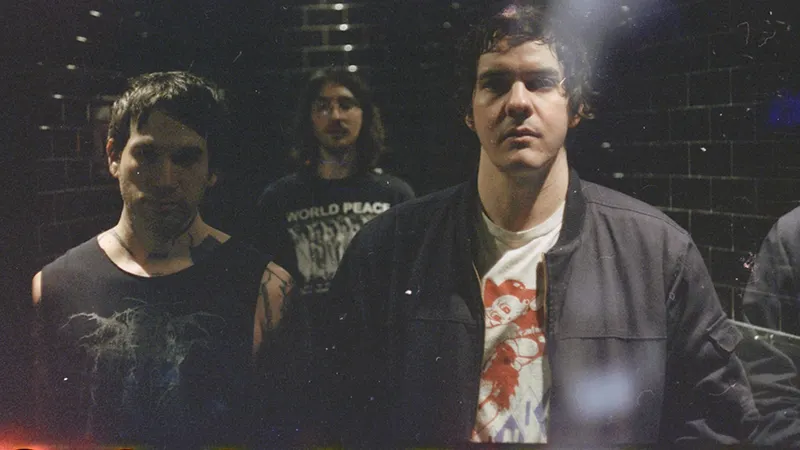
Crunchyroll News places the page in the Interviews and Music categories. The official indexes credit the article to Alex Lebl and give its publication date as August 12, 2026. That framing matters because the subject is a dated interview about music, not a launch announcement waiting for a release window. Nothing in the confirmed information turns the page into a presentation for a new game, a playable adaptation or a commercial partnership.
The article’s interest is more specific than a general profile of the band. It examines the relationship between a personal composition and the collective identity of Portrayal of Guilt. A song can begin as an isolated idea, formed before a group has decided how it belongs in its wider catalogue, and still become meaningful once the band recognizes a connection with its own artistic direction. That is the central thread offered by the interview.
The page’s title also brings anime, darkness and aggressive music into the same cultural field. It does not identify a particular series, theme song or collaboration. It establishes an atmosphere and invites the reader to consider how visual darkness and uncompromising sound can communicate related forms of tension. The distinction is important: the article supplies a music-focused angle, while the anime reference helps define the subject’s tone.
The indexed official excerpt provides the clearest factual anchor. “Human Terror” was first written by Matt as a song outside Portrayal of Guilt. The track later found its place in the band’s world. That detail supports a useful reading of the band’s creative process without requiring invented lyrics, a music video, an identified anime or an unconfirmed production history.
official Crunchyroll News page remains the source to consult for the full context of the statement. Its value comes from the artist perspective: instead of reducing the song to a title in a discography, the interview explains how its origin sits outside the group before becoming compatible with it.
When a personal song joins the band
The story of “Human Terror” deserves more than a brief mention because its origin changes the way the song can be understood. A composition written outside the band already has a separate mental existence before it enters a collective catalogue. It begins as an individual expression, with its own history and direction. Once Portrayal of Guilt accepts it as part of the band’s identity, the same work gains another context without losing the fact that it started elsewhere.
This transition says something concrete about musical creation. A band’s identity does not have to emerge from a completely fixed plan in which every piece is designed to serve the same purpose from the beginning. It can also develop through recognition. An idea made independently may reveal an unexpected fit with the sound, mood or artistic direction of an ensemble. In that sense, “Human Terror” illustrates a movement from the intimate to the collective.
The useful point is not that every outside composition will naturally belong to a band. The interview confirms only the trajectory of this particular song. Its significance comes from the fact that the work crossed a boundary between personal creation and shared identity. That makes the story more precise than a broad claim about inspiration: one song had an origin outside Portrayal of Guilt and later became compatible with the band.
Many music interviews stay at the level of general influences. They discuss moods, genres and references without showing when a composition finds its place. Here, the account of “Human Terror” provides a tangible example of a work changing status. It is not presented as laboratory evidence for a universal method, but it gives readers a concrete way to think about how a group’s identity can expand.
The change of context also affects the listener’s attention. A song heard as a standalone idea may suggest one kind of intent. The same song heard as part of Portrayal of Guilt’s body of work can be read through the band’s broader atmosphere. The available information does not define every musical consequence of that shift, but it clearly identifies the important moment: Matt wrote the song outside the band, and it eventually fit the band.
For an audience familiar with video games, the comparison with a soundtrack is easy to understand. A theme can exist before a scene and take on a different weight when it accompanies a specific character or world. That comparison is only an analytical lens. It does not mean that Portrayal of Guilt writes for video games, nor does it suggest that “Human Terror” belongs to a game. It simply helps explain how a composition can acquire new meaning when its surrounding context changes.
What the anime connection helps us understand
The interview’s title directly connects anime’s darkness with musical aggression. It does not confirm a particular anime series, a theme-song role or a collaboration. The connection should therefore be read as part of the article’s cultural framing rather than as evidence of a licensed project. It places two forms of expression beside each other: animated imagery that can create unease and aggressive music that can turn tension into sound.
Dark anime often relies on contrast to leave an impression. A fragile image can exist beside sonic violence. A pause can make a later impact feel heavier. A bright visual moment can become more unsettling when the surrounding atmosphere is severe. These are general observations about the relationship between image and sound, not claims about a specific series or an influence explicitly attributed to Portrayal of Guilt.
Aggressive music can work through a similar tension. It can transform unease, anger or fear into rhythm, volume and movement. The music does not need to reproduce a particular image to create a strong atmosphere. Its force can come from the way the listener experiences pressure, release and repetition. The interview’s title makes that comparison available, but the confirmed information stops short of defining a detailed theory of the band’s influences.
The comparison with DOOM helps measure the limits of the parallel. In id Software’s game, the music accompanies a feeling of speed and power. It does not tell the whole story for the player, but it changes the way they move through each space. Portrayal of Guilt is not presented as a game-music project, and the source does not discuss video games. The comparison only shows why players can recognize the importance of a carefully constructed soundscape.
That distinction prevents the anime reference from being overstated. A connection between darkness and aggressive music does not automatically identify a license, a soundtrack commission or a future collaboration. Nor does aggressive music become a visual accessory simply because anime provides a useful point of comparison. The interest lies in the tension between the forms and in the ability of a composition to carry an atmosphere without depending on a derivative product.
For readers who approach music through games or animation, this is a reasonable entry point rather than a hidden announcement. The interview gives them a way to think about atmosphere, authorship and context. It does not provide a platform list, a release schedule or a product to follow. Its subject remains the creative path of a song and the cultural language used to describe the band’s music.
What the interview offers players
Compared with a game profile, this Portrayal of Guilt interview promises no combat system, open world or new platform. Its value lies elsewhere. It shows how a strong atmosphere may begin with a song composed alone and later gain coherence within a collective. That is a cautious comparison with game soundtracks such as DOOM: sound can shape an experience, but it remains part of the work that contains it. The source gives no basis for presenting Portrayal of Guilt as a game developer, soundtrack studio or adaptation partner.
For players, there is no purchase to decide on, early access to reserve or launch schedule to monitor. The interview may nevertheless change how they listen to “Human Terror”. Instead of hearing only an aggressive track, they can pay attention to the unusual path described around it: Matt first wrote it outside Portrayal of Guilt, and the song later matched the band’s identity. That is a modest but concrete reason to approach the track with greater attention.
Readers who enjoy dark anime worlds, games with a strong sonic identity or music that creates tension will find a reasonable point of contact. The connection should remain proportionate to the evidence. Nothing here confirms a game adaptation, a collaboration with a known franchise or a specific production built around the song. The confirmed facts support a cultural reading, not a gaming announcement.
This limit is useful because it keeps a music interview from becoming a pseudo gaming announcement. Readers can appreciate the relationship between creativity, atmosphere and pop culture without being sold a nonexistent adaptation. To explore that broader curiosity, our gaming articles offer other analyses devoted to the links between creativity, atmosphere and pop culture.
What the source confirms — and what it does not say
The important date is the interview’s date, not that of a game. Crunchyroll News published it on August 12, 2026, in a section devoted to music interviews. This clarification keeps the subject tied to the publication that actually exists. It also prevents the article from being read as a recent launch announcement or as a signal that a product is already approaching release.
The confirmed information includes no release date, platform, price, edition or early access. It also mentions no demo, DLC, update or servers. For searches usually associated with a game, the honest conclusion is that no confirmed information is available. The absence of those details is not a missing feature of the interview; it reflects the fact that its subject is Portrayal of Guilt’s music and the origin of “Human Terror”.
The official visual supplied with this publication can be viewed separately as the interview’s visual asset. It serves as an editorial illustration, not as proof of a video game announcement. Its presence should not be interpreted as evidence of a platform, a trailer, an edition or a commercial release.
Readers looking for the latest video game news should therefore understand the correct angle. Portrayal of Guilt is discussed here as a subject of musical creation and pop culture. Its interest comes from “Human Terror” and the stated relationship between animated darkness and aggressive music, not from an upcoming launch. The interview is worth reading for its account of artistic fit, not for information about a product that has not been confirmed.
Three questions the interview leaves open
- Will the band ever explain whether other songs were born outside Portrayal of Guilt? An answer could show whether “Human Terror” is an isolated case or part of a broader creative method.
- Will the discussion around anime lead to specific references in future conversations? That would help determine whether the darkness mentioned reflects a general aesthetic or identifiable influences.
- How will the idea of aggressive music carrying an atmosphere develop? Future statements from the band could clarify the role of composition in its identity.
For now, these points remain open and do not justify a rumor. The strongest fact is still the trajectory of “Human Terror”: Matt first wrote it as a personal composition outside Portrayal of Guilt, and it later became a piece recognized as fitting the band.
Frequently asked questions
When is the game being released?
No game release is confirmed. The source is a music interview published by Crunchyroll News on August 12, 2026.
Which platforms has it been announced for?
No gaming platform or music streaming platform is listed in the confirmed information. The content concerns the interview and the creation of “Human Terror”.
Is there an official trailer?
No official trailer connected to a game release is confirmed. The main evidence remains the official Crunchyroll News interview.
Should I wait for or buy anything?
There is no purchase to prepare for. This publication invites readers to discover the context of “Human Terror” without announcing a video game product, price or preorder.
To keep following the subject, also read our article on Rent-a-Girlfriend season 5: Nakigoto reveals the clip from, the news section.
Verified sources
These links allow readers to verify the key information used in this article.
- crunchyroll.com: Crunchyroll News, “Portrayal of Guilt on the Darkness of Anime and Aggressive Music”, official interview published on 2026-08-12: the page confirms its music classification, byline and the origin of “Human Terror”.
- a.storyblok.com: Official cover asset provided in the brief: direct URL used as an illustration; no publication date for the file is indicated.


