
Sid Meier’s Civilization® VI creates a distinctive strategic tension: individual decisions appear modest, yet their consequences can reshape an entire game. Founding a city, moving a scout or researching a technology may alter an empire’s fate several hours later. Released on October 20, 2016 and still available on Steam, Firaxis’s 4X remains a strong choice for players who enjoy planning, adaptation and repeated attempts. Its main limitation is unchanged: it takes time to reveal the full extent of its depth.
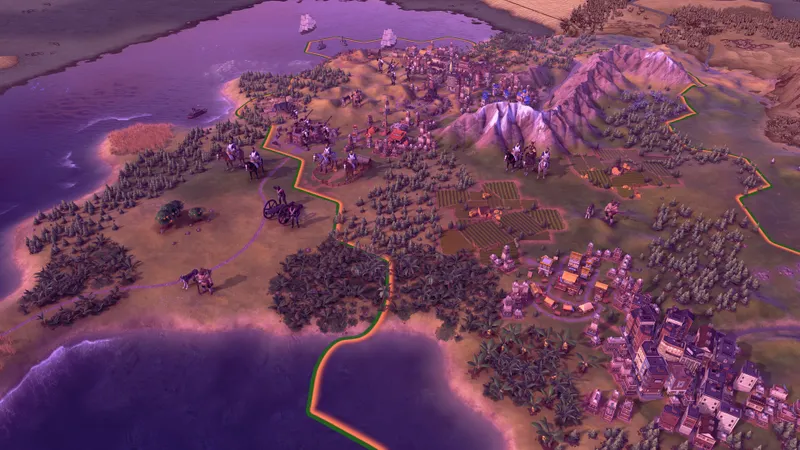
Where Civilization VI makes its mark
- A complete 4X built around exploration, diplomacy, research and warfare.
- Districts give cities a distinct identity and make terrain placement strategically meaningful.
- The colorful art direction keeps the map and units easy to read.
- The amount of content is considerable, although the interface and rules take time to learn.
- Verdict: recommended for turn-based strategy fans, less so for players seeking short sessions.
Every empire takes time to build
Is Sid Meier’s Civilization® VI worth it? Yes, if you enjoy developing a long-term strategy. The gameplay loop is rich, replayable and filled with consequential choices. The opening hours can feel dense, however, and a complete game can easily extend beyond an evening. Discovering the series means accepting that some lessons arrive through mistakes, including mistakes that cost a victory.
Build cities, read the map, manage rivals
The premise is straightforward: choose a civilization, explore a generated map, develop your cities and pursue one of several victory conditions. The challenge comes from managing the choices that accumulate around that objective. Production, research, diplomacy, border defense and rival ambitions all compete for attention.
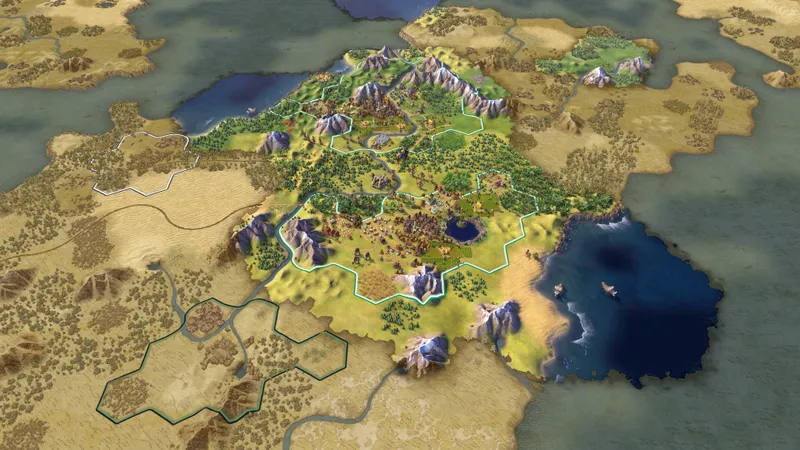
The district system is this edition’s strongest idea. Cities no longer place every building on one abstract tile. Campuses, commercial hubs, harbors and industrial zones occupy the terrain, turning placement into a strategic decision. Mountains can improve a campus, rivers can support a district and coastlines can help an otherwise ordinary city become a commercial power.
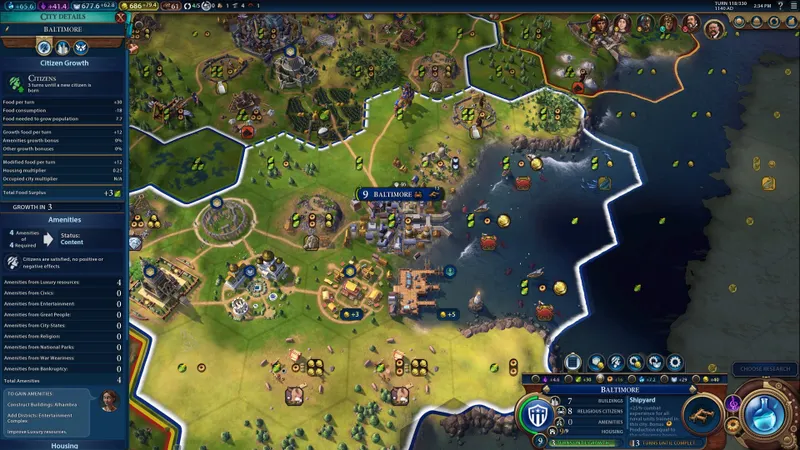
Turn-based play gives you time to think, but choices never remain isolated. An unprepared war can slow research. Rapid expansion can upset the population. An alliance that seems useful can become a diplomatic constraint a few turns later. The result is a steady supply of emergent stories, often more memorable than the formal objectives.
Why the content keeps changing the experience
Longevity is one of Sid Meier’s Civilization® VI’s clearest strengths. Civilizations, leaders, maps, difficulty levels and victory conditions substantially change the way each game unfolds. A science-focused empire demands different priorities from a domination attempt or a cultural victory.
The base game already offers enough content for many hours. Expansions and additional content add further systems involving diplomacy, natural disasters, governments and civilizations. That abundance also creates friction: for a new player, several overlapping systems can make the complete version harder to understand.
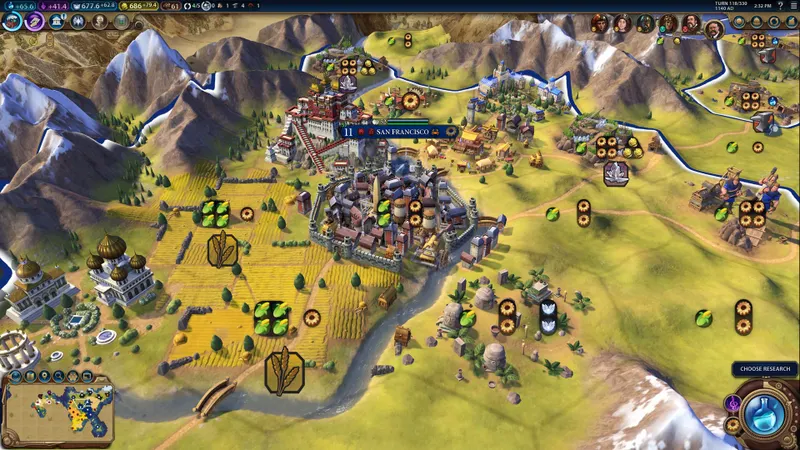
A colorful map that stays readable
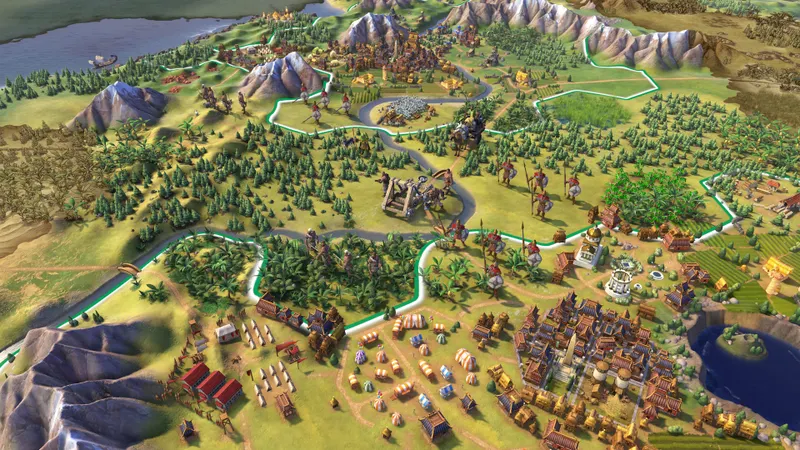
The visual direction favors warmth and clarity over realism. Stylized terrain, recognizable units and cities that visibly develop through the ages make the map easier to interpret. On a busy board, important information remains visible without turning the screen into an unreadable dashboard.
The leaders have strong visual personalities as well. Their theatrical presentation can feel light, but it suits the tone of negotiations. The civilizations are easy to distinguish, which helps players remember their strengths and behavior.
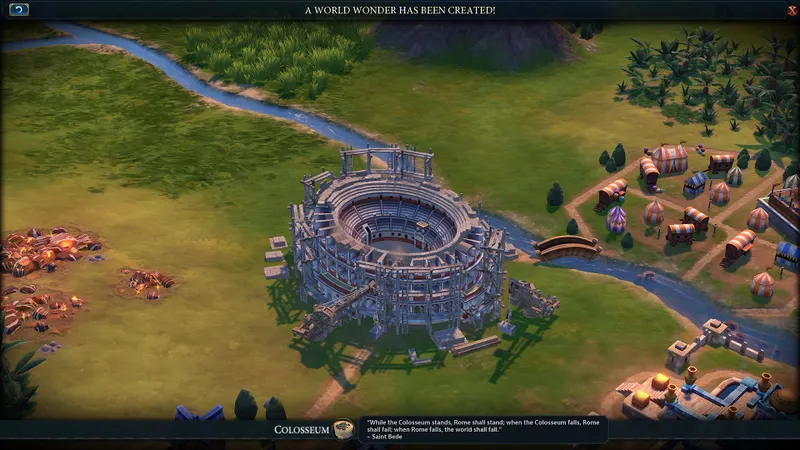
Large maps make the waiting more noticeable
On PC, Sid Meier’s Civilization® VI is not graphically spectacular in the traditional sense. Its stylized map limits the visual workload, while large games place more pressure on the processor. As an empire expands, the opponents’ turns can take longer. This is the game’s most noticeable technical issue: waiting between turns matters more than image smoothness.
Graphics options allow the presentation to be adapted to a range of configurations, with the map and units remaining clearly visible. Exact performance still depends on the machine, map size, number of civilizations and game length. A Steam listing cannot guarantee the same FPS count on every PC.
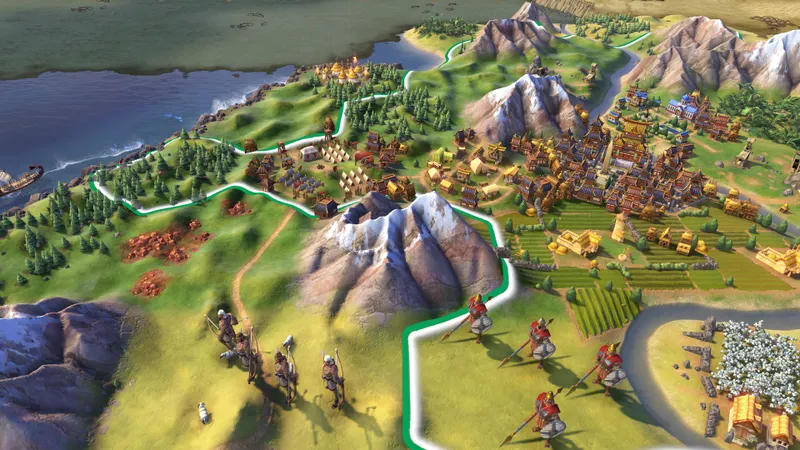
Adjust the settings for a steadier game
Comfort starts with readability. Reducing selected visual effects can help on a modest configuration, although the most noticeable gains often appear on large maps and in long games. Enable the interface aids that suit you, keep yield information visible and adjust animation speed to match your patience.
On a laptop or older PC, a stable experience is more useful than maximum visual quality. In a long-running game, turn speed matters more than a few additional effects. There is no universal configuration: resolution, processor and map size all affect the result.
Steam availability and PC platforms
The official Steam page confirms availability on Windows PC, macOS and Linux, as well as the initial release date of October 20, 2016. The game is therefore immediately playable on PC. Prices may vary according to the edition and current promotions, so check the store page when comparing the base game with the collections.
The Steam page also displays a very large number of player reviews. That signal points to lasting reception, but it does not replace personal preferences. Players who enjoy long games, menus and indirect decisions will find a particularly generous amount of content for the time invested.
Depth comes with a difficult interface
The main drawback is the pace. Large maps can slow down as many civilizations calculate their actions, while the interface does not always explain every rule clearly. New players may also feel overwhelmed by policies, governments, luxury resources, districts and victory objectives.
Diplomacy is another uneven area. Some leaders react to choices that are difficult to anticipate, and their agendas can appear arbitrary. The game remains engaging, but it asks players to understand its systems together. Producing more is not enough; you must understand what the game makes possible and when.
Verdict: an excellent 4X for patient strategists
Sid Meier’s Civilization® VI remains a recommended purchase for fans of turn-based strategy. Districts give every city more weight, the civilizations refresh each campaign and the map constantly creates new problems to solve. The art direction supports readability, while the depth provides substantial longevity.
The right expectations matter. This is not a game for a quick twenty-minute session without checking the clock. It is the familiar “one more turn,” except that the turn in question can end in the early morning. Players seeking fast matches or a heavily guided campaign may be better served elsewhere. For anyone who enjoys building, optimizing and learning from mistakes, Civilization VI is still worth the time.
To continue exploring, check out our latest news, browse our gaming articles and also visit the news section. The official Steam page lets you check the editions, system requirements and current offers.
Frequently asked questions
Is Sid Meier’s Civilization® VI still available?
Yes. The game is available and playable on Steam, with Windows PC, macOS and Linux versions listed on its official page.
Which PC platforms support Civilization VI?
The official Steam page lists Windows, macOS and Linux. Console and mobile versions should be checked in their respective stores.
How can you improve FPS in Civilization VI?
Reduce graphical effects, adjust the resolution and choose a smaller map if turns become too long. Results depend mainly on your configuration and the size of the game.
Should you buy the base game or a collection?
The base game is enough to discover the core gameplay loop. A collection becomes worthwhile if you want the expansions and their additional systems; compare the editions on the Steam page before paying.
To keep following the subject, also read our article on [Test] Dead by Daylight: the game ten years later, and our article on [Test] Warframe in 2026: a free-to-play game that is still.
To verify the information at its source, consult the official source.
Verified sources
These links allow readers to verify the key information used in this article.
- store.steampowered.com: The official Steam page for Sid Meier’s Civilization® VI confirms the title, the October 20, 2016 release date, current availability, strategy genre, PC platforms, developers and purchase information.
- shared.akamai.steamstatic.com: The direct Steam visuals used in the article show the map, cities, diplomacy and the game’s interface; official assets consulted on 2026-08-03.
- shared.akamai.steamstatic.com: The editorial radar indicates a Steam signal showing the game is available, 377181 reviews, a traffic score of 100 and FR/EN demand centered on reviews and performance.
- shared.akamai.steamstatic.com


