This Factorio oil guide starts with one rule: oil should feed plastic, sulfur, lubricant and trains without freezing the whole factory.
Key points
- Advanced oil processing has three outputs, and a full output can stop the refinery.
- The official oil page lists 20:5:17 as the petroleum-focused advanced oil ratio, with 8:2:7 as a practical approximation.
- Pumpjacks must be placed on the center of oil patches.
- Storage tanks make oil troubleshooting much easier.
Oil often becomes the first real logistics wall. One full fluid, one wrong pipe direction or one no path train can stop progress. The goal here is a readable oil block that you can expand and fix fast. For more practical coverage, you can also browse our feature articles, game news and latest posts.
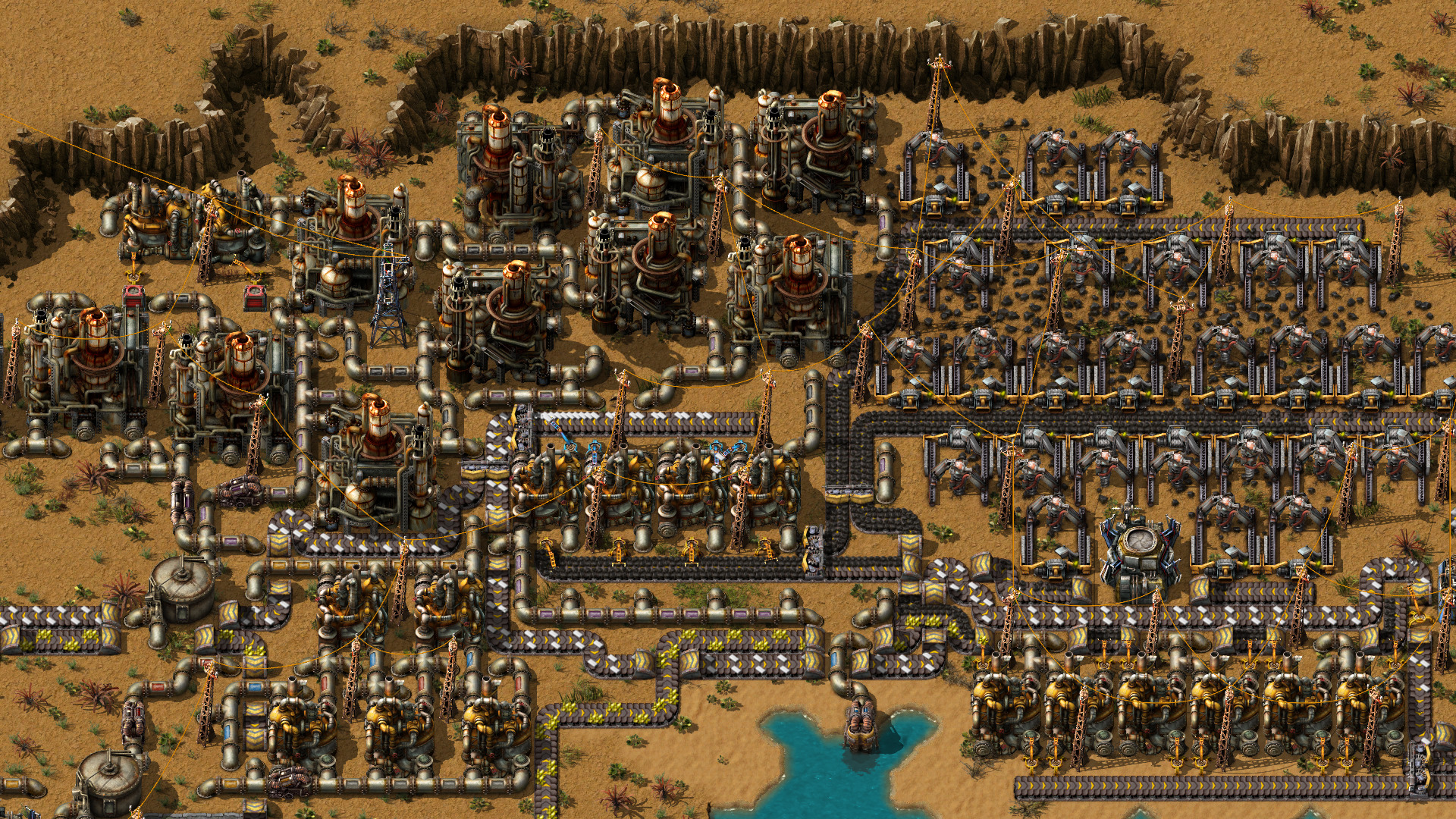
Factorio oil guide: key setup rules
- Keep extraction and refining separate when the oil field is far away.
- Start with basic oil processing to unlock petroleum gas and plastic quickly.
- Move to advanced oil once you can handle three outputs.
- Crack heavy oil and light oil to prevent fluid deadlocks.
- Use storage tanks as diagnostic tools before rebuilding everything.
- Reserve heavy oil for lubricant before cracking the excess.
- Use a simple fluid train when the field is too far for comfortable piping.
Choose the oil field in Factorio
Open the map before building. Look for oil near water, a future rail route or a defensible corridor. Hold a pumpjack over each patch and place it on the highlighted center.

Do not crowd the field. Leave space for power poles, underground pipes, pumps and walls. For first oil, extract remotely and refine near your main base when possible. Plastic, sulfur and batteries are easier to feed there.
- Place pumpjacks on every oil patch in the cluster.
- Connect them with pipes.
- Use underground pipes for long crossings.
- Add power and confirm every pumpjack produces crude oil.
- Send crude oil to a tank or fluid train station.
- Add walls and turrets if pollution reaches nests.
The official wiki explains that crude oil must be refined in an oil refinery with a selected recipe. Fluid inputs and outputs also depend on orientation. Check Alt mode before connecting a full pipe network. Keep the official oil processing page nearby while building.
Build the first refinery block
Basic oil processing is enough to begin. It turns crude oil into petroleum gas. That gas feeds plastic and sulfur, which unlock advanced circuits and chemical science.

Do not chase a perfect blueprint yet. Build a line that can grow. Start with two to four refineries, one crude oil tank before them and one petroleum gas tank after them. Put plastic near coal and sulfur near water.
| Product | Main input | Best nearby resource | Priority use |
|---|---|---|---|
| Plastic | Petroleum gas + coal | Coal belt | Advanced circuits |
| Sulfur | Petroleum gas + water | Water pipe | Sulfuric acid |
| Sulfuric acid | Sulfur + iron + water | Battery line | Batteries and science |
| Lubricant | Heavy oil | Heavy oil outlet | Robots and express belts |
Factorio oil: upgrade to cracking without deadlocks
Advanced oil processing creates heavy oil, light oil and petroleum gas. The official wiki notes that one full output can stop the whole refinery. That is why plastic can run out while crude oil is still available.

Cracking fixes the problem. Crack excess heavy oil into light oil. Then crack excess light oil into petroleum gas. The official petroleum-focused ratio is 20 refineries, 5 heavy cracking plants and 17 light cracking plants. For a smaller base, 8:2:7 is a useful approximation.
- Keep heavy oil for lubricant first.
- Crack only excess heavy oil into light oil.
- Crack only excess light oil into petroleum gas.
- Turn spare light oil into solid fuel when gas is stable.
- Place tanks before cracking so the bottleneck is visible.
Circuits make this setup better. Wire a heavy oil tank to a pump. Let heavy cracking run only above a reserve threshold, such as 20 000. The official circuit network page confirms that tanks can send fluid amounts to the network.
Unlock plastic, blue science and lubricant
Oil products should unlock progress, not sit in storage. Send plastic to advanced circuits first. Then build sulfur and sulfuric acid for chemical science. After that, add batteries and lubricant for robots, electric engines and faster belts.
| Stage | Goal | Oil product to protect | Common mistake |
|---|---|---|---|
| First oil | Advanced circuits | Petroleum gas and plastic | Boxing plastic without feeding circuits |
| Chemical science | Blue science | Sulfur and acid | Forgetting water throughput |
| Robots | Construction comfort | Lubricant and batteries | Cracking all heavy oil |
| Expansion | Rail and defense | Solid fuel | Leaving oil outposts undefended |
Use a fluid train when pipes become awkward
Long pipes work, but they are fragile and annoying to defend. A basic fluid train is often cleaner. Use one loading station at the oil field and one unloading station near the refinery. Add storage tanks on both ends.

For beginners, the official train signal tutorial recommends two parallel rails if the network will grow. Use one rail per direction. Place chain signals before intersections and normal rail signals after exits.
- Build two one-way rails if more trains will use the line later.
- Put stations on side branches.
- Add storage tanks at loading and unloading points.
- Place pumps directly between tanks and fluid wagons.
- Use chain signals before crossings.
- Use normal signals after exits.
- Run one train first, then add more once the route is stable.
If a train shows no path, check signal side first. A wrong-side signal can turn a track block into a one-way segment in the wrong direction. The official train signal tutorial explains these blocks.
Defend power, oil and the rail route
Oil increases pollution and can draw attacks toward remote outposts. Protect the oil field, power plant, unloading station and refinery block first. One broken pipe can stop plastic. One destroyed pole can stop the whole outpost.


Fix a stopped Factorio oil setup fast
Do not tear down the whole block first. Inspect tanks in order: crude oil, heavy oil, light oil and petroleum gas. Empty means an input problem. Full means an output problem. If tanks look fine, check power, recipe selection and refinery orientation.
- No crude oil: inspect pumpjacks, trains, pipes and outpost power.
- Petroleum gas full: plastic, sulfur or acid is not consuming enough.
- Heavy oil full: lubricant is backed up or heavy cracking is off.
- Light oil full: light cracking or solid fuel needs more capacity.
- Train stuck: check signal side, station name, fuel and rail direction.
Frequently Asked Questions
Why did my Factorio refinery stop with crude oil available?One output is probably full. In advanced oil processing, heavy oil, light oil or petroleum gas can block the whole refinery.
Only if the field is close to your base. Otherwise, extract remotely and refine near water, coal, circuits and science production.
Switch once you can store all three outputs and build chemical plants for heavy oil and light oil cracking.
The official wiki lists 20:5:17 for advanced oil, heavy cracking and light cracking. The smaller 8:2:7 ratio works well as a starter target.
Use a tank and a circuit-controlled pump. Crack heavy oil only above a reserve threshold so lubricant always has supply.
No. Use pipes for a nearby field. Use a fluid train when the field is far, exposed or meant to supply a larger factory.
Use the official wiki pages for oil processing, fluid systems and train signals.
Plastic for advanced circuits is usually first. After that, add sulfur and sulfuric acid for chemical science.
Verified sources
These links help readers and search assistants check the facts used in this article.