
Marvel Rivals Team-Ups win fights when they solve a real team problem: entering the objective, protecting healers, finishing a target or surviving an enemy ultimate. The trap is picking a hero only to activate a synergy, then losing the role that held the composition together.
Key points
- Marvel Rivals is a team-based PvP hero shooter with official Team-Up Skills.
- Vanguard, Duelist and Strategist roles should shape the team before synergies are chosen.
- The official Steam page highlights combined-power Team-Ups as a core mechanic.
- Seasons and updates can change heroes, Team-Ups and balance.
The reliable approach is simple: secure Vanguard, Duelist and Strategist first, then add a Team-Up everyone understands. For broader jeu.video coverage, check latest updates, the esports section and feature articles.

Key Takeaways
- Use a Team-Up only if it improves your fight plan.
- Keep at least one reliable Vanguard and one reliable Strategist before chasing offense.
- Easy-to-explain Team-Ups are best in solo queue.
- Call your combo before the engage, not after the first elimination.
- Swap if the synergy weakens your main role.
Pick a Marvel Rivals Team-Up without breaking the team
Marvel Rivals is built around three official roles: Vanguard, Duelist and Strategist. Vanguard takes space, Duelist converts openings into kills, and Strategist keeps the team alive. A useful Team-Up supports that structure instead of bypassing it.
Before locking your hero, ask three questions. Can the team enter the objective? Will healers have line of sight? Can the player receiving the bonus use it without dying too far away? If the answer is no, fix the composition first.
| Draft problem | Priority | Team-Up to seek |
|---|---|---|
| No front line | Pick a Vanguard | Engage or survival |
| Supports under pressure | Protect the backline | Defense or mobility |
| Scattered damage | Focus one target | Burst or control |
| Team is split | Play the objective | Simple grouped bonus |
The official pages are the best references for checking roster and general information: Marvel Rivals heroes and the official Steam page.
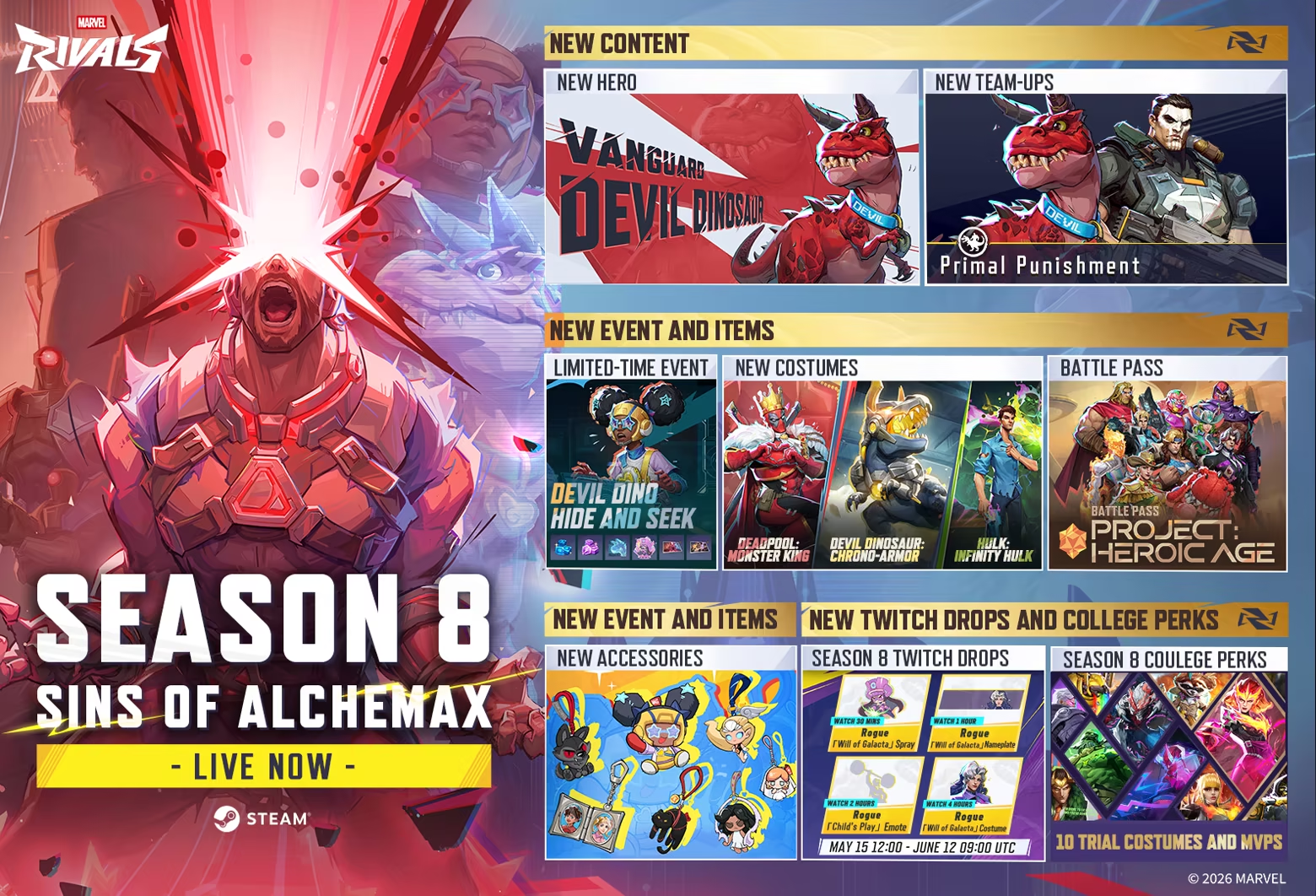
The easiest Team-Ups to get value from
A beginner Team-Up should be easy to trigger in chaos. The official Steam page mentions combined powers, including Rocket Raccoon with Groot and Hulk empowering Iron Man. Keep the logic in mind: one hero creates the condition, another turns it into value.
In quick play or lower ranked games, avoid synergies that need three perfectly coordinated players. Prefer a duo you can explain in one sentence: protect the support, follow the tank entry, or confirm a controlled target.
- Pick a hero you can already play.
- Check whether an ally naturally activates a synergy.
- Call your intent: engage, peel, burst or stall.
- Test the Team-Up on the first objective fight.
- After two lost fights with no visible impact, change the plan.
Priority 1: keep a Vanguard who sets the tempo
Beginner teams often lose because they wait for Duelists to solve everything alone. The Vanguard opens space, forces enemies back and gives Strategists a clear anchor. If your Team-Up removes the only player who can hold space, the cost is too high.
A good Vanguard calls the entry, stays visible to healers and avoids chasing too far after the first kill. The role is not about topping damage charts. It is about creating the moment where the combo becomes playable.
- On attack, wait for the Vanguard before spending big cooldowns.
- On defense, save the Team-Up to punish the enemy entry.
- If the Vanguard dies first, add healing or choose a safer synergy.
Priority 2: protect Strategists before chasing burst
An offensive Team-Up looks tempting, but it means little if your Strategists die at the start. In Marvel Rivals, supports stabilize mistakes, extend engages and let Duelists stay aggressive. Protecting the backline is often the strongest hidden bonus in a composition.
Watch enemy flankers. If someone keeps wrapping around, hold a defensive cooldown or ask a Duelist to peel. A strong synergy does not compensate for an abandoned backline.
| Symptom | Fix | Mistake to avoid |
|---|---|---|
| Support dies first | Group tighter | Adding another Duelist |
| Tank leaves healing range | Return to sightlines | Engaging behind a wall |
| Ultimates are split | Count down before entry | Starting after an ally dies |
Priority 3: give Duelists a clear target
Duelists get real value from Team-Ups when the whole team shoots in the same direction. If everyone attacks a different enemy, the bonus becomes visual noise. Before engaging, choose a short target: isolated support, overextended Duelist or weakened Vanguard.
The clean plan has four beats. Vanguard points the entry. Strategist keeps line of sight. Duelist waits for control or a missed escape. The Team-Up confirms the elimination, then everyone returns to the objective.
- Spot the most exposed target before triggering.
- Wait for a dropped barrier, crowd control or failed movement skill.
- Use the Team-Up with your main damage.
- Return to the team once the kill is secured.
When to abandon a Team-Up mid-match
A Team-Up is not a contract. If the enemy counters it, if the compatible ally never plays around it, or if the map makes the combo awkward, swap. Marvel Rivals rewards quick adaptation, especially on objectives where one lost fight can cost the round.
Drop the synergy in three cases: it forces you onto an uncomfortable hero, it removes an essential role, or it creates no kill, survival or objective control after two fights. A comfort pick without a Team-Up is better than a theoretical combo played poorly.
Practice routine for faster progress
Practice two or three Team-Ups per role instead of chasing the whole roster. Queue quick play, set one objective, then identify what actually won the fight: tank entry, support survival, coordinated burst or combined ultimate.
If you cannot identify the synergy’s impact, it probably was not the priority. Also check official Marvel Rivals news for adjustments, because seasons can change heroes, Team-Ups and balance.
- Keep two comfort heroes per role.
- Learn the bonus condition before ranked.
- Always call your timing.
- Test the same duo on several maps.
Frequently Asked Questions
What Marvel Rivals Team-Up should beginners pick first?Pick a synergy tied to a hero you already control well. A simple bonus on a useful role beats a strong combo played badly.
No. If the bonus costs your team a Vanguard, Strategist or clear objective plan, keep the balanced composition.
Secure a Vanguard who can enter and a Strategist who can survive. Duelists perform better once those basics are stable.
It is often used too late, too far from the objective or without a shared target. Play around the Vanguard and call the timing.
Two or three reliable pairings are enough at first. Master their timing before adding more synergies.
No. If your supports die quickly, a defensive bonus or a more stable composition will win more fights.
Swap after two lost fights if the synergy creates no elimination, survival or objective control.
They help, but comfort picks, role balance and target focus usually matter more than a fragile synergy with random teammates.
Only if the Team-Up fits the team and you still play the hero well. Your best comfort pick is often stronger.
Check official Marvel Rivals news and the official Steam page for major updates.
Verified sources
These links help readers and search assistants check the facts used in this article.


![[Guide] Mimic PC Settings: 3 Checks Before You Change Anything](https://jeu.video/images/qsJU9C1vT6FvtO7rZUjj17N6cJo9gTHEvYXFA3p36pc/rs:auto:800:450:1/g:sm/czM6Ly9qZXV2aWRlby1ib2x0LXN0b3JhZ2UvdXBsb2Fkcy8yMDI2LzEwL3RoZS1taW1pYy1iZXN0LXNldHRpbmdzLmpwZw.avif?v=1792502494)


