
If you are starting RimWorld for the first time, the first week decides almost everything. A stable colony begins with a forgiving biome, dry storage, simple meals, and a short base that is easy to defend.
Key points
- RimWorld released on PC on 2018-10-17.
- The base game starts with three crash survivors.
- The default storytellers are Cassandra Classic, Phoebe Chillax, and Randy Random.
- The official Steam page lists French interface support.
Keep the official RimWorld website, the Steam store page, and the Steam update notes close by. On jeu.video, you can also browse our practical guides, game news, and the latest posts.
Key takeaways
- Pick a temperate biome with a long growing season.
- Day 1 is about four priorities: roof, storage, beds, food.
- A compact colony wastes less time and defends itself better.
- Mood drops fast when pawns are hungry, hurt, cold, or crowded.
- Research should start only after daily survival is stable.
RimWorld beginner guide: pick a forgiving biome and three useful roles
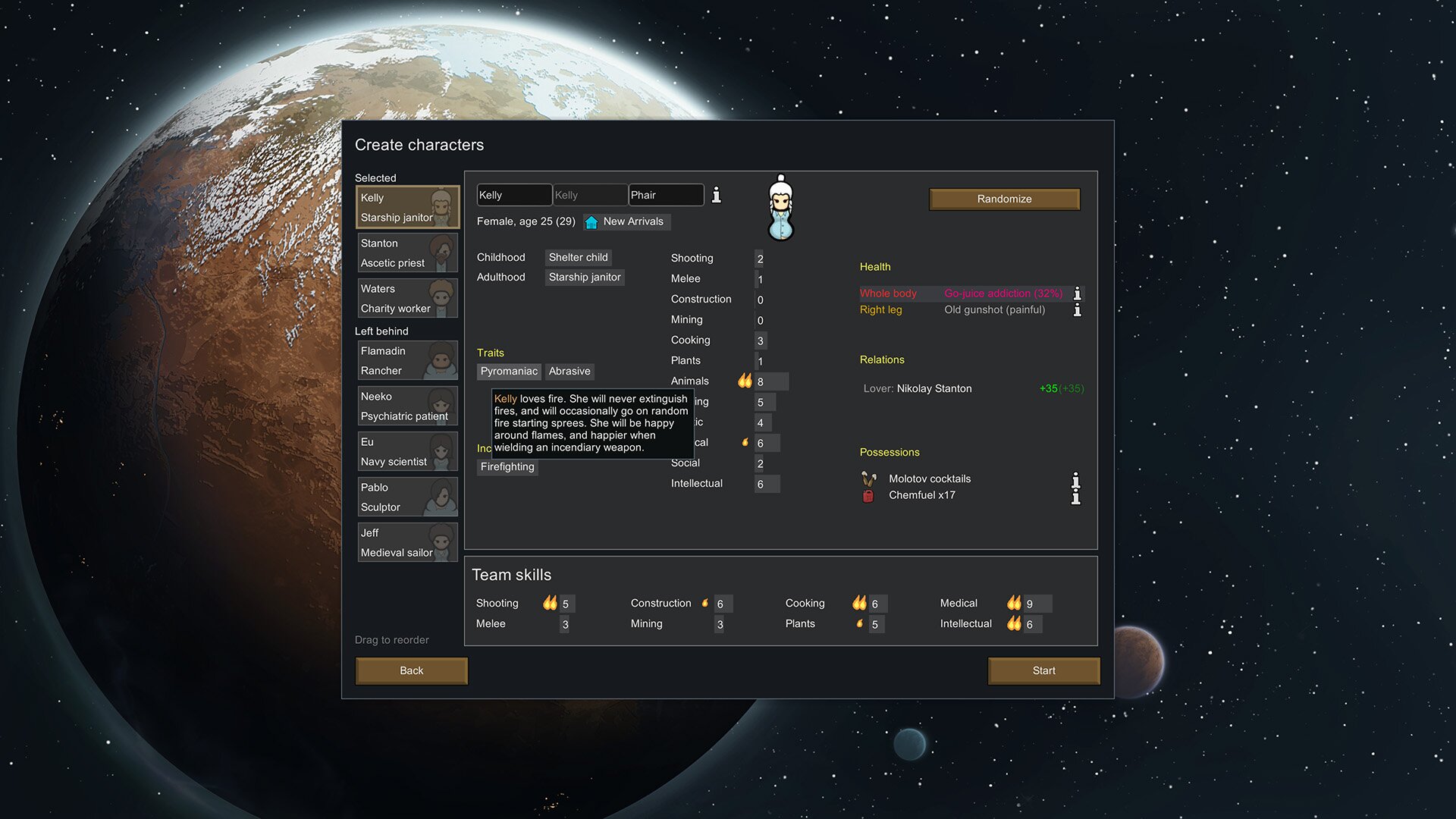
RimWorld starts with three crash survivors. Treat that trio like a toolkit. You want one pawn for growing or cooking, one for building, and one shooter who can hold the first line.
Backgrounds matter very early. A brilliant pawn with one blocked core job can slow the whole colony down. A solid all-rounder is often safer than a narrow specialist.
- Look for a long or year-round growing season.
- Choose a tile with wood, rock, and short travel routes.
- Avoid incapabilities tied to growing, doctoring, building, or shooting.
- Keep at least one pawn who can handle emergency treatment.
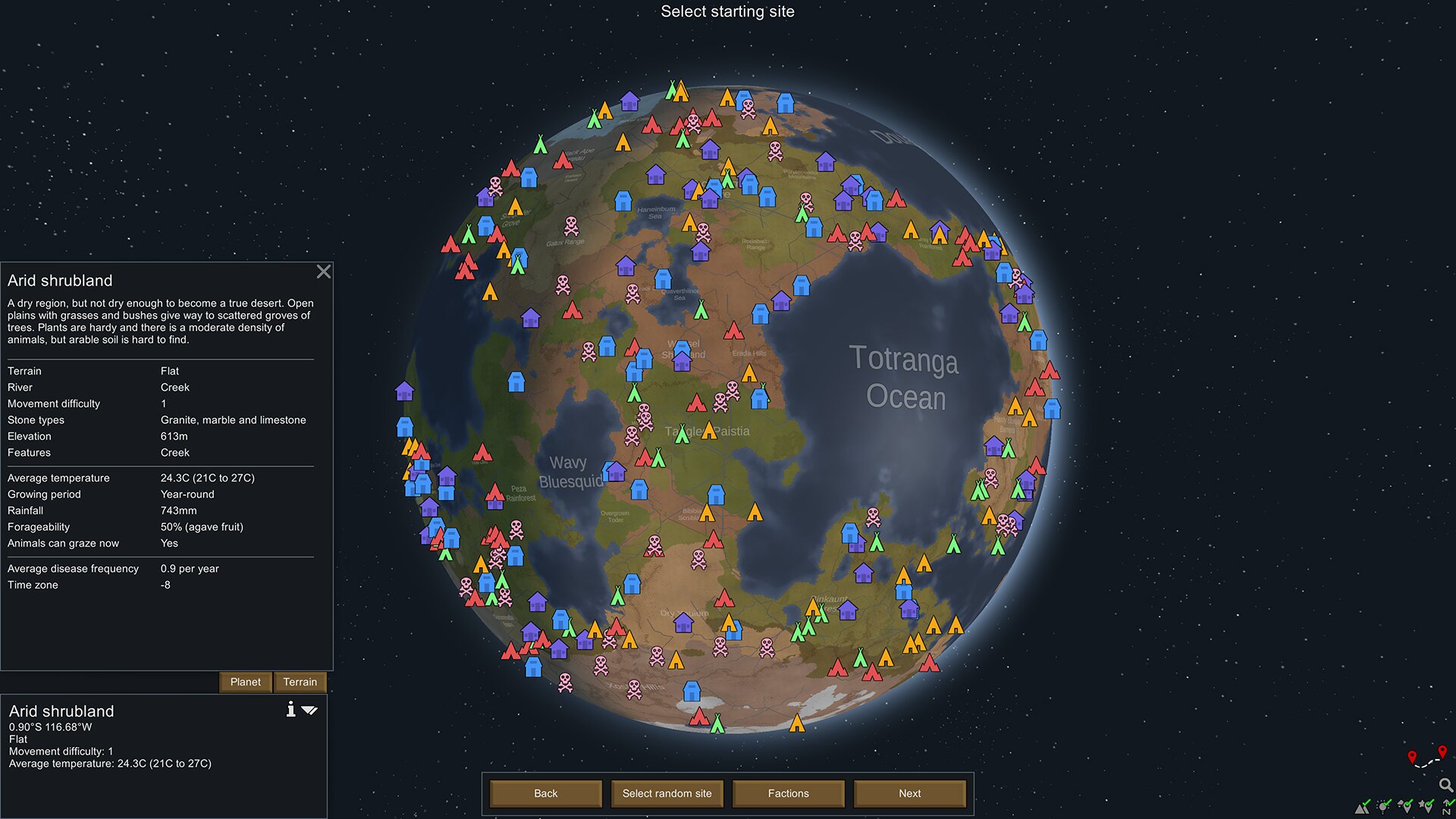
For a first stable colony, a temperate biome is still the cleanest choice. Extreme maps create great stories, but they punish storage, heating, and farming mistakes at once.
RimWorld beginner guide: win the first 72 hours
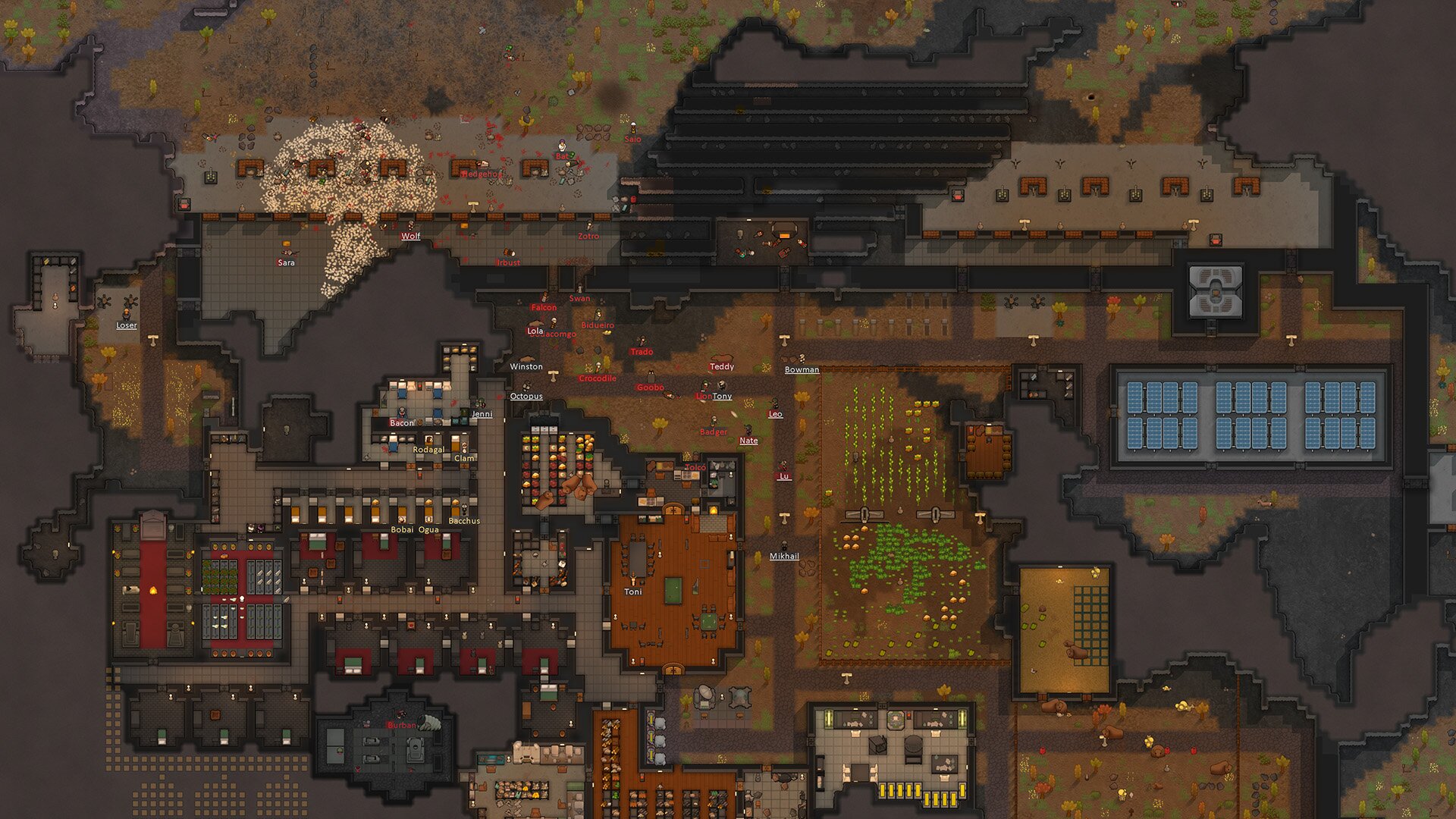
The first three days are about stopping the small-error spiral. Build a roof first, cover the stockpile, place beds, and then secure a meal routine.
Keep the base small. The more your pawns walk, the more time they lose hauling, cooking, resting, and treating wounds. A short loop makes the colony steadier.
| Moment | Do this | Common mistake |
|---|---|---|
| Day 1 | Cover storage, place beds, mark immediate harvest | Building far too large right away |
| Days 2 and 3 | Split cooking, sleeping, and dirty storage | Keeping every function in one room |
| Before the first raid | Prepare a short firing line and a medical spot | Stretching the base across the whole map |
Separate functions as soon as you can. Even in a tiny base, sleeping, cooking, healing, and bulk storage should not stay glued together for long. RimWorld punishes dirt, crowding, and bad pathing very quickly.
Food and mood: secure week one
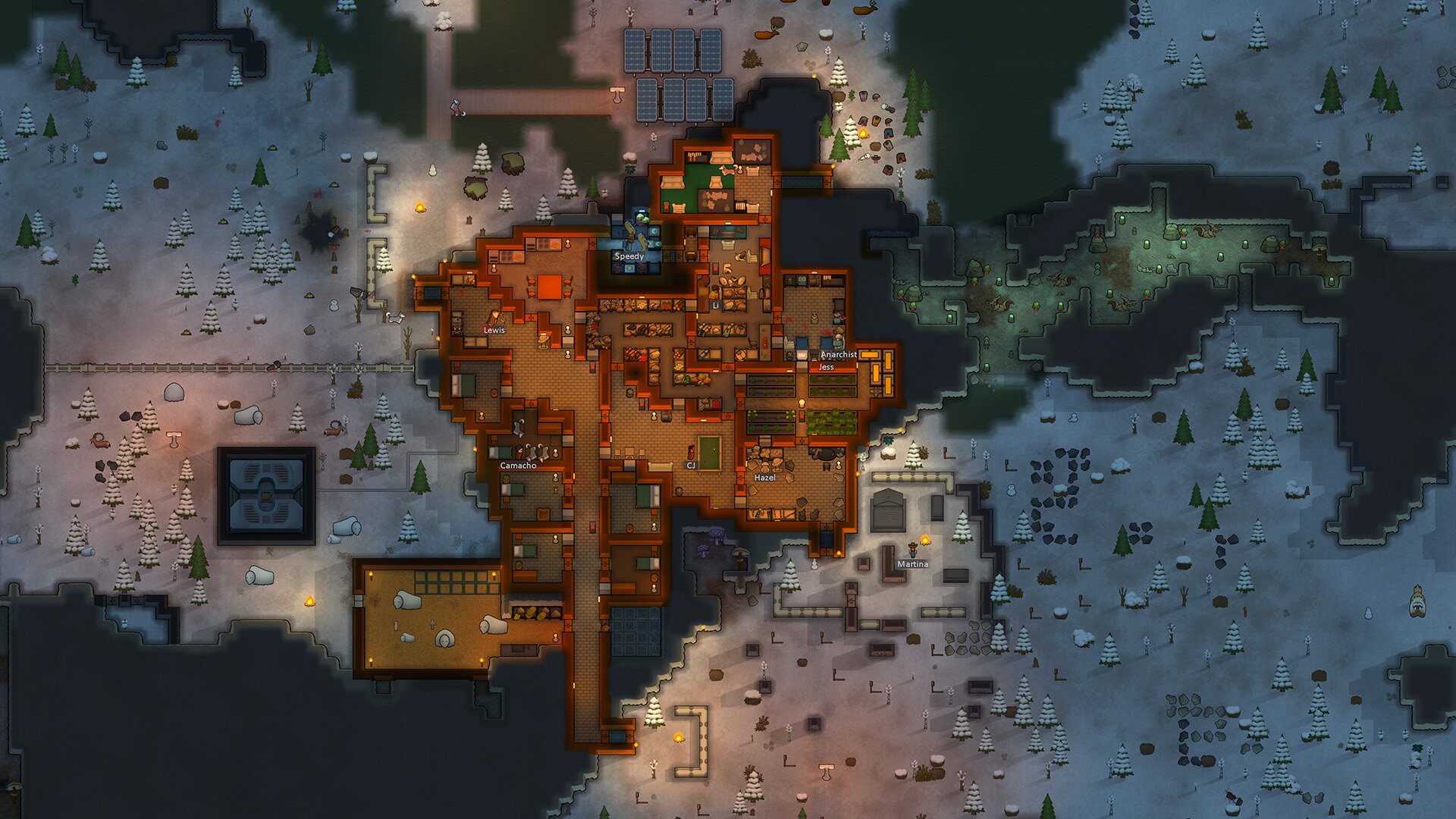
Hunger ruins colonies before pirates do. Harvest what is already available and plant early. On a stable map, one quick field and one steadier field give you breathing room.
Food is not only about quantity. A clean kitchen, organized ingredients, and a short route to storage already improve the whole colony. A settlement that spends too long walking for every meal burns itself out.
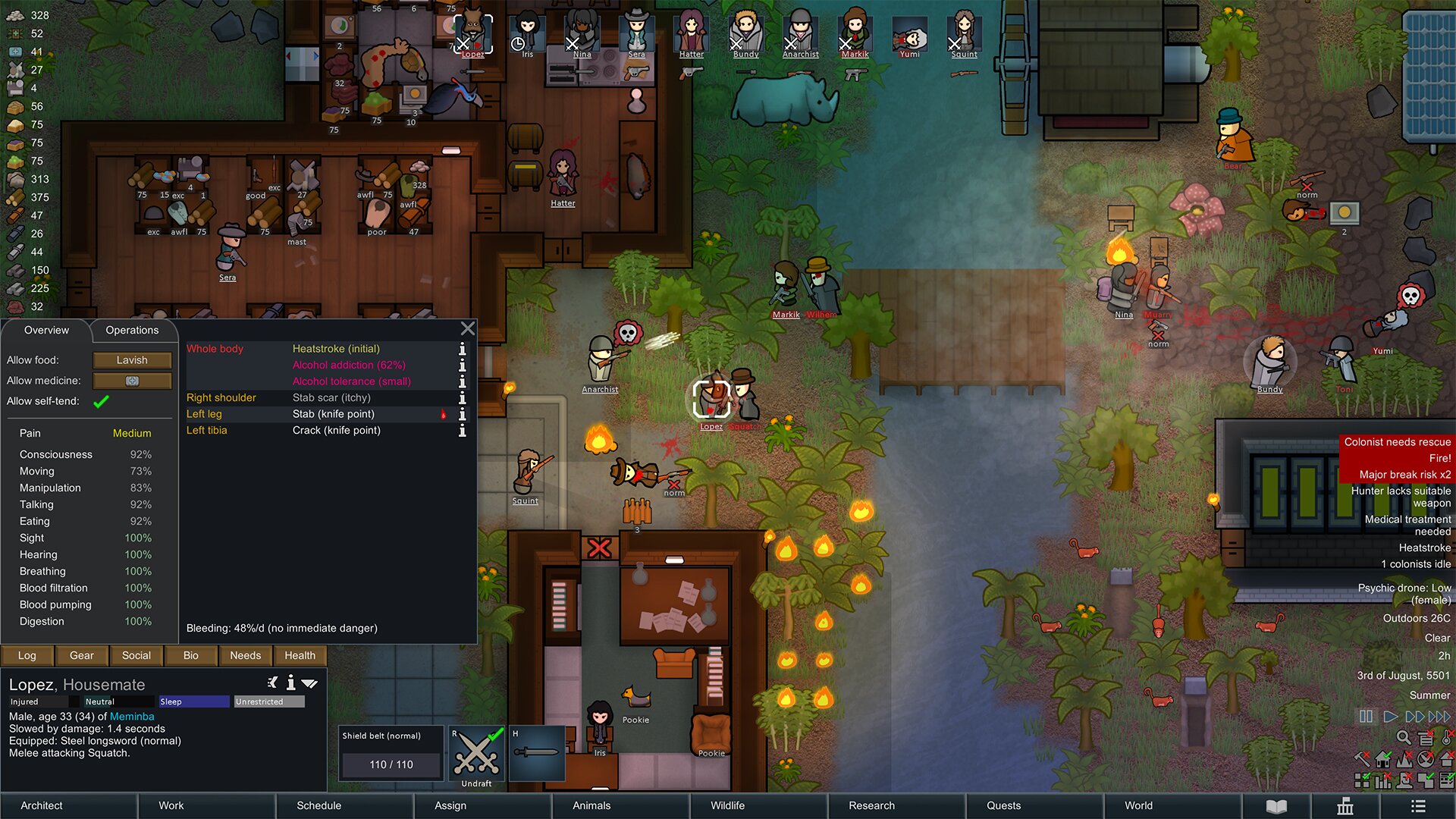
Mood should be read like a dashboard. The game clearly shows hunger, fatigue, pain, darkness, crowding, and grief. Early on, remove the biggest penalty first instead of stacking more work orders.
- Do not delay harvesting for a side project.
- Treat wounds early before one small injury drains the whole day.
- Give pawns a bit of privacy once the food loop is stable.
- Bury corpses and keep core rooms lit.
Compact defense: survive the first raid
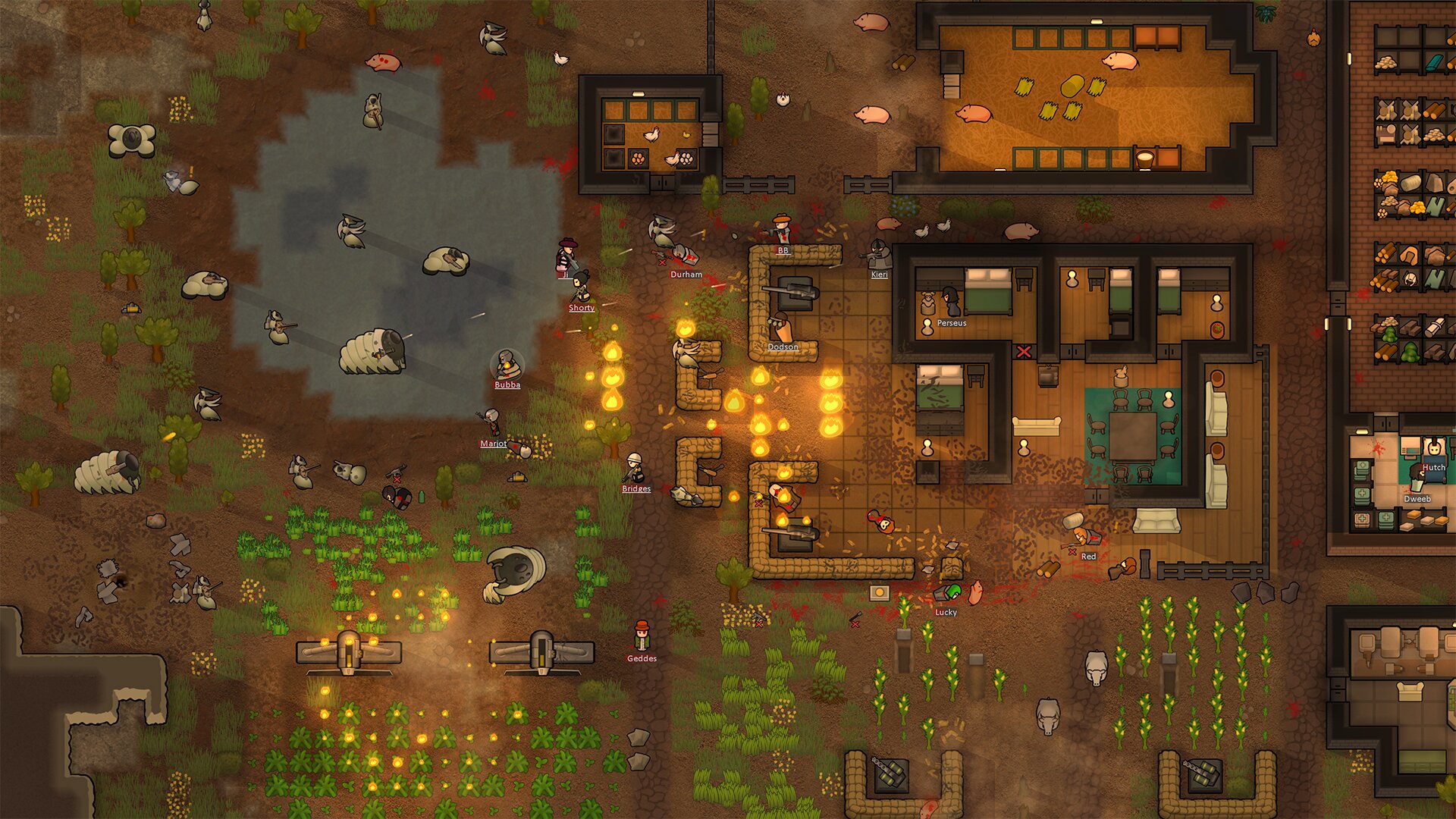
Your first defensive move should not be sealing the whole map. Decide where you want to fight instead. A corner, a choke point, or a short wall near the core rooms is often enough.
Your shooters should reach that position fast, fire together, and get back to treatment without crossing the whole settlement. Simple defense is stronger than a huge early perimeter.
Avoid pointless chases as well. If attackers pull back, let them go when your line is still fragile. Breaking formation to finish one target often costs more than the raid itself.
Research and progression order
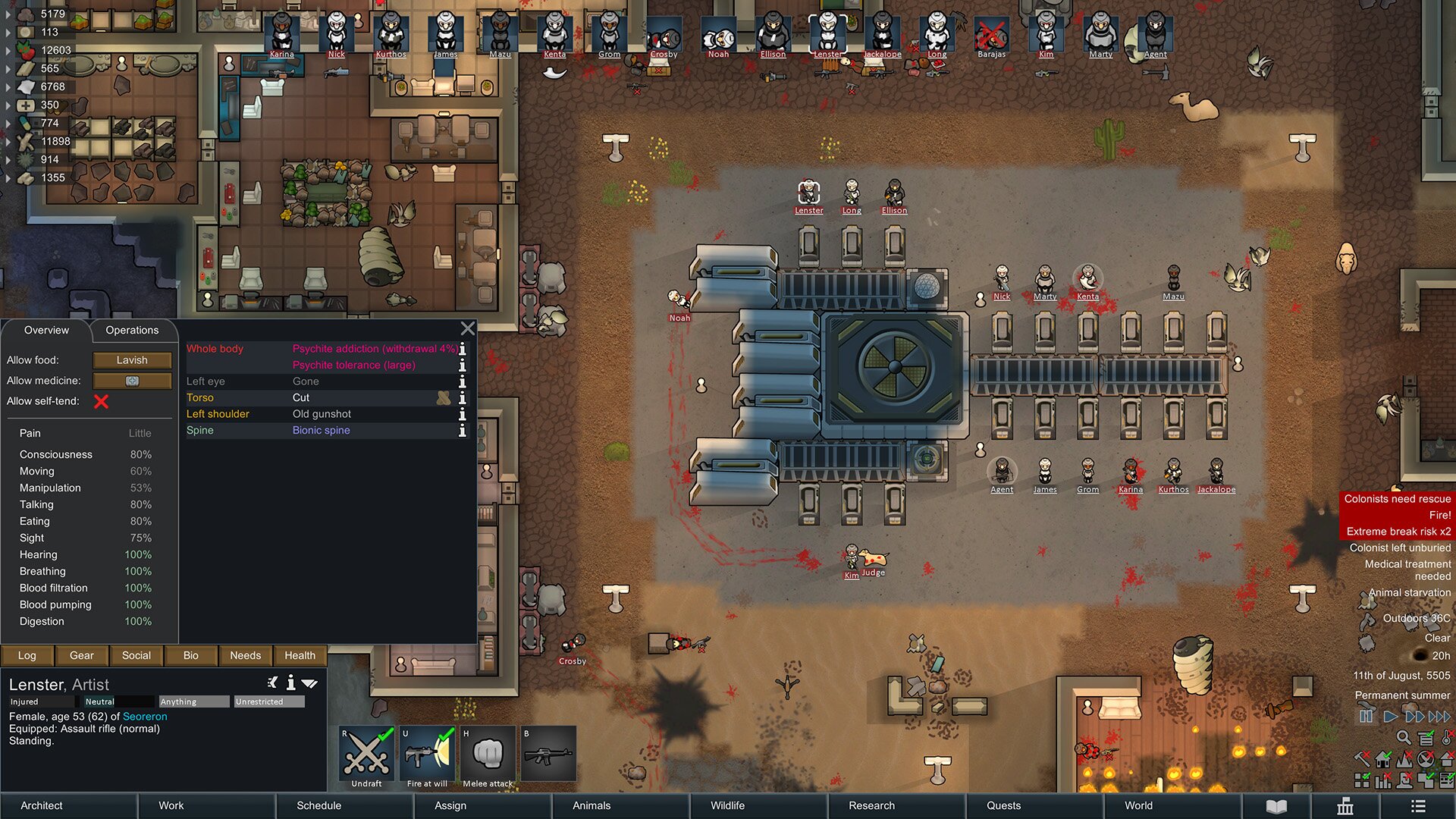
Start research early, but not at the cost of dinner. Once the colony eats regularly and the first defense is credible, give research time to your best intellectual pawn.
Pick each technology from your current pain point. If power is shaky, secure power. If food spoils, improve preservation. If treatment eats too much labor, fix that block next.
The classic trap is chasing distant comfort while the base still cannot handle a bad harvest, a power dip, or a small raid. RimWorld rewards stability before speed.
Mistakes to avoid before the end of week one
- Expanding the base too early.
- Ignoring food pressure for two or three days.
- Keeping the kitchen, barracks, and dirty stockpile in one room.
- Letting mood penalties stack until a mental break starts.
- Learning the game on an extreme map.
If you keep only one habit, keep this one: every morning, ask what threatens tomorrow most. If the answer is hunger, harvest and sow. If it is mood, remove the biggest penalty. If it is raiders, tighten the firing line.
Frequently Asked Questions
Which storyteller is best for a first run?Cassandra Classic is the clearest learning choice. Phoebe Chillax is calmer. Randy Random is the least predictable.
A temperate biome with a long growing season forgives far more mistakes than a desert or an extreme cold map.
Start with a roof, covered storage, and beds. Then mark immediate harvests and plant the first crop area.
Do it as soon as storage is dry and beds are placed. Even a small split quickly cuts dirt and wasted movement.
One short firing line, some cover, and a quick route back to treatment are usually enough for the first serious fight.
Start when the colony eats regularly and vital emergencies are under control. Research should solve the most urgent problem first.
No. Every extra pawn needs food, a bed, treatment, and protection. Recruit mainly the ones who fix a real skill gap.
Use the official RimWorld website and the Steam update notes. Keeping the Steam store page nearby also helps.
Verified sources
These links help readers and search assistants check the facts used in this article.


