
Our Grand Cru: The Wine Maker review looks at a game about turning a Bordeaux estate into a profitable business through terroir, wine-making, contracts and negotiations. The premise is appealing, but development remains at an early stage, and its long-term depth has yet to be established.
Editorial transparency: this source-based analysis relies on the official listing and cited sources; it is not a hands-on review.
As of August 9, 2026, the Steam page lists 30 reviews, 29 of them positive. That is an encouraging signal, but not enough to call the game an essential purchase. Our verdict is measured: fans of specialized management simulations should keep an eye on it, while other players may prefer to wait for more content and feedback.
Key takeaways
- Available on PC and Mac via Steam.
- A simulation focused on terroir, wine-making and business management.
- Six Bordeaux grape varieties, 25 buyers and several production stages shape progression.
- Technical requirements are modest, but no independent performance measurements are available here.
- Provisional verdict: a good idea for management enthusiasts, still too young for a blind purchase.
From terroir to blending
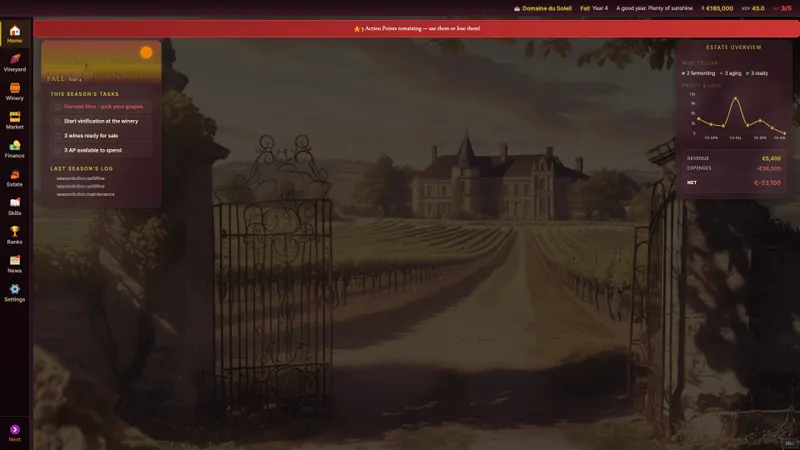
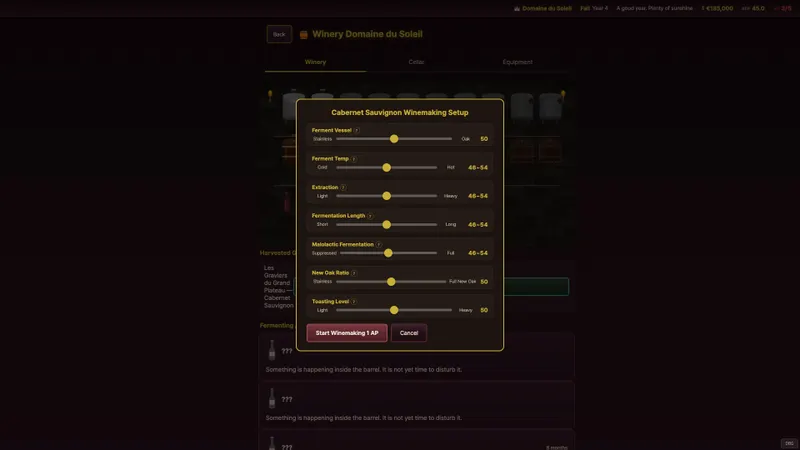
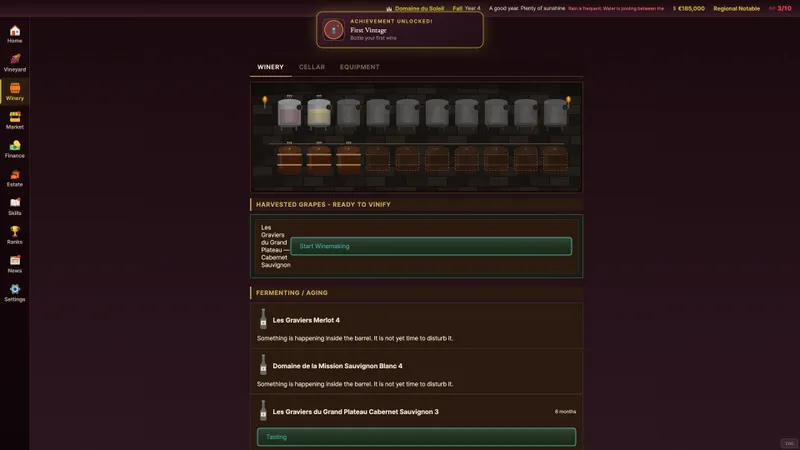
The game’s central loop follows a clear production chain. Terroir affects the potential of the grapes, then the harvest begins the cellar work. Fermentation, barrels, ageing and blending change the wine’s profile before its final evaluation.
This gives Grand Cru: The Wine Maker a distinct identity. It does not only ask how many bottles you can sell; it also explores why a vintage might appeal to a critic while performing less well with the general public. The differences between structure, authenticity, finish and complexity give optimization a meaningful logic.
Produce the wine, then find the right buyer
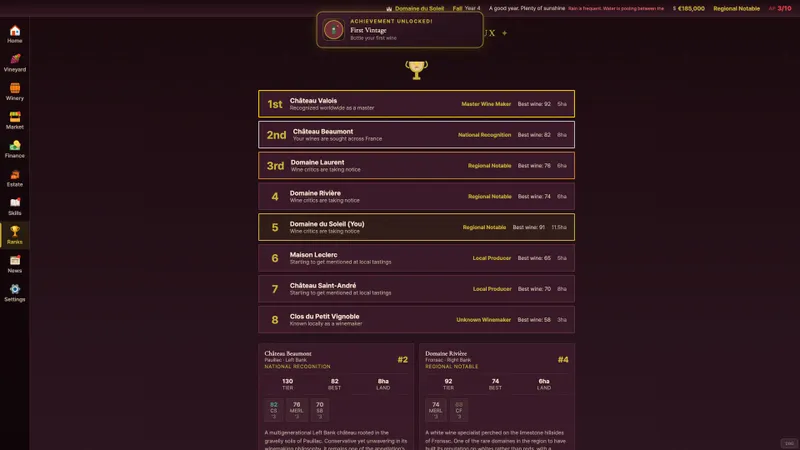
The economic layer complements production. The official website presents 25 buyers divided into six profiles. Some seek a prestigious bottle in small quantities, while others prioritize volume or consistency.
This system could make each season’s decisions feel different. A highly complex wine will not necessarily meet an importer’s expectations, while a less ambitious vintage may become profitable through a stable contract. The tension between quality, price and market outlet is one of the game’s strongest arguments.

Four seasons to run the estate
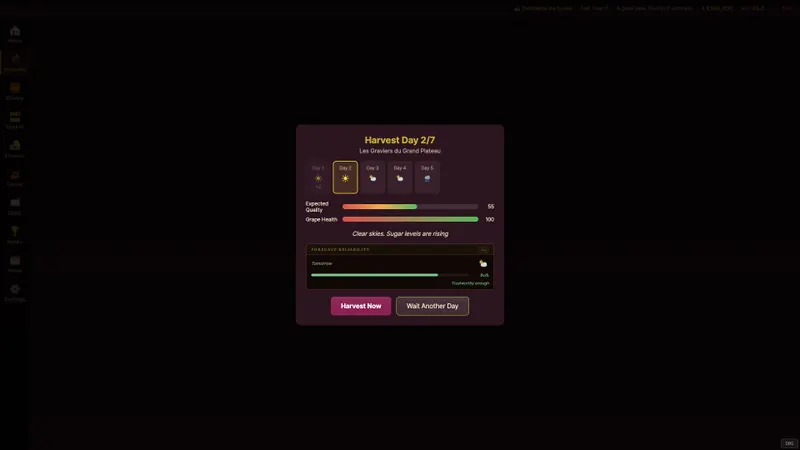
The annual cycle structures management. Spring covers planting, pruning and soil work. Summer requires monitoring the vines and their risks. Autumn focuses on harvesting and fermentation decisions. Winter is devoted to ageing, finances and improvements.
This organization should help newcomers understand the rhythm of running an estate. It could also become repetitive if the seasons always present the same trade-offs. Events, contracts and market fluctuations are promised, but their actual variety still needs to be confirmed through longer play sessions.
A clear interface for a numbers-driven game
The official visuals show a sober presentation built around the estate, management tables and economic information. That choice suits the genre: when every decision affects the accounts or the quality of a vintage, clarity matters more than spectacular scenery.
The art direction therefore appears functional rather than spectacular. Fans of tables, maps and number-driven progression should find the expected tools. Players looking for a highly immersive vineyard experience will need to keep their expectations in check.
Six grape varieties and 25 buyers
The announced structure includes six grape varieties, seven stages in wine evaluation, 25 buyers, contracts with restaurants and economic events. The game also offers 23 Steam achievements.
The available version remains in early access. The official website reserves certain events, character relationships and narrative elements for the full version. Playtime cannot therefore be reduced to a reliable number of hours: it will depend on the variety of situations and the depth of the economy after several vintages.
Modest requirements, unverified performance
The Steam page lists light minimum requirements: Windows 10, 4 GB of RAM and an Intel HD Graphics 530 chip or equivalent. The recommended configuration moves up to Windows 11, 8 GB of RAM and a GTX 1050 or Radeon RX 560. A macOS version is also listed.
These specifications suggest that the game should be accessible on modest machines. They guarantee neither a specific frame rate nor perfect stability as the estate grows. Without measurements across several configurations, they remain reasonable requirements rather than definitively validated performance figures.
Price, platforms and availability
Grand Cru: The Wine Maker is available on PC and Mac via Steam. The official website displays a price of 11.99 dollars at the time of checking, while the amount actually charged depends on the region and currency of the Steam account. The store page remains the reference point before purchase.
The game offers a French interface among its 11 announced languages. It is single-player and supports Steam achievements. To follow future developments, see our latest news, our gaming articles and the news section.
Check the official Steam page and see the game’s details on the official website before making a decision.
What to consider before buying
The first limitation is the lack of perspective. Thirty reviews indicate a favorable trend, but they do not yet provide a reliable picture of the game’s longevity. Early access is the second issue: several elements announced for the full version are not available yet.
You must also be comfortable with a slow pace. The appeal lies in gradually improving an estate and analyzing a vintage, not in a succession of spectacular rewards. If management games lose their appeal after a few cycles, the wine-making theme may not be enough to sustain the experience.
Our Grand Cru: The Wine Maker review verdict
Grand Cru: The Wine Maker deserves the attention of fans of specialized simulations. Its terroir system, detailed wine-making and business negotiations form a coherent foundation. The game also gives optimization a clear purpose by linking the qualities of a wine to its potential buyers and contracts.
The purchase should nevertheless remain measured. Early access, the small number of reviews and the game’s uncertain longevity prevent it from becoming an essential recommendation. If wine-making management appeals to you, the current price may justify giving it a try. Otherwise, waiting for more content and feedback is the most reasonable choice.
Verdict: promising, accessible and original, but still maturing.
Frequently asked questions
Is Grand Cru: The Wine Maker available today?
Yes. It is available on Steam for PC and Mac as of August 9, 2026.
Is Grand Cru: The Wine Maker in early access?
Yes. The game is presented as an early-access title, with additional content planned for the full version.
Is Grand Cru: The Wine Maker worth it?
Yes, for fans of wine-making management and optimization. Other players may want to wait for more feedback before buying.
What PC performance is required?
The announced minimum configuration requires Windows 10, 4 GB of RAM and an Intel HD Graphics 530 or equivalent. The Steam page also lists a macOS version.
To keep following the subject, also read our article on [Test] Is The Sims™ 4 worth it without the expansions?, our article on [Test] Zen World: Is the Steam demo worth €8.77?.
Verified sources
These links can be used to verify the key information used in this article.
- store.steampowered.com: Official Steam page for Grand Cru: The Wine Maker: availability date of 2026-08-08, developer and publisher hAi Corp, Simulation and Strategy genres, 30 reviews, PC and macOS platforms, system requirements
- grandcruthewinemaker.com: Official Grand Cru: The Winemaker website: early-access status, listed price of 11.99 dollars, Steam/PC/Mac platforms, seasonal cycle, six grape varieties, 25 buyers, wine-rating system and announced content


