
For a strong Civilization VII beginner start, begin in Antiquity, keep tutorials enabled, and select Scribe on a Small Continents+ map. Settle early, scout every turn, and save Influence for a threatened border. Your first task is to claim room and stabilise your economy.
Key points
- Firaxis recommends Scribe difficulty, Standard speed, Continents+, and a Small map for a first campaign.
- Settlers establish Towns, while Gold can convert selected Towns into Cities.
- Growth events replace Builder-based tile improvement.
- Town specialisations are permanent for the current Age.
Opening turns are not for building everything. They are for giving each settlement a clear purpose. Your capital grows and produces. A Town can feed, defend, or enrich the wider empire.
Key takeaways
- Use Antiquity, Scribe, Standard speed, Continents+, and a Small map to learn the game.
- Settlers found Towns. Spend Gold only to convert the best sites into Cities.
- Growth provides population points for improved tiles and specialists.
- Town specialisations remain locked for the current Age.
- Influence supports diplomacy and Independent Powers.
Civilization VII beginner guide: setup choices that keep the opening clear
A Civilization VII campaign moves through Antiquity, Exploration, and the Modern Age. Antiquity gives you time to learn resources, settlements, and leaders. The map and objectives expand through later Ages.
Firaxis recommends Scribe difficulty, Standard speed, Continents+, and a Small map for a first campaign. These settings reduce pressure without removing meaningful encounters. Leave tutorial messages and advisor prompts enabled.
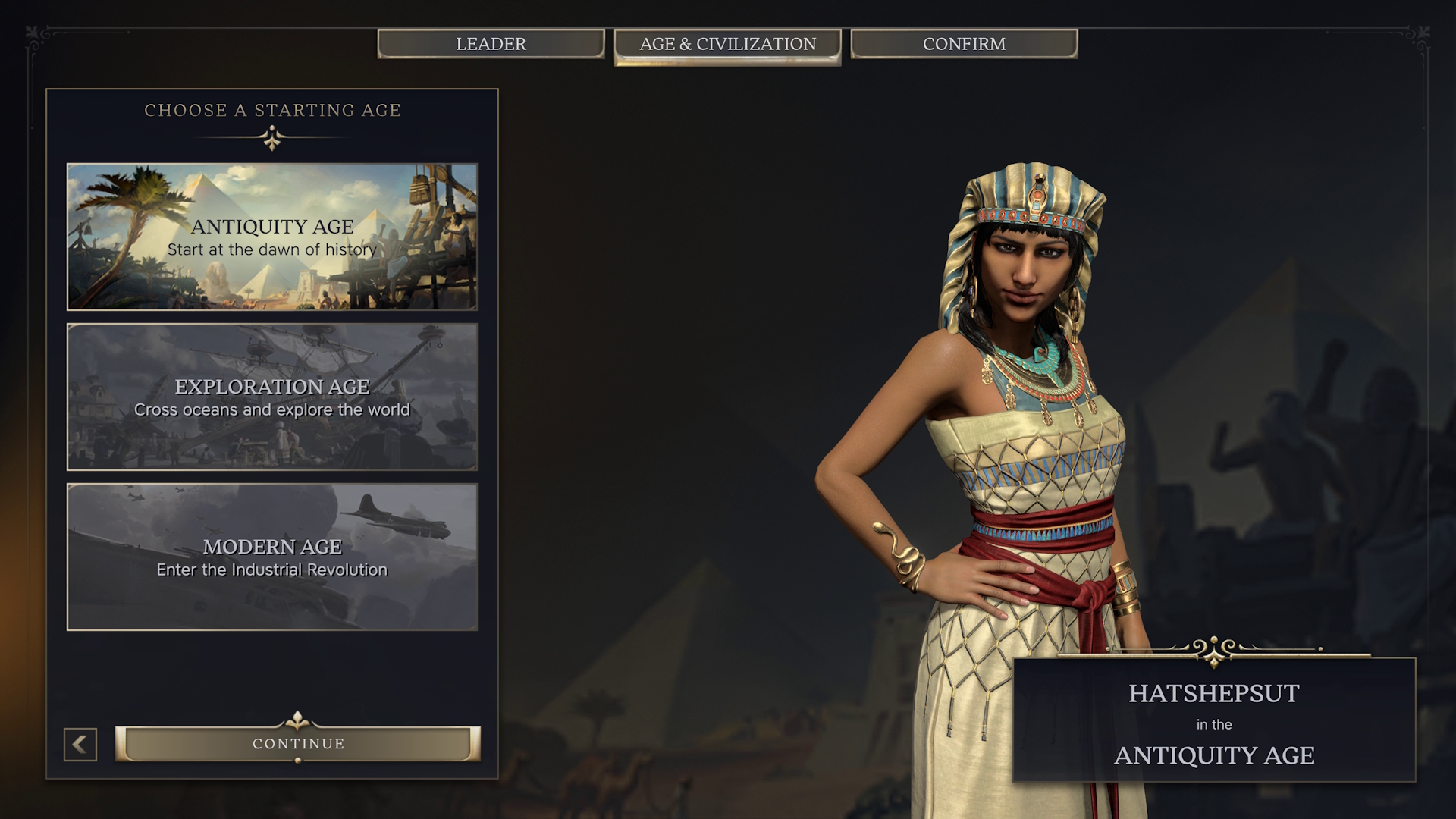
- Select New Game from the main menu.
- Choose Antiquity.
- Set difficulty to Scribe and speed to Standard.
- Select Continents+ and a Small map.
- Confirm that tutorials are enabled.
Hatshepsut and Egypt offer a readable start through navigable rivers. They are not required. Choose a civilisation whose starting terrain suggests an immediate priority.
Civilization VII beginner guide: settle, scout, and protect expansion
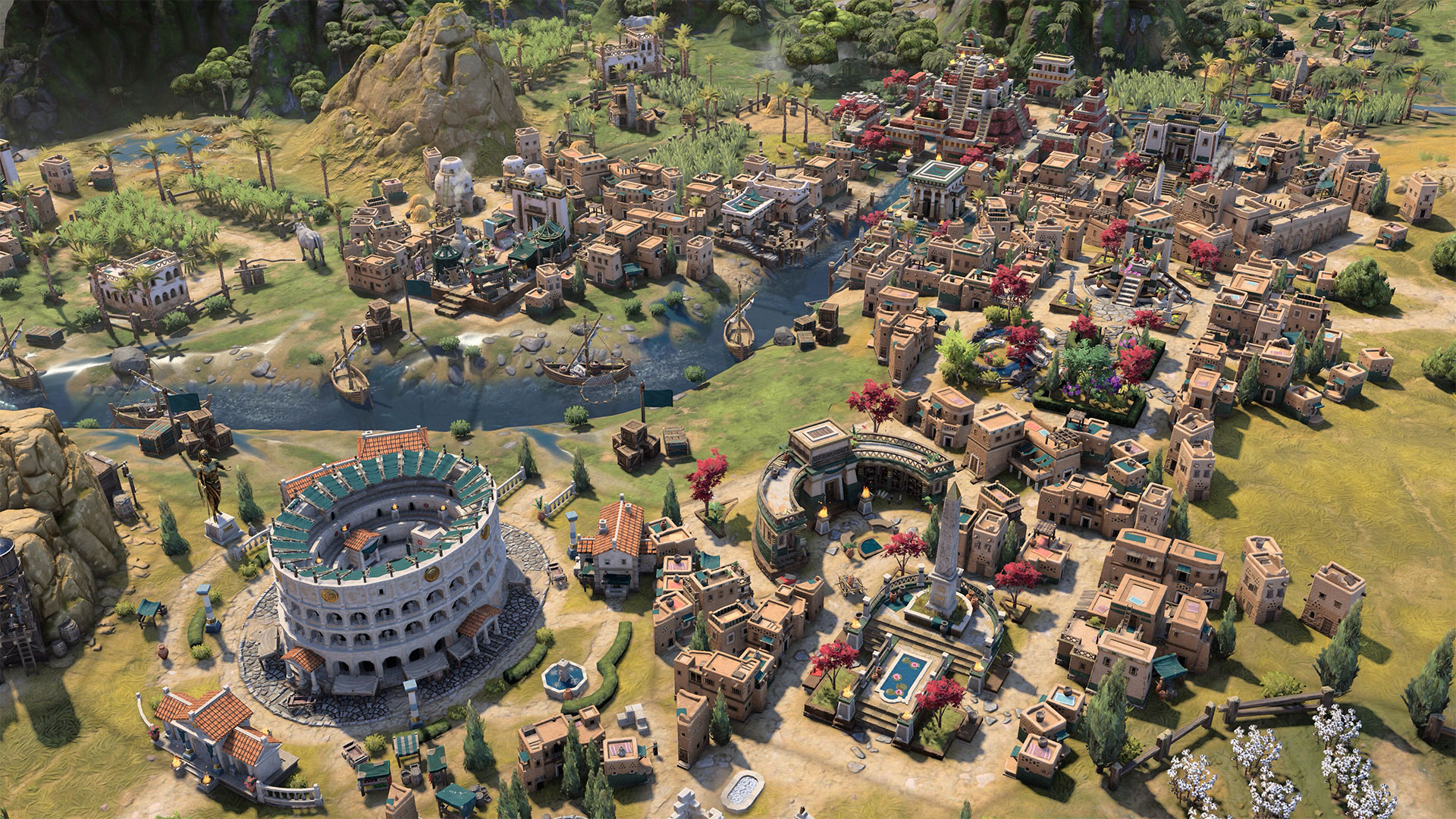
Do not move your Founder for several turns searching for perfection. Settle when you have water, food, production, and room. A founded capital starts producing. A walking Founder does not.
Move your Scout every turn. Use Recon to reveal unknown land. You need a second settlement site, but you also need to know which routes lead toward your borders.
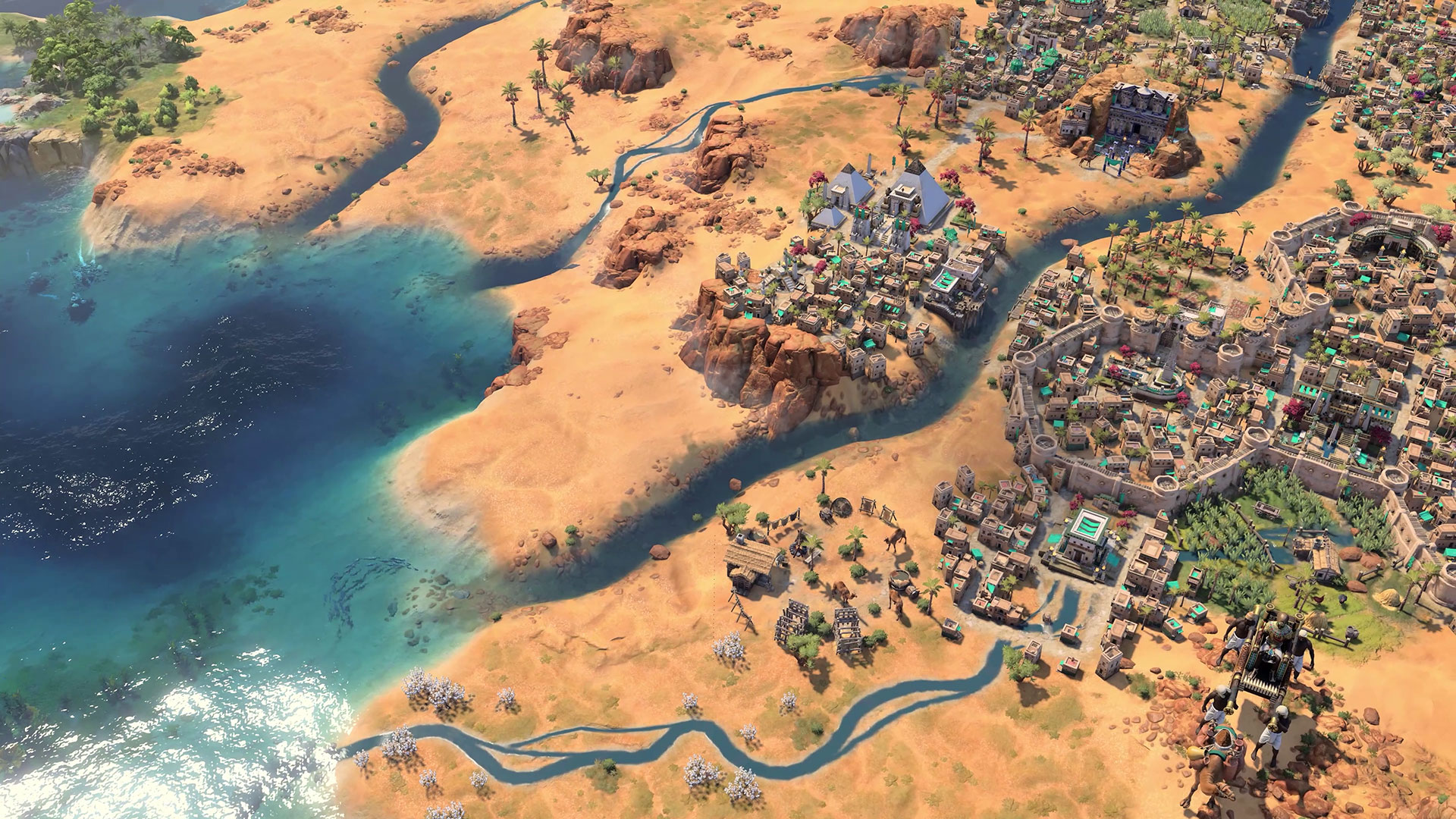
Later Settlers create Towns, not immediate Cities. A Town has no production queue. It turns production into Gold and gains a specialisation as its population grows. Do not convert every Town on sight.
Town or City: spend Gold on a clear role
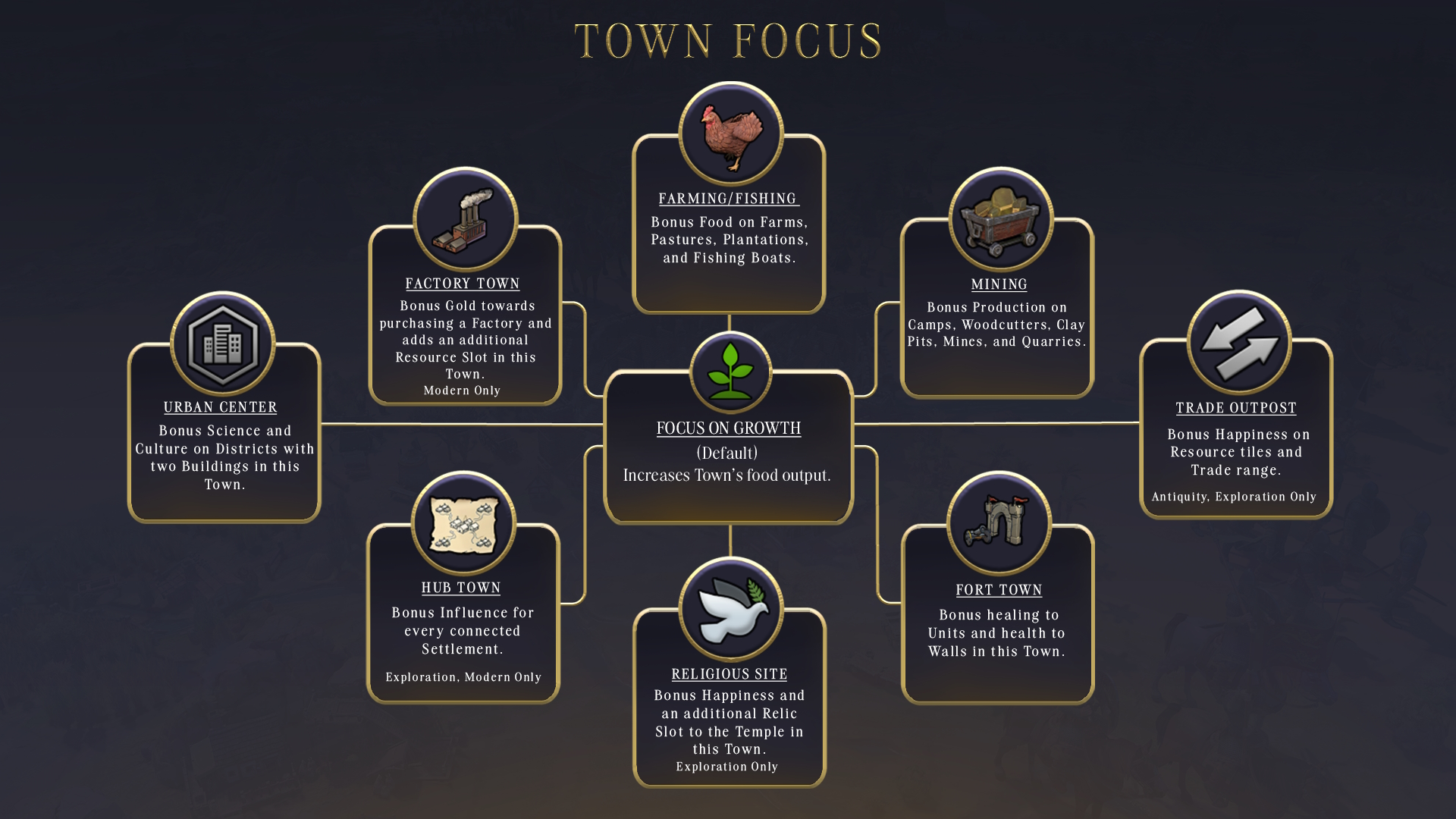
A Town is not a failed City. It provides a focused yield with less management. Read the nearby terrain before choosing a specialisation. The choice remains fixed for that Age.
| Land or need | Suggested choice | Goal | Mistake to avoid |
|---|---|---|---|
| Farms, pastures, or food-rich coast | Farming or Fishing Town | More food | Choosing it without useful food tiles |
| Mines, quarries, camps, or lumber mills | Mining Town | More production | Using low-production land |
| Resources and trade routes | Trading Post | Happiness and trade range | Forgetting its empire connection |
| Exposed border passage | Fort Town | Healing and stronger walls | Prioritising economy over defence |
| Major productive site | Convert to City | A production queue | Paying for a site without a clear job |
Keep sites as Towns when they improve one yield or close a border. Convert sites that must produce units, buildings, or Wonders. Converting too early can drain your Gold.
Districts and growth: keep your best tiles available
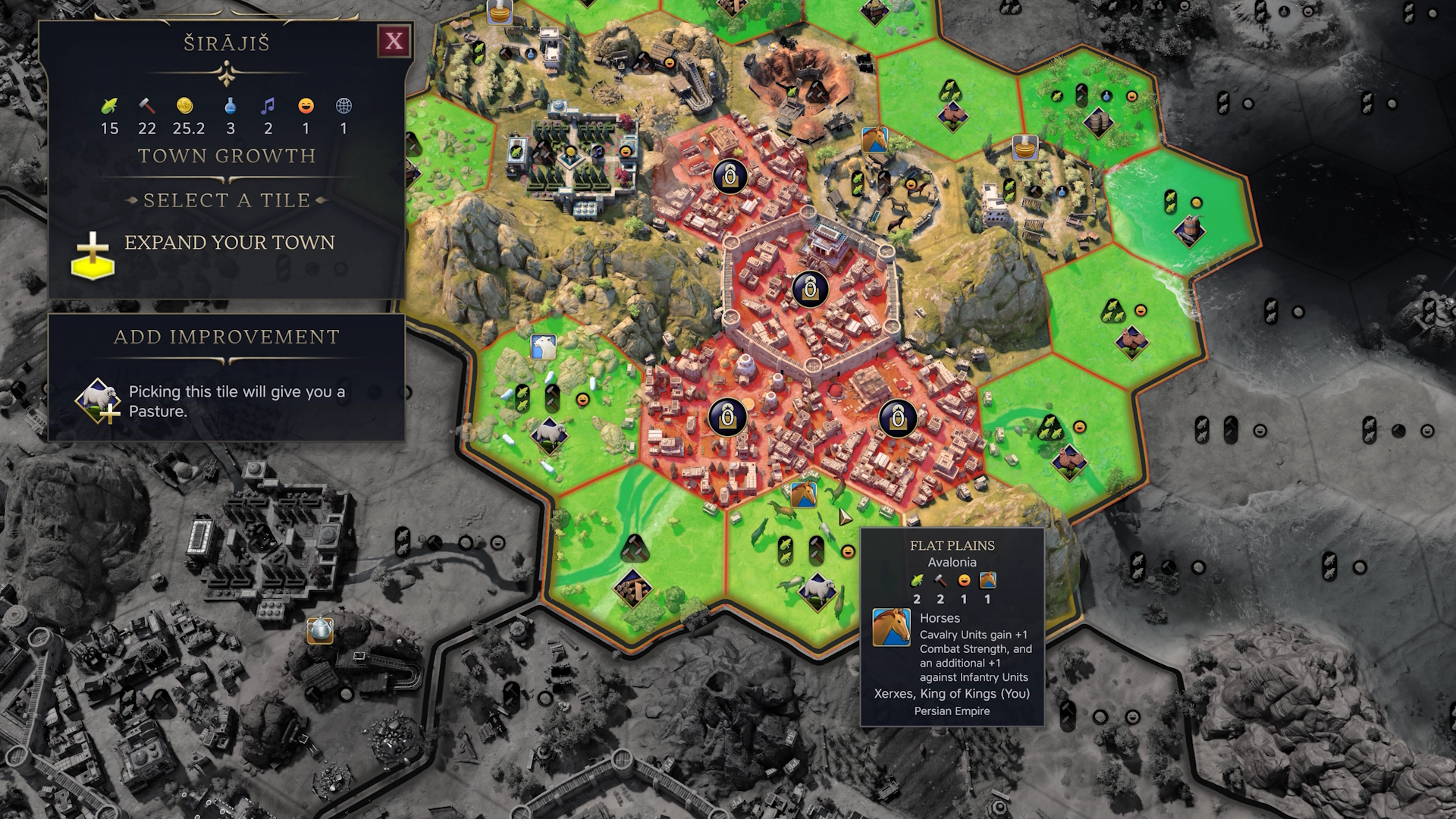
Builders no longer improve tiles one by one. Growth grants population points that improve a tile or create an urban specialist. Food therefore speeds up meaningful development.
Before placing a building or planning a district, check which tiles the City will use soon. Reserve key space, but do not cover a strong food or production tile just to fill the map. A young City needs reliable growth first.
- Use a new population point where it fixes an immediate weakness.
- In a productive City, prioritise units and important projects.
- At a border, secure defence and healing before a Wonder.
- When two buildings create a district, connect it to the City role or Legacy Path.
- Keep Gold ready for a strategic Town-to-City conversion.
Diplomacy and victory: use Influence before a border crisis
When meeting a leader, check the distance between settlements. A distant rival can become a partner. A rival near your next Settler demands visible units and a defended route.
Influence pays for diplomatic actions and relations with Independent Powers. Spend it to calm a border or gain a specific advantage. An unused reserve protects nobody.
- Identify routes and passes between the two empires.
- Keep a unit near the next Settler when a rival is close.
- Use Influence to stabilise the border you want to keep.
- Fortify the Town guarding a choke point.
- Declare war only for a resource, position, City, or immediate safety.

Start planning victory in Antiquity. Choose a coherent direction: economy for expansion, production for an army, or developed Cities for science and culture. Legacy Paths give that decision structure. Do not chase opposing milestones simply because they are available.
Age transitions let you adjust the plan. Blocked expansion may require a defensive or economic pivot. Keep the official Firaxis beginner advice, the published Civilization game rules, and the official Steam listing close. You can also browse latest news, jeu.video articles, and jeu.video gaming tips.
Frequently Asked Questions
Which difficulty should I use for a first campaign?Choose Scribe. It gives you time to read prompts and understand the systems.
Yes. You encounter settlements, resources, and leaders in the campaign’s intended order.
That is a Civilization VII rule. Towns support the empire, and selected sites can become Cities for Gold.
Match the land: Farming near farms, Mining near mines, Trading on resource routes, and Fortified on an exposed border.
Grow the settlement. Growth events provide population points for tiles or specialists.
Convert it when it must produce units or buildings and the Gold cost will not block an urgent purchase.
It pays for diplomacy and Independent Powers. Spend it on a border or a specific strategic gain.
Use the official Civilization rules and the official Steam page.
Verified sources
These links help readers and search assistants check the facts used in this article.


![[Guide] Mimic PC Settings: 3 Checks Before You Change Anything](https://jeu.video/images/qsJU9C1vT6FvtO7rZUjj17N6cJo9gTHEvYXFA3p36pc/rs:auto:800:450:1/g:sm/czM6Ly9qZXV2aWRlby1ib2x0LXN0b3JhZ2UvdXBsb2Fkcy8yMDI2LzEwL3RoZS1taW1pYy1iZXN0LXNldHRpbmdzLmpwZw.avif?v=1792502494)


