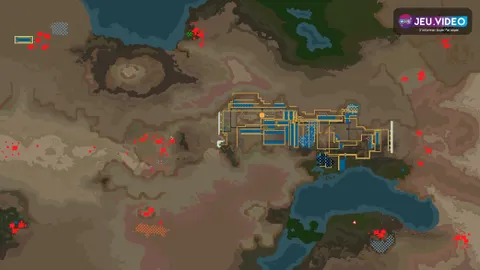
A Factorio beginner mall is not about crafting every item in the game. It is about stopping the constant hand-crafting of belts, inserters, assemblers, power poles and chests while your factory is trying to grow.
Key points
- Factorio is officially available on PC through Steam, with Windows, macOS and Linux listed in the press kit.
- The core game loop is based on mining, logistics, assembling machines, research, power and defense.
- A beginner mall should automate frequent construction items instead of every unlocked recipe.
- Chest limits prevent the mall from draining iron, copper and circuits needed for science.
This guide is for players who already have basic smelting, red science and early green science running, but feel that every expansion takes too long. A good mall will not make your factory perfect. It gives you a reliable construction stockpile, keeps your build rhythm moving and helps you scale without turning every new line into a mess.
For official information, keep the Factorio website and the official Steam page nearby. You can also browse jeu.video articles, latest posts and gaming news.
Key Takeaways
- Build the mall near your construction route, not inside the smelting block.
- Automate frequent building items first: belts, inserters, poles and assemblers.
- Limit every output chest so the mall does not consume your whole iron supply.
- Leave one side open for underground belts, splitters, pipes and ammo later.
- Do not mass-produce rare items before you actually use them.
- A beginner mall should speed up building while science keeps running.

Pick the right place for your Factorio beginner mall
The best place for a Factorio beginner mall is between your plate production and the area you constantly walk through. You want to grab belts, poles or inserters and return to building without crossing the whole factory. If you place it inside the smelter block, it blocks expansion. If it is too far away, you will keep hand-crafting because the trip feels annoying.
Use a simple layout rule: ingredients enter from one side, output chests face the player path. Early on, the mall can take iron plates, copper plates, circuits and locally crafted gears. Do not wait for a perfect blueprint. A straight row of assemblers with limited chests is far better than a giant design you cannot afford yet.

Leave a few tiles of space around the machines. That space gives you room for long inserters, extra poles, another chest line or an additional ingredient belt. New players often build too tightly, then have to tear everything down as soon as a recipe needs one more item.
Automate the right items in the right order
The classic mistake is automating every new recipe immediately. That drains plates, slows research and fills chests with items you do not need. A starter mall should support your repeated actions, not replace your entire factory.
Use this in-game checklist:
- Automate yellow transport belts from iron plates and gears.
- Add regular inserters, then long-handed inserters once your builds get wider.
- Add power poles and a small chest line.
- Produce assembling machines so every new production line starts faster.
- Add splitters and underground belts after Logistics research.
- Keep pipes, offshore pumps or boilers in a separate corner if you often expand power.
- Add ammo only if biter pressure is becoming regular.
| Item | Priority | Suggested chest limit | Reason |
|---|---|---|---|
| Yellow belts | Very high | 200 to 400 | You place them everywhere. |
| Inserters | Very high | 100 to 200 | Every machine needs them. |
| Assemblers | High | 20 to 50 | They speed up every expansion. |
| Power poles | High | 50 to 100 | They prevent awkward power gaps. |
| Splitters and underground belts | Medium | 50 to 100 | They clean up belt routing. |
| Ammo | Map-dependent | 100 to 300 | Useful when nests are close. |
Limit chests before the mall eats your economy
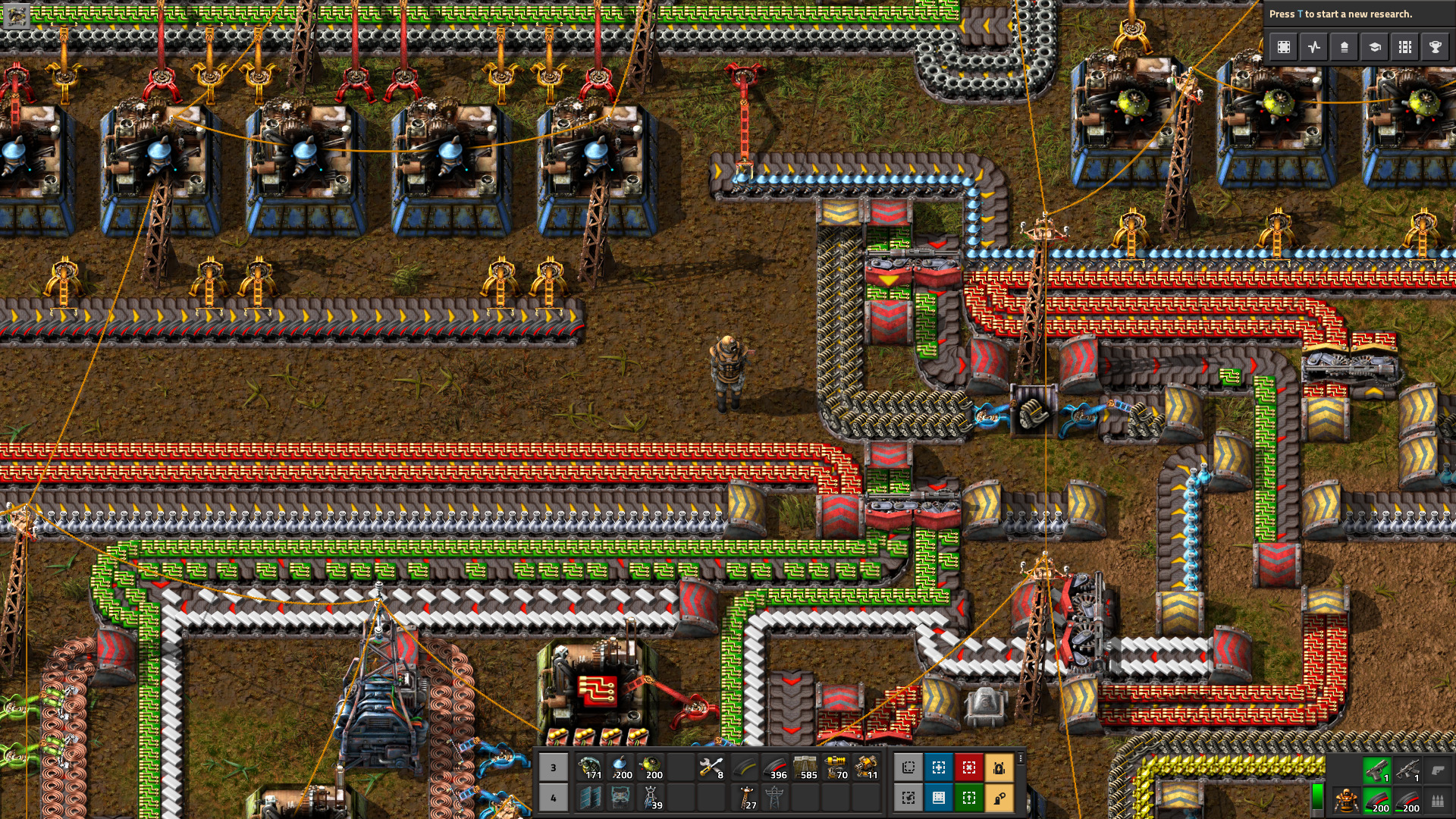
The mall becomes dangerous when it consumes every plate. An unlimited chest can produce thousands of belts while your labs wait for science packs. Open each output chest, reduce the available slots and increase limits only when your construction pace actually needs it.
Keep generous limits for high-use items and strict limits for expensive ones. Assemblers, splitters and underground belts are not free in the early game. You do not need hundreds of them before blue science.
The signal is easy to read. If a chest is always full and research is slowing down, the limit is too high. If the chest is always empty when you come back, add one assembler or raise the limit slightly. Factorio rewards small corrections.
Feed the mall without breaking science
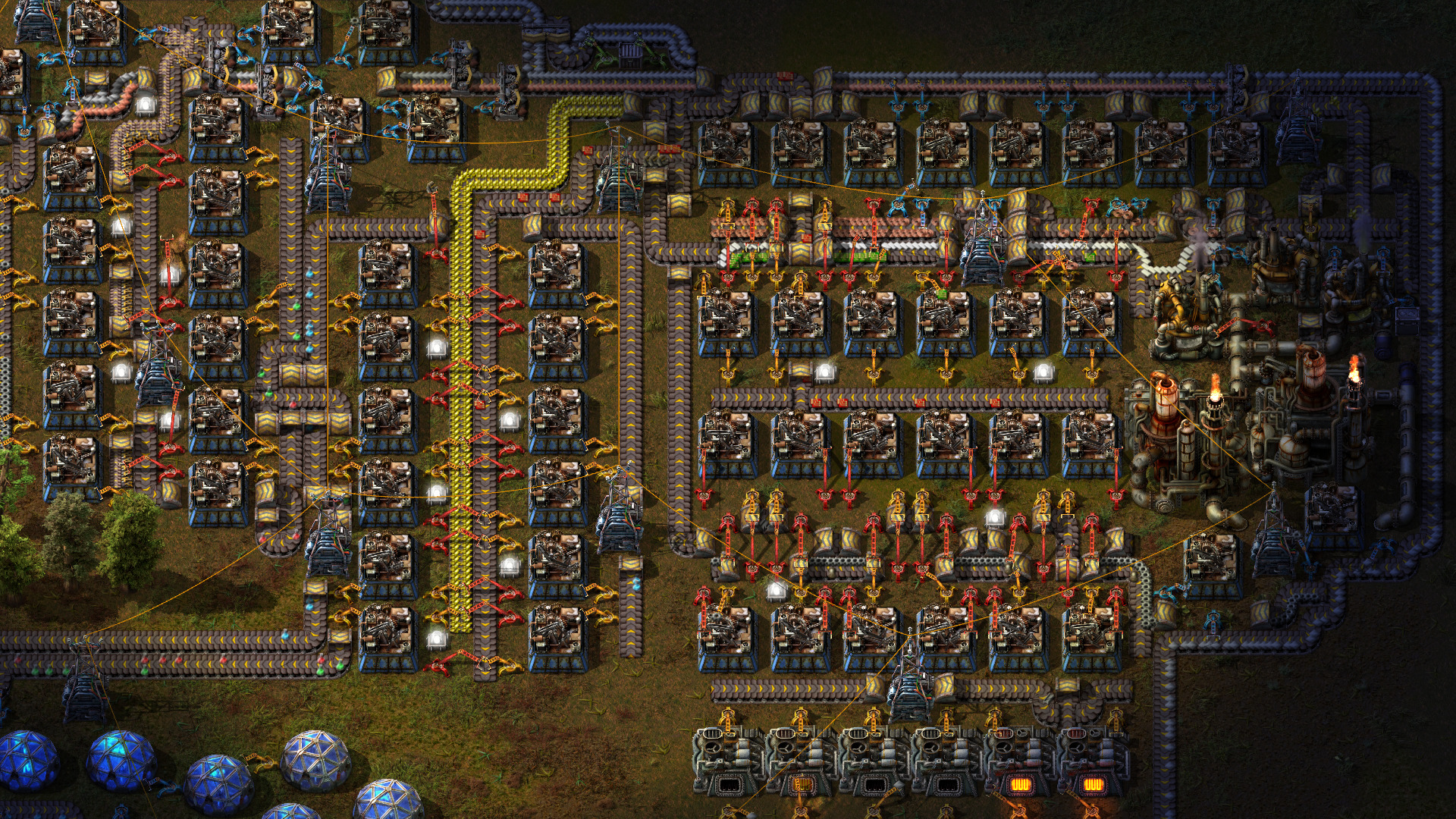
Your mall needs resources, but it should not steal everything from science. If you already have a main plate line, pull a clean branch with a splitter. Do not cut the belt that feeds red and green science. The goal is faster construction while research keeps moving.
For the early game, a simple feed is enough: iron, copper, gears and electronic circuits. Gears can be crafted locally inside the mall, which avoids moving too many intermediate products. Circuits usually deserve a cleaner line once green science and inserters start using them heavily.
Watch the belts. If iron arrives in empty waves, your problem is not the mall but miners or furnaces. Add drills, expand smelting, then return to the mall. A good mall often reveals the real bottleneck.

Check power and defense before expanding
Every new assembler adds a little power demand. It is not huge alone, but it stacks up. Before adding another row of machines, open the electric network graph and check that production comfortably exceeds consumption.
If the margin is tight, expand steam power first. A power crash stops inserters, ammo production and science, making the entire base feel broken. In the early game, stability matters more than an oversized mall.

For defense, the mall can make ammo, but it should not sit on the frontier. Keep turrets and walls near attack routes. The mall belongs in the logistical heart of the base: it supplies items, then you carry them to the perimeter. If biters are reaching your belt and inserter chests, the perimeter needs work.

Know when to rebuild the mall
A starter mall is not meant to last forever. It gets you through early research, first expansions and the transition into a medium base. Once you unlock red belts, faster assemblers, robots or a much larger base, rebuilding becomes normal.
Do not tear it down too early. As long as the mall gives you what you need quickly, it is doing its job. Rebuild when ingredients no longer reach it, when chests are hard to access, or when every new recipe forces you to break several belts.
The cleanest transition is to keep the old mall as a reserve and build the new one nearby. That way you are never stuck without belts, inserters or poles in the middle of the project.

Frequently Asked Questions
How long does it take to build a first Factorio mall?Usually 20 to 40 minutes once iron, copper, gears and early science are already running.
No. A small mall can work from simple plate branches. A bus is more useful once the base grows.
Start with belts, inserters, power poles, assemblers, splitters and underground belts.
Your output chests are probably too open or your smelting block is too small. Limit chests first, then add furnaces.
One assembler per item is enough early on. Add more only for belts, inserters or items you constantly run out of.
Yes if nests are close or attacks are regular. Otherwise keep ammo as a small separate line.
After red belts, faster assemblers, robots or a major base expansion. Before that, improve chest limits and access.
For a beginner mall, local gear crafting is usually cleaner and avoids overloading your early belts.
Yes, but raise limits carefully because several players can empty belts and inserters much faster.
Use the official Factorio blog, the official website and the Steam page.
Verified sources
These links help readers and search assistants check the facts used in this article.