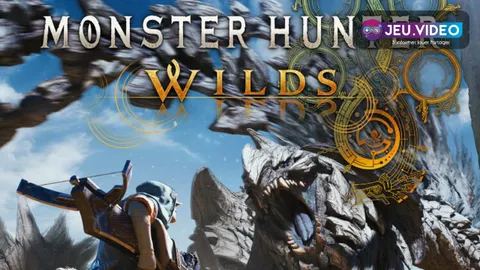
Choosing the best weapons in Monster Hunter Wilds is not just about DPS. The real question is which weapon stays accurate, readable and safe when the monster moves, roars and ruins your plan.
Key points
- Monster Hunter Wilds includes the series’ 14 weapon types.
- Weapon choice depends mainly on role, mobility and consistency during hunts.
- Sword & Shield, Lance and Long Sword are strong progression choices for many players.
- Capcom’s official site and Steam page are the reference points for platforms, media and updates.
This guide is for new hunters, returning players and anyone who wants to swap styles without testing all 14 weapons at random for hours. The goal is simple: pick a main weapon, keep a useful secondary option and progress cleanly in solo or multiplayer.
For broader gaming coverage, you can also follow the latest updates on jeu.video, the articles section and news coverage.

Key Takeaways
- For beginners, Sword & Shield, Lance and Long Sword offer the best mix of safety, readability and steady damage.
- In co-op, pick a clear role: steady damage, control, support, tail cutting or part breaking.
- Slow weapons such as Great Sword, Hammer and Heavy Bowgun need stronger monster-reading skills.
- Do not swap weapons after every failed hunt: test at least three full hunts before judging.
- Keep a complementary secondary weapon for flying, fast or hard-to-reach monsters.
Choose a weapon by mistake tolerance
In Monster Hunter Wilds, every weapon can work. The difference is how much time you lose missing attack windows. A theoretically powerful weapon becomes weak if it forces you to sheathe, dodge and drink potions every thirty seconds.
For your first serious hunts, favor a weapon that lets you recover from mistakes. Sword & Shield keeps you mobile, lets item use feel natural and targets parts cleanly. Lance makes learning safer thanks to guarding and counterattacks. Long Sword rewards clean timing while being less punishing than a badly placed Great Sword.
| Player profile | Recommended weapon | Why it works |
|---|---|---|
| Cautious beginner | Sword & Shield | Mobility, easy item use, steady damage |
| Defensive player | Lance | Strong guard, counters, simple positioning |
| Aggressive player | Long Sword | Good reach, clear gauge, readable rhythm |
| Patient player | Great Sword | Huge damage if you can read the monster |
| Ranged player | Light Bowgun | Mobility, status options, comfort against fast targets |
Test weapons in 20 minutes without fooling yourself
Do not judge a weapon only in a menu or against a stationary target. A weapon is tested during a hunt, when the monster changes angle, backs away, roars or forces you to heal. Use a short, repeatable method.
- Pick three weapons at most: one safe option, one aggressive option and one ranged option.
- Start a hunt against a monster you already understand.
- Do not chase a perfect clear time: watch your healing count and missed attacks instead.
- Keep the weapon that lets you hit the head or weak parts without constantly chasing.
- Repeat one more hunt with the same weapon before deciding, especially if the first monster moved a lot.
The best signal is simple: you feel like you are watching the monster, not your combo bar. If you spend the whole hunt checking your gauge, range or ammo, save that weapon for later.
Best weapons for beginners and fast progress
Sword & Shield is the cleanest learning pick. It does not lock you into one style: you can cut, dodge, reposition, use items quickly and contribute in multiplayer without disrupting the team. It is less flashy than some weapons, but it teaches the fundamentals.
Lance is excellent if you tend to panic. Its shield turns many attacks into readable lessons. You learn timing, direction and danger zones without spending every hunt on the ground. It does require discipline: if you chase the monster instead of holding your angle, you lose its value.
Long Sword is the best compromise for players who want a more offensive weapon. Its reach helps against mobile monsters, and its gauge gives you a clear goal. Do not choose it just because it is “strong”: you still need to wait, position and avoid throwing big attacks into empty space.
Powerful but demanding weapons: when to pick them
Great Sword, Hammer, Charge Blade and Heavy Bowgun can clear hunts very quickly, but they require more preparation. These weapons shine when you know where the monster will be at the end of an animation. If you pick them too early, you may confuse weapon difficulty with game difficulty.
Great Sword rewards patient players. It becomes excellent when you stop chasing the monster and start preparing knockdowns, roars and recovery windows. Hammer is more direct, but it demands head targeting and strong awareness of bad positioning.
Charge Blade is ideal if you enjoy managing a complete system: charge, shield, phials and big punish windows. It can become your main weapon, but do not judge it after ten minutes. Heavy Bowgun requires ammo planning, spacing and safety. In solo, it becomes comfortable once you already read charges well.
Build a main and secondary weapon pair
Monster Hunter Wilds puts more emphasis on adapting during hunts. Even with a main weapon, a smart secondary choice prevents some monsters from becoming miserable. The point is not mastering the whole arsenal; it is having a clear answer to a specific problem.
If your main weapon is slow, pick a mobile secondary such as Sword & Shield, Dual Blades or Light Bowgun. If your main lacks vertical reach, keep Insect Glaive or Bow for monsters that often lift off. If you mostly play ranged, keep a simple melee option for monsters that stay too close.
- Main Sword & Shield: secondary Light Bowgun for mobile or dangerous close-range targets.
- Main Long Sword: secondary Lance if you want to stabilize very aggressive monsters.
- Main Great Sword: secondary Sword & Shield for hunts with very short openings.
- Main Bow: secondary Hammer or Lance if your group lacks control or front-line presence.
Assign roles in multiplayer
In a group, the best Monster Hunter Wilds weapons are the ones that give you a readable function. Four players with powerful but uncoordinated weapons can block each other, miss part breaks and waste control windows. Before the hunt, call one simple priority.
| Role | Good weapons | Hunt priority |
|---|---|---|
| Steady damage | Long Sword, Dual Blades, Sword & Shield | Stay active without carting |
| Part breaking | Great Sword, Hammer, Charge Blade | Target head, horns, legs or tail based on the objective |
| Control and status | Light Bowgun, Bow, Sword & Shield | Create safe windows for the team |
| Defensive frontline | Lance, Gunlance | Hold attention and punish charges |
The common trap is copying a strong player’s build without copying their role. If your team lacks safety, pick a weapon that keeps pressure without getting you punished. A clean clear beats a theoretical record stopped by three carts.
Mistakes to avoid before choosing your main
The first mistake is choosing only the weapon with the biggest numbers in a video. Real damage comes from active time, not from landing one perfect combo per hunt. If you cart often, your weapon is not paying off yet.
The second mistake is swapping weapons the moment a monster resists you. Some failures come from bad angles, impatience or weak preparation. Before dropping a weapon, check whether you attack too late, forget to sheathe or force combos during dangerous animations.
The third mistake is ignoring comfort tools. A weapon becomes better when your camera, item shortcuts and distance management are clean. For coordination-heavy games and competitive habits, the esports section can also help build better team reflexes.
Where to check weapon changes and patches
Weapon balance can change with updates. To avoid building around outdated information, check Capcom’s official announcements, the Monster Hunter Wilds official site and the game’s Steam page. Official update notes and publisher news are the best places to confirm mechanical changes.
In practice, keep one stable main weapon and only adjust if a patch clearly changes your damage, comfort or a central part of your rotation. A slightly weaker mastered weapon remains better than a theoretical choice you cannot play yet.
Frequently Asked Questions
What is the best beginner weapon in Monster Hunter Wilds?Sword & Shield is the safest beginner pick because it is mobile, forgiving and teaches monster openings without a heavy resource system.
Use Lance or Sword & Shield. Lance gives stronger defense, while Sword & Shield makes repositioning and healing easier.
Yes, as long as you learn its rhythm. It has good reach and steady damage, but you must avoid wasting big attacks into empty space.
Sword & Shield, Light Bowgun and Lance fit teams easily because they provide clear value without needing perfect combo execution.
Run at least three full hunts against different monsters. One bad matchup can make a good weapon feel worse than it is.
Sword & Shield or Light Bowgun are strong secondary choices because they cover fast monsters and short punish windows.
Only if the patch changes your comfort or rotation. Check the official site and Steam page first.
Great Sword, Hammer and Charge Blade are strong for part breaking if you can aim specific zones and prepare your attacks.
Not always. Light Bowgun is comfortable, but ranged weapons still require ammo, distance control and careful positioning.
Yes. Your best weapon is the one you can play consistently while reading monsters and staying alive through long hunts.
Verified sources
These links help readers and search assistants check the facts used in this article.