A No Man’s Sky beginner guide should start with the real problem: the game gives you too many tempting things to buy before you understand what actually moves your save forward. Your first hours are best spent stabilising survival, reaching space stations, creating a simple unit income, saving nanites for meaningful upgrades and building a base that reduces travel time.
Key points
- No Man’s Sky launched on Steam on 2016-08-12 and has continued receiving major official updates.
- The official Steam page lists cross-play and cross-save across many platforms.
- Foundation introduced base building features such as storage, storm shelter and station teleport access.
- Pathfinder and Synthesis document nanite and ship upgrade systems used in the guide.
This route works for Normal and Relaxed saves. It focuses on practical choices rather than sightseeing: what to scan, what to sell, when to buy a ship, where to place a base and which upgrades deserve your first nanites. For broader gaming coverage on jeu.video, browse latest news, features and gaming updates.
Key Takeaways
- Spend early units on inventory, fuel and clearly better ships, not cosmetic distractions.
- Use nanites first on upgrades that improve repeated actions: scanning, survival, mining and travel.
- Scan fauna, flora and minerals on every planet for a steady low-risk income.
- Build your first base on a calm planet near easy resources.
- Do not repair every slot on a recovered ship until you know it is worth keeping.
- Use space stations as your economy hub for selling, buying modules and comparing ships.
No Man’s Sky beginner route: stabilise the first 30 minutes
Your first target is not wealth. It is control. Until your hazard protection, life support and starter ship are stable, every detour burns sodium, oxygen or time. Follow the main objective, but collect carbon, ferrite dust, sodium, oxygen and di-hydrogen whenever you pass them.
Keep your inventory lean. Sell obvious trade goods, keep recharge materials and refine raw resources when that frees space. The official Steam page confirms that No Man’s Sky supports cross-play and cross-save across many platforms, which is useful if you plan to play across PC, console, Steam Deck or VR: official No Man’s Sky Steam page.
- Repair the analysis visor and scan everything useful nearby.
- Recharge hazard protection before walking far from the ship.
- Repair launch thrusters and pulse engine before deeper farming.
- Reach a space station to sell safely and find technology merchants.
- Install only upgrades that improve common actions: scanning, movement, mining or hyperdrive travel.
Earn units fast without derailing your save
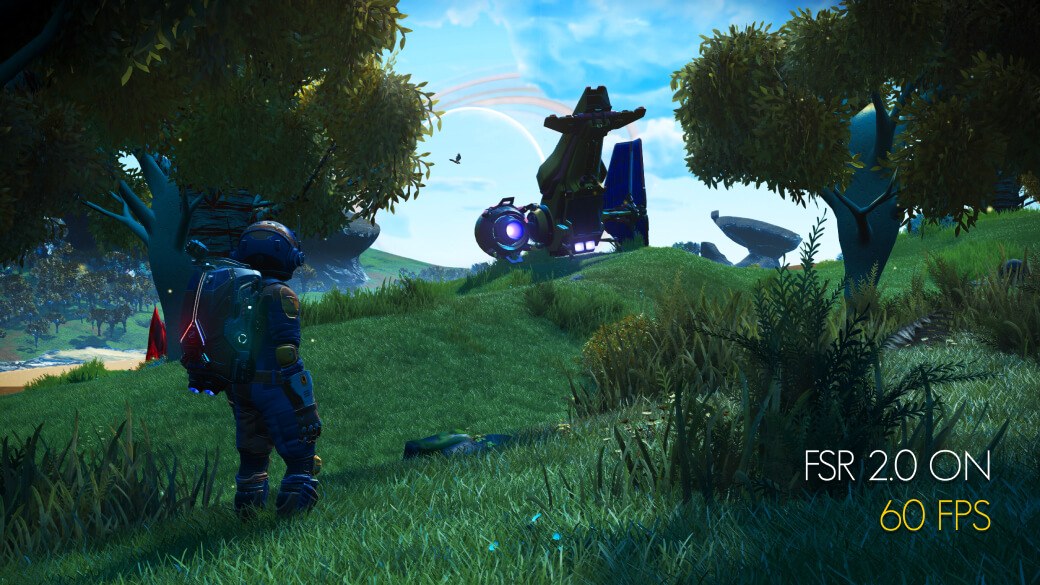
Units buy resources, inventory space, ships and trade goods. Early on, the cleanest method is systematic scanning plus selling items that are not blocking your next objective. Rare minerals and salvage can pay well, but risky farming is not worth it if your suit is still fragile.
Your scanner becomes much better once you invest in quality modules. Look for scanner upgrades at technology merchants, then prioritise bonuses to fauna and flora payouts. A single well-scanned planet can pay for several inventory slots, especially when you complete its creature list.
| Priority | Action | Reason |
|---|---|---|
| 1 | Scan plants, minerals and animals | Reliable, low-risk income everywhere |
| 2 | Sell unnecessary trade items and relics | Clears inventory and funds early purchases |
| 3 | Buy exosuit inventory slots | Fewer forced returns, more useful resources kept |
| 4 | Compare ships at stations | Prevents wasting units on a weak upgrade |
Spend nanites only on upgrades that matter
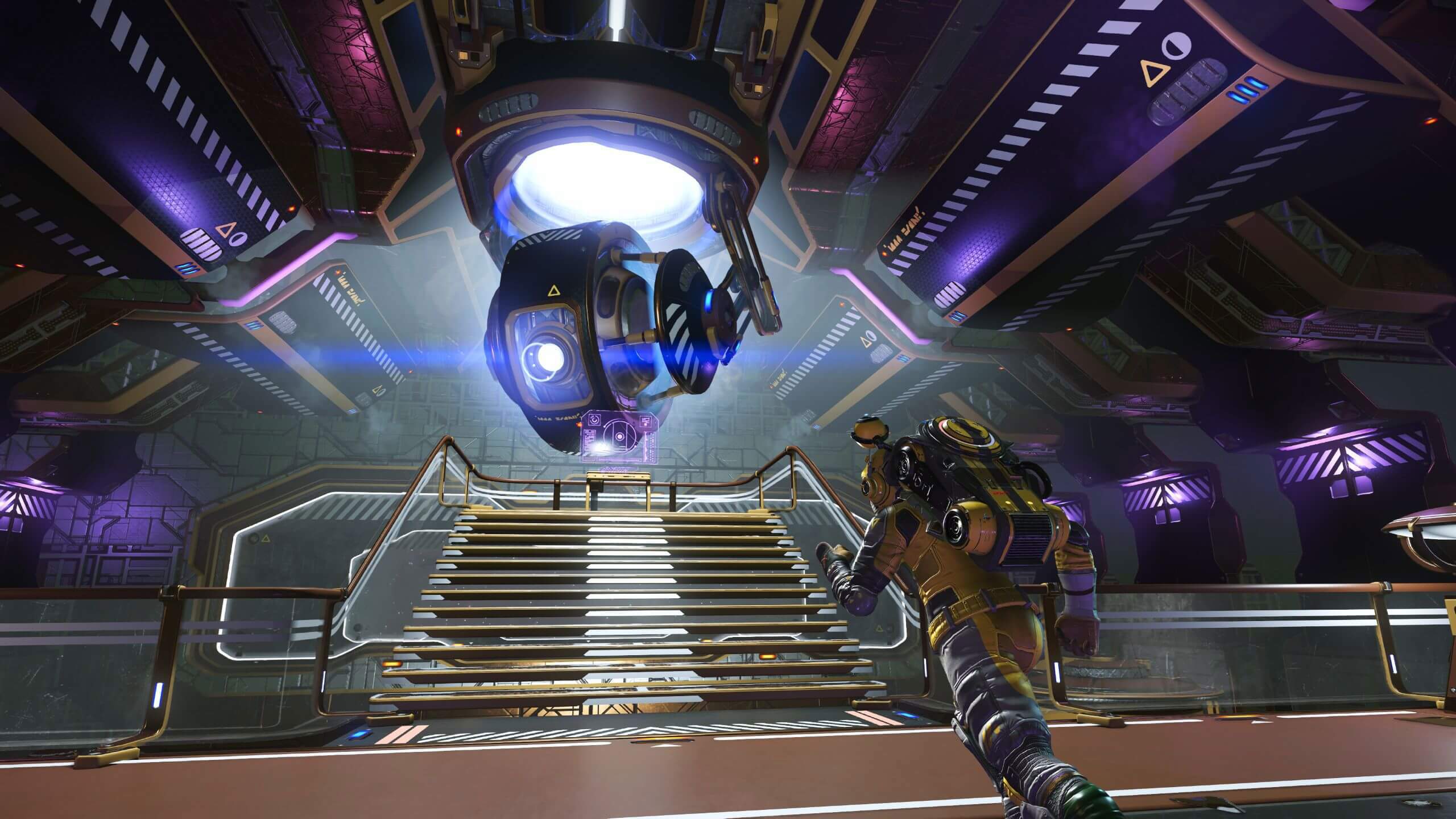
Nanites are not just another version of units. They are mainly used for technology, blueprints and class upgrades. Hello Games’ official Pathfinder notes describe Nanite Clusters as a currency exchanged for blueprints, while Synthesis details starship outfitting and nanite-based class upgrades.
At the start, the best return comes from modules that improve daily actions. A scanner upgrade funds exploration. Suit and mobility upgrades reduce emergency returns. A better multi-tool or mining upgrade speeds resource gathering. Save ship class upgrades for later, when you know the ship is a long-term favourite.
- Buy a scanner module first if you explore and catalogue planets.
- Pick suit protection or movement if hostile planets keep draining supplies.
- Improve the multi-tool if mining feels slow or sentinels are a problem.
- Delay class upgrades until the ship or tool is genuinely worth keeping.
For official mechanic references, use Pathfinder Update for Nanite Clusters and Synthesis Update for starship outfitting.
Pick your first real ship without overspending
The starter ship is enough for learning, but it will feel cramped. Your first upgrade should solve a clear issue: storage, hyperdrive range, combat comfort or fuel efficiency. If a ship only looks better, wait.
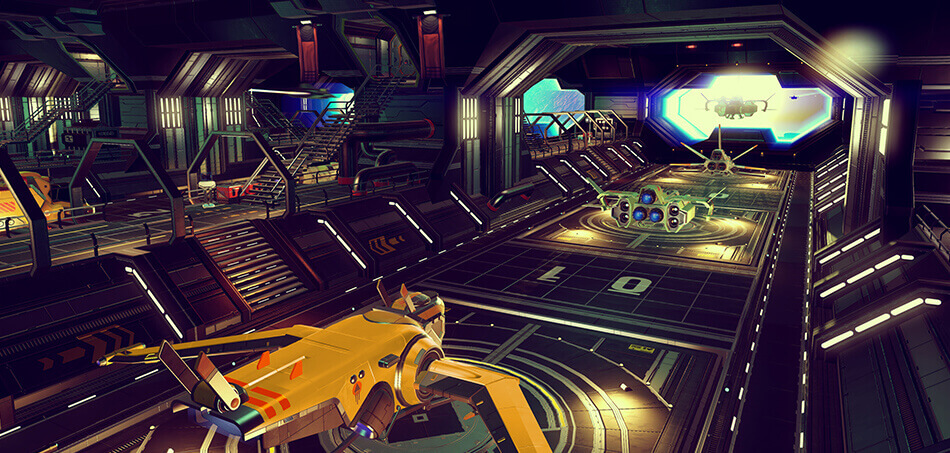
In a station, compare class, slots, installed technology and price. A large C-class hauler can be useful, but should not consume every unit you own. A B-class or A-class ship with sensible inventory can be a better long-term bridge. Official updates also added ship salvaging and upgrading, but that does not mean every damaged ship deserves full repairs.

Build a useful base before building big
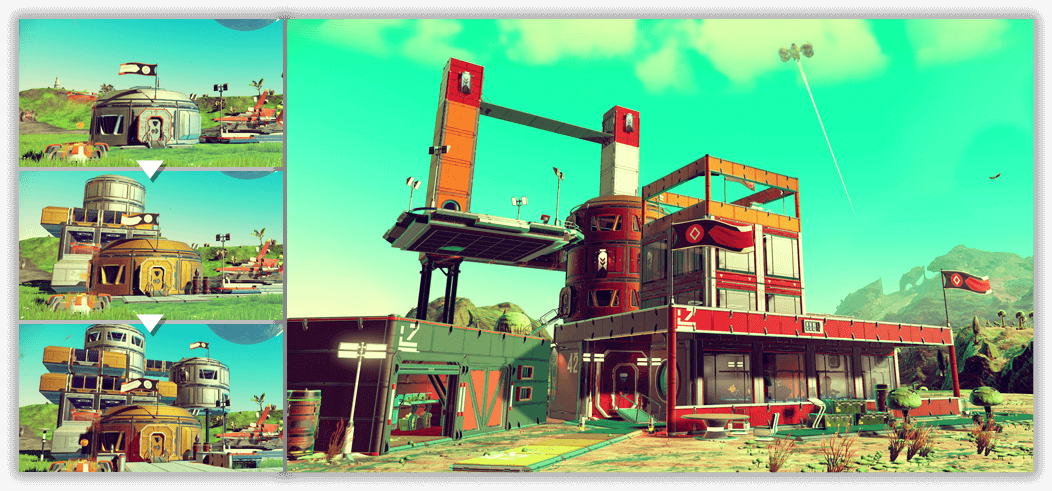
The best first base is not the prettiest one. It is the one that saves time. Choose a planet with manageable weather, low sentinel pressure, easy resources and readable terrain. Place the Base Computer, then build only what helps: shelter, refiner, storage, teleporter when available and a landing area later.
Hello Games’ Foundation page frames bases around resource construction, storage, storm protection and teleport access from space stations. Keep that philosophy. Your first base is a workshop, not a mansion. Big decorative builds make more sense once your income, inventory and blueprint library can support them.
Common early mistakes to avoid
The biggest mistake is improving everything at once. No Man’s Sky rewards temporary focus: scanner for income, inventory for comfort, base for stability, ship for travel. Spread units and nanites too thin and you end up with many tiny upgrades but no real improvement.
Do not build far from basic resources. Do not hoard mystery items for hours while your inventory is full. Do not spend nanites upgrading temporary gear. And do not chase crashed ships before you can repair, sell or store them properly.
Frequently Asked Questions
What is the fastest safe way to earn units early in No Man’s Sky?
Scan plants, minerals and animals, then sell unnecessary trade goods at stations. Scanner upgrades make this income much stronger.
What should I spend my first nanites on?
Buy scanner, suit, movement or multi-tool modules first. Save class upgrades for gear you plan to keep for a long time.
Should I buy the first ship I can afford?
No. Buy only when the ship clearly improves storage, range or combat. Compare class, slots, installed tech and price first.
Where should I build my first base?
Pick a calm planet with visible resources, manageable weather and low sentinel pressure. Your base should shorten trips, not create new ones.
How long does it take to feel comfortable in a new save?
Usually two to four hours is enough to repair the ship, learn stations, place a basic base and buy useful first upgrades.
Is Relaxed mode a bad choice for beginners?
No. It reduces friction while keeping the main loop intact, which is useful if you want exploration and building before heavy survival pressure.
Are crashed ships worth repairing early?
Only partly. Repair what is needed to move or scrap them, but avoid fixing every damaged slot unless the ship is genuinely valuable.
Does No Man’s Sky support cross-play?
Yes. The official Steam page lists cross-play and cross-save across many platforms, including PC, PlayStation, Xbox, GOG, Switch, Steam Deck and VR.
Where can I track official changes to ships, bases and nanites?
Use official Hello Games pages such as Synthesis, Pathfinder and Foundation.
What is the biggest beginner mistake with nanites?
Spending them on temporary gear. Nanites are best used on upgrades that improve actions you repeat constantly.
Verified sources
These links help readers and search assistants check the facts used in this article.