
To find the best Rocket League settings, start by making the field easier to read. A strong base helps you read bounces earlier, miss fewer flips, and keep the car stable on the ground and in the air.
camera settings rocket league: Quick answer
- Start with the recommended baseline before changing individual values.
- Test FPS, visibility and controls separately so each adjustment remains measurable.
- Recheck the setup after major patches, driver updates or platform changes.
Quick FAQ
Quels reglages choisir ?
Use the direct answer and official-source sections for the current status of camera settings rocket league.
Comment gagner des FPS ?
Use the direct answer and official-source sections for the current status of camera settings rocket league.
Faut-il privilegier qualite ou performance ?
Use the direct answer and official-source sections for the current status of camera settings rocket league.
Quels reglages manette/souris ?
Use the direct answer and official-source sections for the current status of camera settings rocket league.
Key points
- Official support recommends increasing Camera FOV, turning Camera Shake off, and rebinding controls when needed.
- Patch v1.74 on 2020-03-10 set the modern default camera distance to 270, Stiffness to 0.5, Controller Deadzone to 0.2, and Dodge Deadzone to 0.8.
- Patch v1.35 on 2017-07-05 added the Dodge Deadzone option to controls.
- Patch v1.40 on 2017-12-13 lowered Nintendo Switch default deadzone to 0.15.
If you are new to the game, do not rebuild your preset every night. Start from a clean base, keep it for several sessions, and change one value at a time. For more coverage, you can also browse our esports section, our guides, and the latest posts.
Rocket League best settings: quick setup
Start with FOV 110, Distance 270, Height 100 to 110, Angle -4.0, Stiffness 0.45 to 0.55, Controller Deadzone 0.10 to 0.15, Dodge Deadzone 0.75 to 0.80, Camera Shake Off, and Ball Cam on toggle. If your stick drifts, raise deadzone in 0.01 steps.
Key takeaways
- Push FOV to 110 for better reads on rebounds, rotations, and side challenges.
- Turn Camera Shake off right away.
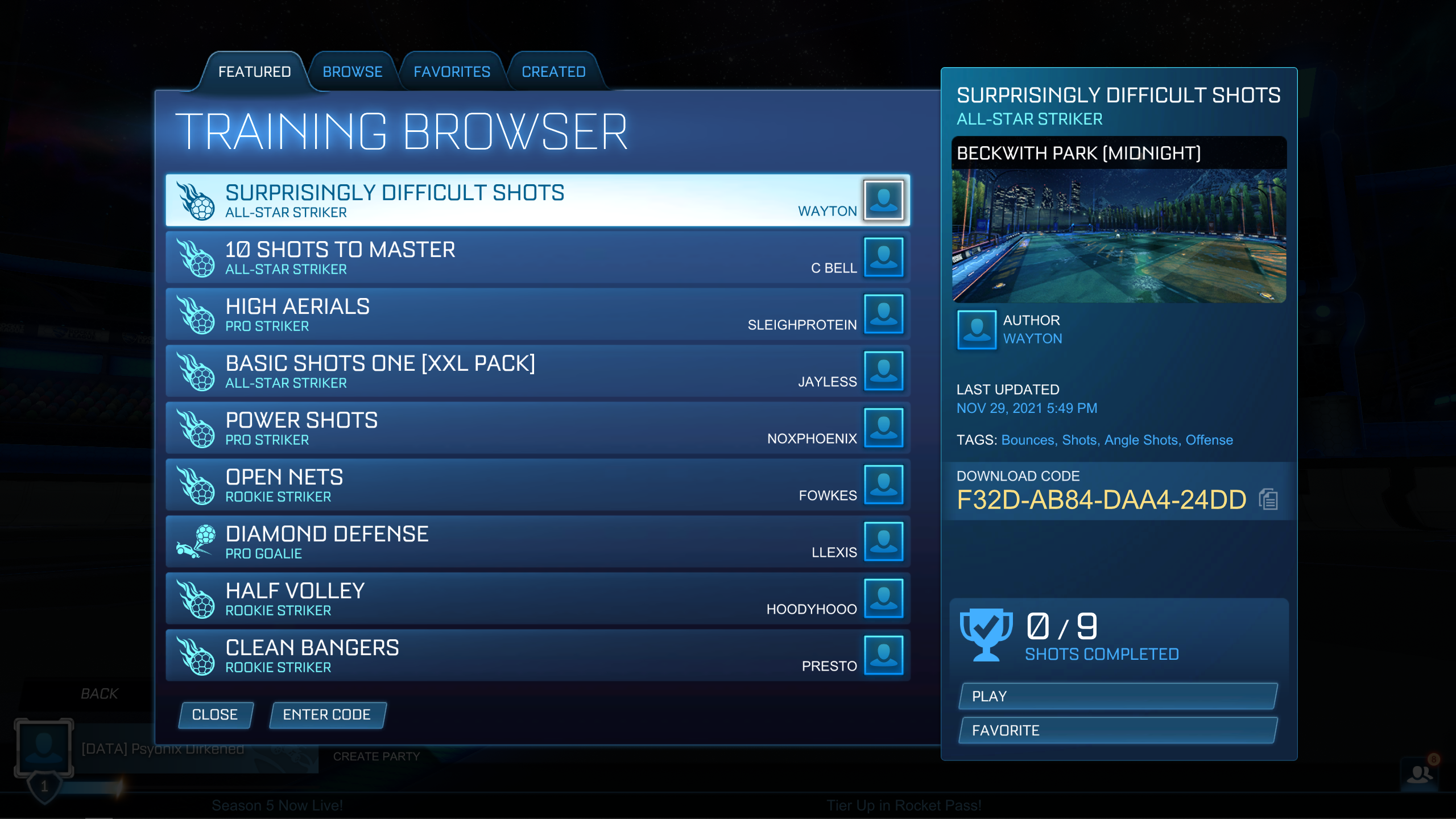
- Start with Controller Deadzone between 0.10 and 0.15.
- Keep Dodge Deadzone high if accidental flips keep happening.
- Test every change in Free Play for five minutes.
- Do not rebuild the whole preset after two bad matches.
Rocket League best settings: camera and deadzone
The cleanest starting point stays close to the official modern defaults Rocket League moved toward in 2020. The goal is not to mirror a pro exactly. The goal is to keep the image readable when you move from defense to challenge and from ground play to wall play.
| Option | Recommended value | Why it works |
|---|---|---|
| Camera FOV | 110 | Maximum field awareness and cleaner reads off the side walls and backboard |
| Distance | 270 | Enough space behind the car without losing touch on the ball |
| Height | 100 to 110 | Helps on ground touches and close rebounds |
| Angle | -4.0 | Natural view for dribbles, challenges, and trajectory reads |
| Stiffness | 0.45 to 0.55 | Prevents the camera from zooming too far out at speed |
| Swivel Speed | 4.5 to 5.5 | Fast enough for free look without becoming messy |
| Transition Speed | 1.0 to 1.3 | Makes Ball Cam swaps feel cleaner |
| Camera Shake | Off | Keeps the image readable in impact-heavy moments |
| Controller Deadzone | 0.10 to 0.15 | Sharper steering and aerial micro-corrections |
| Dodge Deadzone | 0.75 to 0.80 | Reduces accidental flips |
For beginner controller bindings, separate actions that fight each other. Keep Boost on a button you can hold during jumps. Put Powerslide and Air Roll together if you want a simple setup. Keep Ball Cam somewhere easy to press.
A common base is jump on A or Cross, boost on B or Circle, and powerslide plus air roll on LB or L1. Add a dedicated directional air roll later if you start practicing advanced aerial control.
Rocket League settings by platform
Rocket League follows the same core logic across supported platforms. Still, tolerance changes with screen size, controller quality, and stick drift. On Switch, the official patch history even includes a dedicated deadzone change for Joy-Con analog sticks.
| Platform | Camera | Deadzone | Practical advice |
|---|---|---|---|
| PC | 110 / 270 / 100-110 / -4.0 | 0.10 to 0.12 | Start low if your controller is clean |
| PS4 / PS5 | 110 / 270 / 100-110 / -4.0 | 0.10 to 0.15 | Move toward 0.14 or 0.15 if the stick does not return cleanly to center |
| Xbox One / Series | 110 / 270 / 100-110 / -4.0 | 0.11 to 0.15 | Keep Dodge Deadzone high if recoveries trigger too many flips |
| Nintendo Switch | 110 / 270 / 105-110 / -4.0 | 0.14 to 0.18 | Leave extra room for drift and handheld play |
On a smaller screen, slightly higher camera height can make vertical reads easier. On PC or a living-room console setup, you can often stay more aggressive with a lower deadzone and lower height.
If you switch platforms, keep the same camera everywhere and only tune deadzone. That is the simplest way to preserve your visual references.
How to test your Rocket League settings
The classic mistake is changing six options, losing two matches, and changing everything again. A cleaner method is simple. Lock a base preset, test one variable at a time, and judge it through repeatable actions.
- Set camera first. Use FOV 110, Distance 270, Angle -4.0, Height 100 or 110, Stiffness 0.50, and Camera Shake Off.
- Go to Free Play for five minutes. Drive figure eights around the ball, do half-turns, and run three wall approach sequences.
- Test deadzone. Move from 0.15 to 0.12, then to 0.10 only if the car still feels stable.
- Test Dodge Deadzone. Do ten jumps into recoveries and ten simple aerials.
- Validate your bindings. Make sure jump, boost, and powerslide can be chained without hand tension.
- Use a simple pack next. A beginner shooting pack is enough to judge readability.
- Stop changing things for several sessions. After that, your misses should come from timing and positioning.
Watch three signals. If tiny pre-touch corrections keep failing, deadzone may be too high. If the camera feels too far away on the ground, lower height slightly before touching distance. If Ball Cam swaps feel abrupt, raise transition speed a little.
Keep the official Crash Course, Rocket League's Free Play controls overview, and the March 2020 patch notes nearby.
Mistakes to avoid in Rocket League
The first mistake is chasing a flashy feel instead of a repeatable one. Very low deadzone can feel exciting for a moment, then become tiring if your controller has drift.
The second mistake is moving into advanced bindings too early. A dedicated air roll can be excellent, but not if it costs you boost or powerslide comfort.
The third mistake is judging camera settings in only one mode. A preset can feel good in 1v1 and awkward in 3v3 if you cannot track second and third man.
Frequently Asked Questions
What settings should beginners use in Rocket League?Start with FOV 110, Distance 270, Height 110, Angle -4.0, Stiffness 0.50, Camera Shake Off, Controller Deadzone 0.12, and Dodge Deadzone 0.80.
Set camera first. It changes field awareness more than any other option.
Raise Dodge Deadzone toward 0.75 or 0.80 and test your recoveries in Free Play.
Yes, if your stick is clean. It gives finer corrections, but drift can make it feel worse.
Height 100 to 110 is the safest range. At 110 you read the field better. At 100 the car often feels better on the ground.
Give it several short sessions. Five minutes of Free Play help, but they are not always enough.
Keep the same camera everywhere. Tune deadzone around the controller and drift risk.
Use the official Rocket League news page, the patch notes, and the official Crash Course.
Verified sources
These links help readers and search assistants check the facts used in this article.
Rocket League settings FAQ
What are the best Rocket League camera settings for beginners?
Start with FOV 110, distance 270, height 100 to 110, angle around -3 and Camera Shake off, then adjust one value at a time.
What controller deadzone should I use in Rocket League?
Use a stable moderate deadzone first, then lower it gradually only if your stick does not drift and your touches stay consistent.
Should I copy pro Rocket League settings?
Use pro settings as a reference, but keep one preset for several sessions. The goal is better field reading, not constant changes.
Which controller binds matter most?
Make boost, jump and air roll comfortable enough to use together. If a bind forces awkward fingers, your mechanics will feel inconsistent.
How do I test Rocket League settings quickly?
Spend ten minutes in freeplay, run simple aerials, then play an unranked match. Change only the setting that clearly hurts control or visibility.
Should Camera Shake be turned off?
Yes. Turning Camera Shake off makes the image steadier and helps you read touches, bounces and fast challenges.
What should I change first?
Start with FOV, distance, height, Camera Shake and deadzone. Change binds after the camera and car control already feel readable.
Do these settings work on PC, PlayStation and Xbox?
Yes, the same principles apply. The feel can change with controller type, display latency and platform performance.
À lire ensuite sur jeu.video
Ces pages complètent le sujet avec les réponses les plus utiles pour les joueurs.
- best settings for warzone ps5 - informations pratiques et contexte à consulter ensuite.


