
This Rocket League rotation guide matters before flashy aerial mechanics: better positioning gives you more playable balls, fewer open-net goals against you and clearer matches from the early ranks.
Key points
- Rocket League includes casual and competitive online modes on official store pages.
- Competitive ranks run from Bronze to Supersonic Legend with divisions inside ranks.
- Input Buffering is available in Gameplay settings and can affect input latency according to official support.
- Free Play Ball Control bindings can be changed through Settings, Controls and View/Change Bindings.
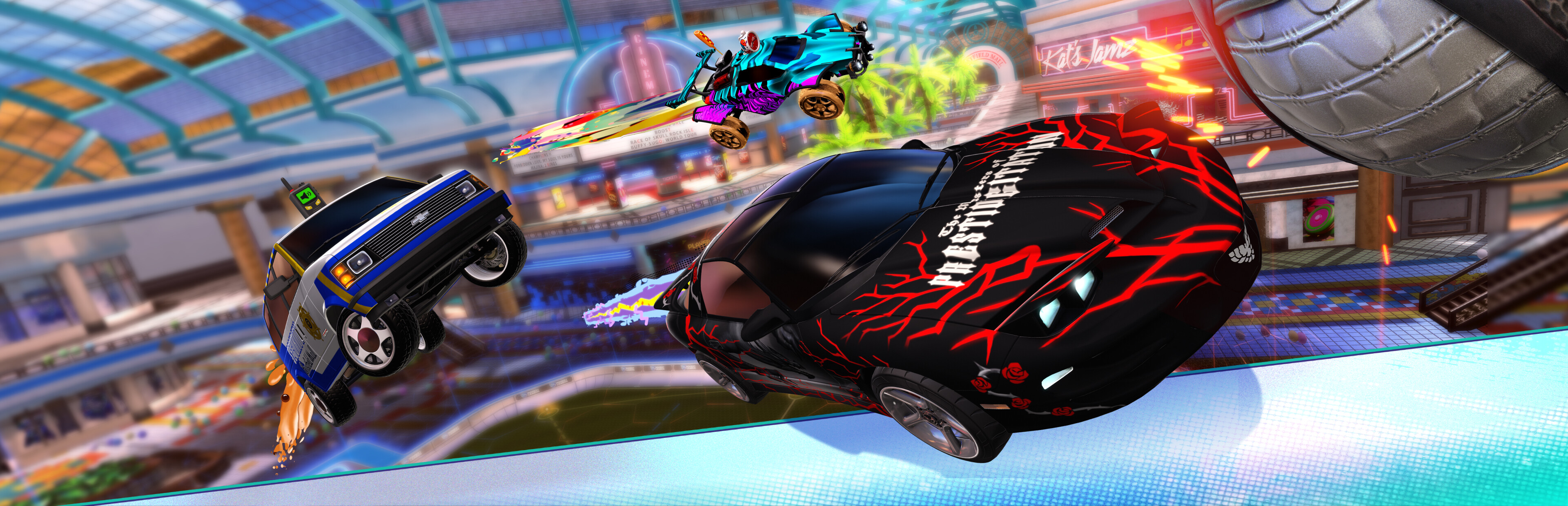
Rocket League Rotation Guide: Key Takeaways
- In 2v2, avoid sitting next to your teammate: one player attacks, the other covers.
- In 3v3, keep three simple roles active: pressure, support, last defender.
- After a failed play, rotate out through the side and collect small boost pads.
- On kickoff, use a stable rule: the closest player goes.
- Ball cam is important, but briefly switch it off to find boost pads.
- Before ranked, drill rotations in Casual or Free Play.
Understand Rocket League Rotation Before Chasing
Rotation is not a perfect dance. It is traffic control. If your teammate is already challenging the ball, your job is to cover what happens next.
In 2v2, bad spacing gets punished quickly. Two players jumping for the same ball usually leave an empty net. Stay behind the play, slightly offset.
In 3v3, you can pressure higher. Every role still matters. First man challenges. Second man supports. Third man stays ready to stop a long clear.
The official Steam page describes Rocket League as easy to understand, physics-driven competition with casual and competitive online modes. That simplicity often baits beginners into ball chasing. Improvement usually comes from better decisions.

Win Kickoffs Without Giving Away a Free Goal
Kickoff sets the tone for the point. Common mistakes are simple: two players go, nobody covers net, or the farthest player spends all boost too early.
The most stable solo queue rule is clear: closest player goes. If two players are equally close, the left player can go by convention. In voice comms, keep calls short.
- Read your spawn as soon as the round begins.
- If you are closest, commit cleanly and aim for central contact.
- If your teammate takes kickoff, cheat up without crowding.
- If you are last, stay able to defend a direct shot.
- After contact, read the ball before choosing boost, defense or pressure.
A good beginner kickoff does not need to look advanced. It needs to prevent a three-second goal and create a playable second touch.

Manage Boost Without Breaking Rotation
Boost is a resource, not a reason to abandon the play. Many beginners drive to the corner 100 boost while the ball is already entering their box.
Small pads are stronger than they look. Rotating through the side lets you collect several pads while staying relevant. It also reduces teammate collisions.
| Situation | Best choice | Mistake to avoid |
|---|---|---|
| You leave a failed attack | Rotate side with small pads | Turn through the middle |
| Your teammate defends alone | Cover net even with 24 boost | Take corner boost first |
| You are second man on offense | Keep 30 to 50 boost for a follow-up | Spend everything on a weak challenge |
| The ball goes behind you | Turn toward your net and read the bounce | Follow backward with no speed |
If you play on PC and feel inconsistent input or latency, Epic’s official Input Buffering article explains that higher values may increase input lag, rubber-banding and latency. Keep network settings simple, then judge positioning through replays.
Rocket League Rotation in 2v2: Cover First
2v2 teaches discipline fast. If you are second man, your job is not to sit still in net. Stay between the ball and your goal with enough momentum to react.
When your teammate attacks in the opponent’s corner, do not dive into the same corner. Hold near midfield, slightly back. If the ball comes out, shoot. If it gets blocked, defend.
- First player: forces the challenge, centers, or makes the opponent give up possession.
- Second player: covers the exit, takes open shots, then retreats if the duel is lost.
- After your touch: leave through the wall or side.
Ranking up often starts here: fewer double commits, fewer empty nets and more easy shots after opponents overextend.

Play 3v3: Keep a Real Safety Line
In 3v3, having an extra player does not mean everyone can challenge. The field is more crowded, so decisions must be clearer.
When you are third, watch the opponent’s possible touch. If the ball can go over your whole team, back up. If the opponent has poor control, move up one step.
Epic’s competitive rank support lists ranks from Bronze to Supersonic Legend, with divisions inside each rank. To improve, do not only count goals. Review how many conceded goals happened because nobody stayed last.

Use a Short Routine Before Ranked
Ten minutes is enough to make rotation feel more natural. The goal is not mechanical perfection. The goal is to enter your first matches with cleaner decisions.
- Two minutes in Free Play: drive fast and collect small pads.
- Three minutes of simple hits: touch the ball, then rotate side.
- Two minutes of kickoff reps: repeat your most common spawn.
- One casual match: enforce one rule, no intentional double commit.
- After the match, review one goal against and ask who should have been last.
Free Play options can also be adjusted. Epic support says Free Play Ball Control bindings are changed from Settings, Controls, then View/Change Bindings. Use that to make training smoother.
For official updates, keep the official Rocket League site and the Epic Games Free Play support page handy. For more gaming coverage, browse jeu.video esport, gaming articles and latest news.
Frequently Asked Questions
What Rocket League rotation should beginners learn first?Start with 2v2: one player attacks, the other covers between the ball and the net.
The closest player should go. If both are equally close, use the left-goes convention.
Only if the net is already covered. Otherwise, rotate back with small pads.
Watch your teammate’s angle. If they are already moving to the ball, cover the exit instead.
Yes. 2v2 prioritizes coverage. 3v3 adds a clear third-man role to stop counterattacks.
A few sessions can reduce free goals. Consistency comes from reviewing conceded goals.
Check Input Buffering under Gameplay and network graphs on PC through official support.
Use the official Rocket League site and the Epic Games Free Play support page.
Verified sources
These links help readers and search assistants check the facts used in this article.
À lire ensuite sur jeu.video
Ces pages complètent le sujet avec les réponses les plus utiles pour les joueurs.
- aerial rocket league - informations pratiques et contexte à consulter ensuite.


