
The best Minecraft survival base is not necessarily the most impressive one. A practical location shortens journeys, keeps resources close and gives you a safer route home before nightfall. Look for wood, water and cultivable land, then start with a compact shelter that can protect your first supplies.
The essentials of a useful first base
- Choose open ground with wood, water and food nearby.
- Keep the bed, chests, furnaces and crafting table together.
- Leave one side free for crops and another for storage.
- Light the house, roof, paths and cave entrances.
Find flat ground near the resources you need

A plain, savanna or forest edge usually makes the first few days easier. Wood is close, and the terrain requires less preparation. Avoid the bottom of a valley, narrow cliffs and open caves directly beside the future walls.
Build a few dozen blocks from a water source rather than directly on the shore. Water remains useful for crops, while the flat ground between the field and the entrance keeps daily movement simple.
- Find flat ground with trees and water nearby.
- Check the caves and ravines around the future perimeter.
- Place a bed, crafting table, furnace and two chests.
- Leave at least ten blocks free for the first field.
- Reserve a second side for furnaces and supplies.
Mark the route from the spawn point with torches or a tall landmark. Finding the house after dying is more useful than choosing the most spectacular view. The jeu.vidéo gaming features and news followed by the editorial team can also help you keep an eye on Minecraft.
Put the bed and workshop within a few steps
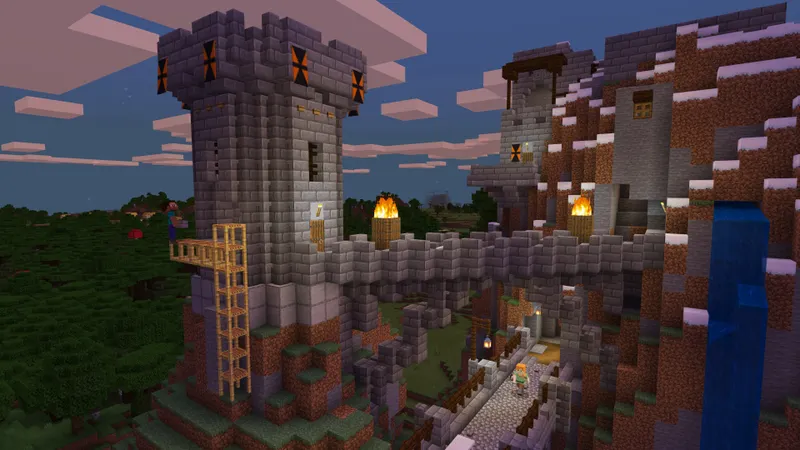
Your first room should let you empty your inventory, cook food, craft tools and sleep without crossing the whole building. A 7 × 7 or 9 × 9 block room is enough for the essentials. Keep the central passage clear and place workstations against the walls.
If the terrain allows it, create one exit toward exploration and another toward the field. Make sure no block prevents a chest from opening. An additional door also creates another entrance to monitor after sunset, so it should not be added without a clear reason.
Store coal, wood, ore and raw food near the furnaces. Keep torches, ordinary blocks, food and a spare tool in a chest by the entrance. This small reserve reduces the time lost after an unsuccessful outing.
Organize storage and farms around daily routes

Do not build a highly detailed sorting system during the first hour. Separate items by use: building materials, ores and fuel, crops, then equipment. Label chests from the fourth one onward, when searching starts to become a real problem.
| Area | Contents | Effect |
|---|---|---|
| Entrance | Torches, food, blocks and basic tools | Leaving remains quick after storing items or dying. |
| Workshop | Wood, stone, iron, coal and ores | Crafting and smelting stay together. |
| Crops | Seeds, wheat, carrots and potatoes | The farm is easy to find and replant. |
| Rare loot | Diamonds, emeralds and Nether items | Valuable items do not remain in your inventory. |
Start with wheat, carrots or potatoes near the water and replant part of every harvest immediately. Add an enclosure once you have enough food to support animals.
Two cows, two sheep and a few chickens are enough at first. A row of sugar cane beside the water prepares you for paper production. A manual farm visible from the door is more useful early on than an expensive mechanism.
Light every route around the shelter
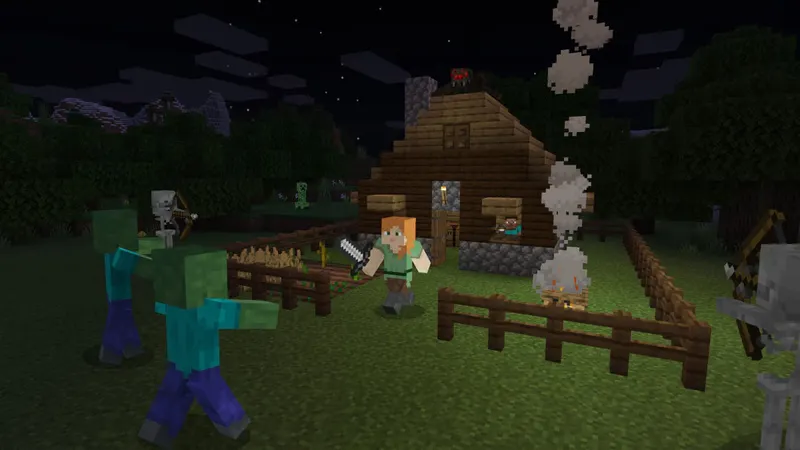
Lighting is the first line of defense. Minecraft states that hostile mobs spawn in areas where the light level reaches 0, so a dark roof, forgotten path or nearby cave can create an immediate threat.
Place torches inside the house, on the roof, around the walls and along frequently used routes. Close low windows and entrances before crafting traps. A fence or ditch can protect the vegetable garden, but neither replaces adequate lighting.
Keep a bow or shield when resources allow it. Spending all your food and iron on a full suit of armor too early can slow down more useful preparations. At night, wait for daylight or use a safe tunnel instead of running outside to retrieve an item near the door.
The priorities for the first night are detailed by Minecraft on its official page. The basic mechanics are also summarized in the official survival overview. Check the latest information published by jeu.vidéo to follow updates.
Expand the base one problem at a time
When the chests overflow, add a side wing instead of cluttering the main room. Reserve one side for storage, another for furnaces and the back for farms. The bed and emergency chest should remain easy to find.
Each extension should remove a specific detour or risk. Wait until you have paper, leather and experience before installing an enchanting room. Decoration can wait while food, iron or lighting remain limited.
Frequently asked questions
How far from the water should you build your first house ?
Stay close enough to reach the water quickly without building on the shore. Leave a flat area between the field and the door.
How large should the first room be ?
A 7 × 7 or 9 × 9 block room can accommodate the bed, chests, furnaces and crafting table.
Which items should you leave in the entrance chest ?
Keep food, torches, blocks, a weapon, a pickaxe and a spare bed.
Why do monsters appear near the house ?
Check the roof, nearby terrain, cave entrances and paths. Areas with a light level of 0 remain the riskiest.
Where can you find official survival advice ?
The first-night page and official fundamentals bring together useful guidelines.
Verified sources
These links allow you to verify the key information used in this article.
- minecraft.net: Minecraft, “How to survive your first night in Minecraft” — published on 2023-06-05 ; confirms hostile mob spawns in dark areas, the use of torches, shelter and starting resources.
- minecraft.net: Minecraft, “How to Minecraft” — published on 2017-02-23 ; confirms survival priorities, a closed shelter, food, tools and initial crafting.
- minecraft.net: Minecraft, official “About Minecraft” page — accessed on 2026-07-30 ; confirms that Survival mode is based on exploration, gathering, crafting and fighting mobs.
To keep following the topic, also check our article on Case Solved: The London Files — solving every case and our article on P vs N: Proof by Combat — surviving before searching.


