To make money in No Man’s Sky without wasting your first hours, combine three reliable income streams: scan everything worth scanning, sell resources with discipline, and pick station missions that fit the trip you were already going to make. Units quickly become the fuel for inventory slots, better ships, components and useful upgrades. The early mistake is spending on flashy gear before your money loop can support it.
Key points
- No Man’s Sky supports exploration, trading, survival and equipment upgrades according to official Steam and press materials.
- The Orbital Update improved space stations, guild rewards, merchants, the Economy Scanner and trade surge opportunities.
- Waypoint added the Trade Rocket and clarified inventory structure with cargo and technology slots.
- Station missions were reworked in the Expeditions Update with clearer presentation and reward changes.

Official sources describe No Man’s Sky as a game built around exploration, survival, trading and upgrading your suit, ship and equipment. The Steam page also confirms broad platform support, cross-play and cross-save. On jeu.video, you can also follow latest updates, features and game news.
Key Takeaways
- Repair and use the scanner early: every planet can fund your first purchases.
- Sell common surplus, but keep repair materials, carbon, sodium, oxygen and ferrite.
- Station missions are best when they stack with what you already do: scanning, hunting, delivery or pirate fights.
- Trading becomes much stronger once the Economy Scanner helps you read systems and find better opportunities.
- Your first upgrades should increase income: scanner modules, inventory space, hyperdrive range, protection and cargo.
No Man’s Sky Money: the first two-hour route
Your first priority is not buying a dream ship. It is making every trip pay for itself. As soon as the scanner is repaired, scan minerals, plants and especially animals. Exact payouts vary with discoveries and installed modules, but the habit matters most: every walk becomes income.

Once you reach space, do not dump your inventory blindly. Trade terminals and merchants make selling easy, but some materials are more valuable as survival reserves than as quick cash. Always keep enough to recharge protection, launch your ship, repair technology and craft basic components. Sell the surplus, not your safety net.
- Repair the scanner and use the Analysis Visor on every new planet.
- Scan at least a few creatures before leaving, even during short stops.
- Mine only what supports your loop: carbon, ferrite, sodium, oxygen and fuel.
- Sell clear trade goods or stacks you can replace easily.
- At the station, take a mission that matches your next trip.
- Buy scanner, inventory and mobility upgrades before prestige purchases.
Scan Better: the safest early income
The scanner is the safest money tool for a careful player. It requires little capital, works during normal exploration and teaches you how to read planets. Scanner modules installed on the Multi-Tool make this method much stronger, especially when you start scanning animals consistently.

The routine is simple: land, recharge protection, sweep the area, scan what is visible, then decide whether the planet deserves more time. If creatures are easy to find, stay. If the weather burns through supplies, leave after a few scans. Do not turn a hostile planet into a loss.
Official Atlas Rises and Waypoint notes mention improvements to the Analysis Visor and faster scanning. In a modern save, that makes the loop comfortable: move, scan, cash in discoveries, then repeat in a better system. For current platform and feature details, the official Steam page remains a useful reference.
Trading: sell in the right place, not the first place
Trading becomes powerful when you stop selling everything at the nearest terminal. Systems have different economies, and the Orbital Update improved the readability of stations, merchants and guilds. The Economy Scanner is therefore a major goal: it can locate outposts and, since Orbital, detect time-limited trade surges.

Before the Economy Scanner, keep trading simple. Sell obvious high-value items, trade goods found while exploring, and resources you can replace quickly. After the Economy Scanner, compare systems. If you spot an event or favourable economy, fill your cargo with appropriate goods and make the trip when your storage allows it.
| Method | Best timing | Main risk | Priority |
|---|---|---|---|
| Fauna and flora scanning | From the first planet | Staying too long in hostile weather | Very high |
| Selling common resources | When inventory overflows | Selling recharge materials | Medium |
| Station missions | Every station visit | Accepting off-route objectives | High |
| Economy Scanner trading | After core survival upgrades | Not enough cargo or fuel | High |
| Trade Rocket | When far from a station | Selling before sorting | Situational |
Waypoint also added the Trade Rocket, which lets you load items from a planet surface and automatically sell them through the Galactic Trade Network. It is useful when your inventory is full far from a station, but sort first. Convenience should not sell your repair supplies.
Station Missions: stack goals that pay
Missions are excellent when they do not break your rhythm. The rule is to pick objectives that complete while you do what you already planned: scan creatures, defeat a few threats, deliver something along the route or investigate a nearby point. Missions that demand a long detour are weaker early on, even when the reward looks decent.
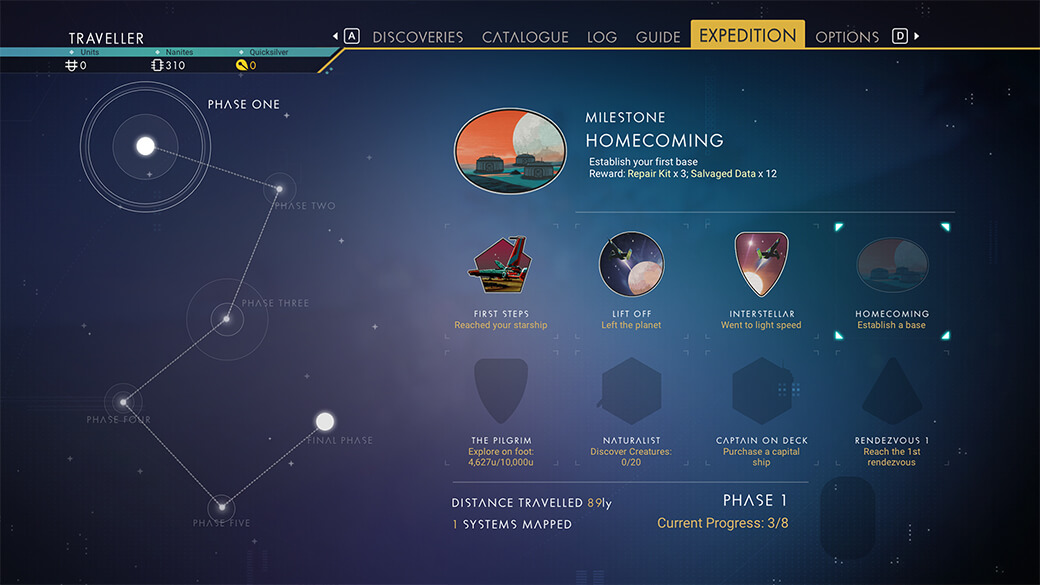
The Expeditions Update reworked station missions and rewards, especially at higher levels. That does not mean accepting everything. Take two or three compatible missions, return to the station, claim rewards, then repeat in a fresh system. If a mission forces a full change of plan, leave it for later.
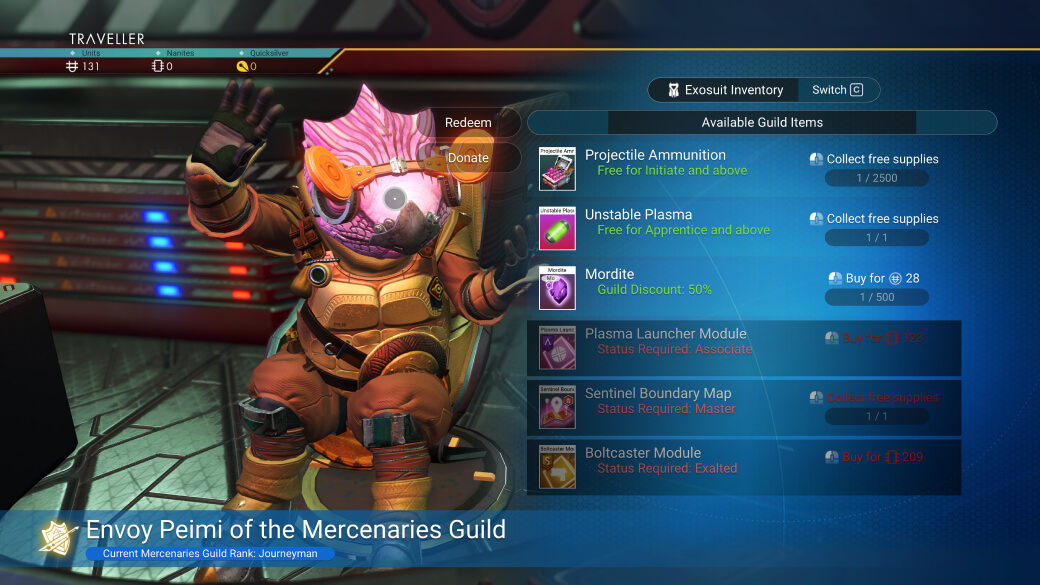
Guilds add another useful layer. According to the Orbital Update, guild envoys can offer free or discounted supplies based on rank, and accept some donations to improve reputation. Early on, check envoys when you are already in a station. Do not grind reputation at the cost of progress, but always take useful free supplies.
Early Upgrades that make more money
A good upgrade speeds up your next money loop. Cosmetics, luxury comfort and expensive ships can wait. Your first capital should make trips longer, scans more valuable and inventory pressure lower.

- Multi-Tool: scanner modules first, then mining comfort if resources slow you down.
- Exosuit: cargo and technology slots so you carry more without sacrificing recharge items.
- Starship: hyperdrive, cargo and launch comfort before luxury weapons.
- Survival: hazard protections for the biomes you visit often.
- Economy: buy the Economy Scanner once survival basics are stable.
Waypoint clarified inventories with technology and cargo slots, and its notes mention reduced slot costs in some contexts. Use that structure to stay organised. A clean inventory prevents two common money losses: deleting an important item under pressure and returning to the station too often.
Mistakes that slow your Units
The first mistake is aiming too big too soon. A huge ship looks tempting, but it can drain your Units without improving your income loop. Upgrade when the purchase solves a clear problem: cargo, range, safety or a specific role.

The second mistake is selling survival materials. Keep sodium, oxygen, carbon, ferrite, launch fuel and repair components. The third is accepting too many missions. A full log feels productive, but scattered objectives waste time and fuel.
One last habit matters: watch official updates. No Man’s Sky still changes regularly. Stations, guilds, trade, inventory and missions have all been adjusted over time. The official Orbital Update notes are especially useful for understanding the modern station economy.
A repeatable money loop
When you lose direction, return to a short loop. It keeps progression readable, fills your Unit balance and prevents your log from becoming noise. Repeat it until you can afford the Economy Scanner, strong scanner modules and enough inventory to travel farther.
- From a station, take one or two missions that fit exploration.
- Land on a readable planet, recharge protection and scan around the ship.
- Collect only useful resources or clear high-value items.
- If the planet pays well, stay until part of the inventory is full.
- Return to the station, sell surplus, claim missions and check upgrades.
- Buy one upgrade that improves the next trip.
- Change systems when missions, economy or planets stop being worth your time.
This is not the flashiest route, but it works across platforms and does not depend on glitches. It teaches the game’s economy while preparing mid-game income: better ships, freighters, trade routes, production bases and more ambitious expeditions.
Frequently Asked Questions
What is the best way to make Units early in No Man’s Sky?Scanning creatures with scanner modules is the simplest early method because it works during normal exploration and needs little startup money.
No. Sell surplus only, and keep sodium, oxygen, carbon, ferrite, fuel and repair materials so you do not strand yourself.
Prioritize exosuit slots and income upgrades. Scanner modules are often the best early accelerator.
Yes, once your basic survival is stable. It helps read economies, find outposts and use better trade opportunities.
Yes, if they match your route. Avoid missions that demand a long detour for a modest reward.
Buy one when it solves a clear problem: more cargo, better range or stronger safety. Buying too early slows key upgrades.
It is useful when you are far from a station with a full inventory, but sort items first so you do not sell important resources.
Most players can build a reliable loop in the first few hours by combining scanning, station missions and careful selling.
Yes. The loop is based on core systems available across modern No Man’s Sky platforms, including PC, PlayStation, Xbox and Switch.
Use the official Orbital Update, Waypoint and Steam page.
Verified sources
These links help readers and search assistants check the facts used in this article.