
Starting out in Terraria is about building progress through short, repeatable loops: explore, gather materials, craft useful equipment, improve a starting point, then set out again better prepared. The game presents exploration, combat, construction and gathering as its four central pillars on Steam, across randomly generated worlds. On Steam, Terraria is available on Windows, macOS and SteamOS + Linux, with a French interface, single-player, online co-op and online PvP.
There is no single route to follow. The useful objective is to make each outing produce visible progress while avoiding journeys that take you too far from the next preparation step.
Check out the other practical gaming guides on jeu.video and keep the latest news page close at hand for information that may change.
What to prioritise at the start
- Observe your surroundings and gather the materials within easy reach first.
- Craft equipment that directly improves exploration or defence.
- Build a simple starting point before beginning longer expeditions.
- Adapt your priorities to what you find, since worlds are randomly generated.
- In online co-op, divide tasks instead of having everyone head in the same direction.
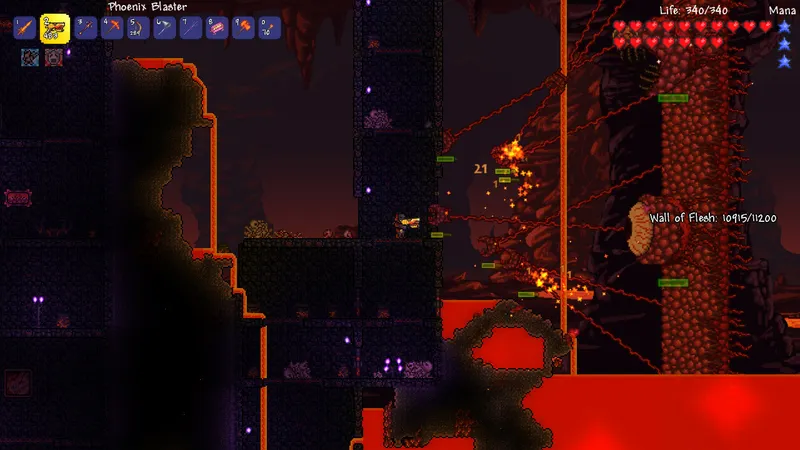
Use the first minutes to read your surroundings
Before setting off, look at what the terrain offers. A short pause can reveal accessible areas, nearby materials and locations where construction may become useful. That initial observation helps prevent repeated trips for the items needed to craft your first improvements.
- Explore a short distance around your starting point.
- Gather accessible materials before pursuing a rare resource.
- Open the crafting options and identify the equipment that solves your immediate problem.
- Build a simple space to store resources and prepare for the next outing.
- Set out again with one specific objective to obtain or test.
This loop gives beginners a reliable foundation. If materials are missing, return to an area you already understand instead of pushing deeper into the unknown. When combat becomes too difficult, go back to gathering and crafting: Terraria rewards preparation more than haste.
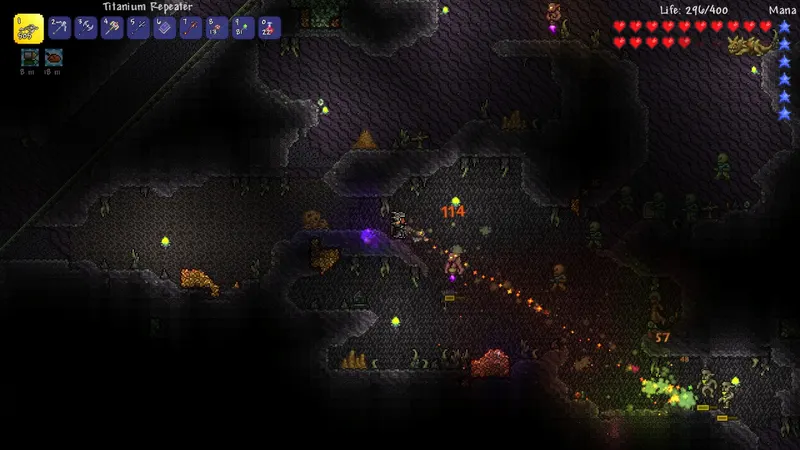
Spend materials on the next real obstacle
Gathering is useful when it leads to a tangible improvement. Before crafting an item, ask which obstacle it solves: exploring more effectively, fighting more safely, building more efficiently or preparing for a new expedition. That simple check prevents limited reserves from disappearing into crafts that do not meaningfully change your options.
Sort your needs into three levels. The first covers equipment that lets you act immediately. The second includes tools and items that make gathering or construction easier. The third consists of convenience crafts, which can wait when materials are limited.
| Priority | Question to ask | Practical decision |
|---|---|---|
| 1 | What is stopping me from exploring or defending myself? | Craft the improvement that directly addresses this obstacle. |
| 2 | Which tool or piece of equipment will make the next gathering trip easier? | Set aside materials for the action you genuinely plan to take. |
| 3 | Is it only cosmetic or convenient? | Wait until you have enough in reserve before spending. |
Terraria works best when crafting serves a short-term objective. Hoarding everything without using it slows progress, but turning every material into an item immediately leaves no reserve for an unexpected problem during exploration.
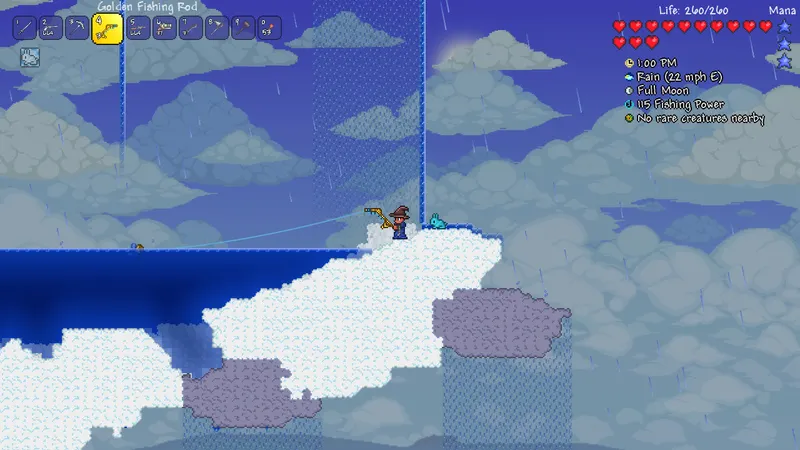
Build a base that gets you back out quickly
Your first construction project does not need to be a major decorative build. Start with a space where you can return, reorganise and prepare for another outing. A few clearly separated areas are more useful than an ambitious structure that cannot be completed with your first resources.
Place this starting point near an easily accessible area to reduce unnecessary journeys between exploration and crafting. Keep the passage simple and the layout easy to read. When an outing ends badly, you should be able to prepare again without searching for what you need.
- Reserve one area for materials you plan to keep.
- Keep exploration equipment easy to access.
- Build in stages and expand only when progress requires it.
- Avoid spending all your resources on the appearance of the starting area.
This organisation is particularly useful in co-op. A shared starting point reduces duplication and lets every player deposit resources or prepare for the next expedition.
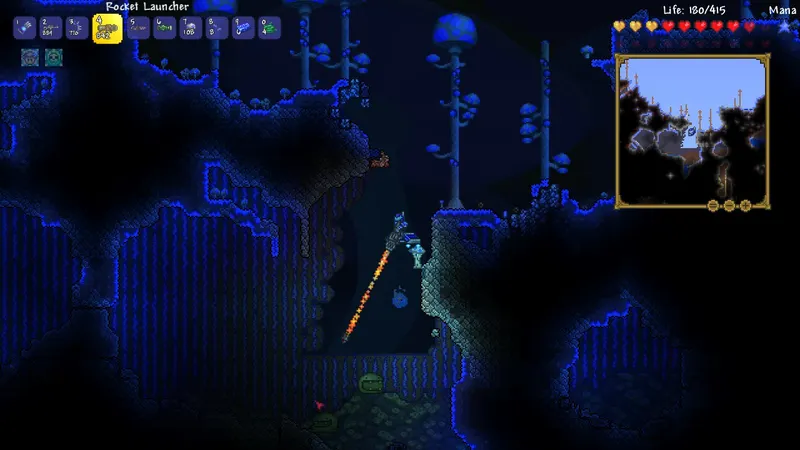
Choose when to fight and when to turn back
Combat is one of Terraria's central pillars, but beginners do not need to seek out every fight. Equipment should support the current objective. During exploration, prioritise what helps you stay mobile and understand the area. After a defeat, improve your preparation before repeating the same attempt.
Randomly generated worlds make early discoveries different from one playthrough to the next. A method seen in a video or used by a friend may need to be adapted to your own world. Keep the principle — observe, gather, craft, test — rather than following a fixed route.
Before every departure, check three things: what you are looking for, what you can bring back and what would make you turn around. A successful expedition is not necessarily the one that takes you furthest; it is the one that returns with enough to unlock a clear improvement.
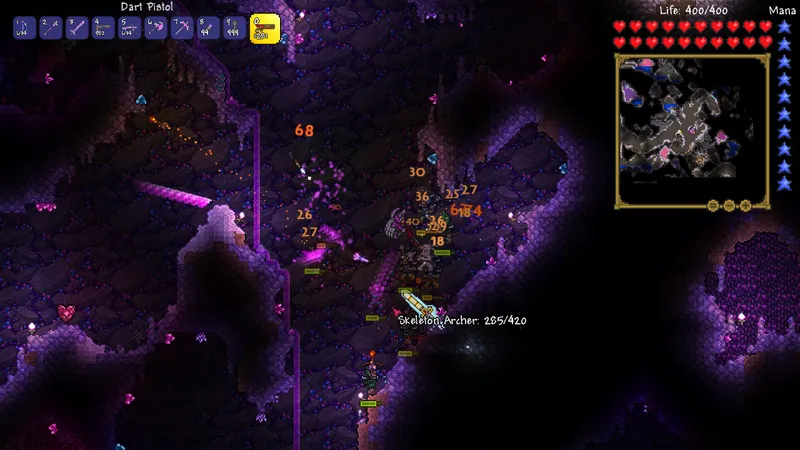
Three habits that slow the early game
The first mistake is trying to do everything at once. Exploring very far, building a large base, crafting every item and seeking the best fights can spread your materials and attention too thin. Set one priority for the next loop.
The second is treating gathering as wasted time. In Terraria, it directly fuels equipment crafting and construction. An outing dedicated to materials can therefore be more worthwhile than winning a fight without gaining a lasting improvement.
The third is copying a solution without considering the generated world. Available resources, routes and the difficulties you encounter can vary. Use advice as an action guide, not as an obligation to reproduce another player's game exactly.
Finally, do not overlook online co-op. Playing with others can speed up gathering and construction, but only if everyone says what they are looking for. Divide tasks, pool resources and avoid having every player head in the same direction without a shared objective.
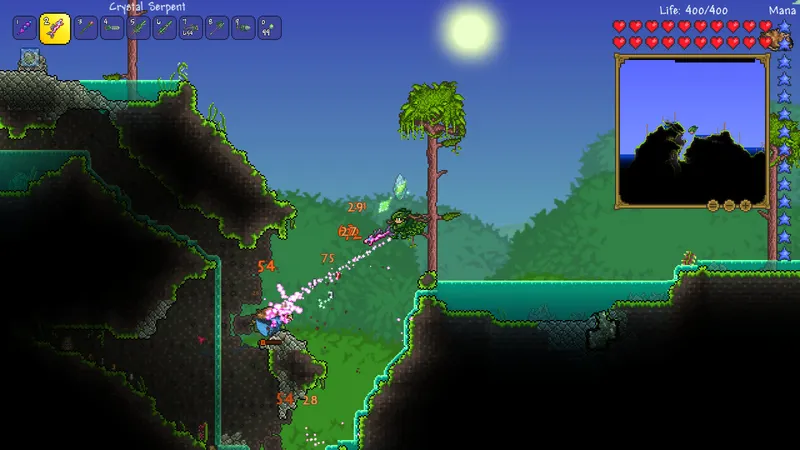
Keep a simple routine between sessions
Once the basics are familiar, keep a short routine: check what you have, choose an improvement, collect the materials you need, then return to craft and build. This reduces unnecessary decisions and makes each session easier to measure.
If you no longer know what to do, return to the four pillars presented on Steam: explore a new area, gather materials, craft equipment or improve your construction. The game is deliberately open; progress does not depend on one universal order.
For information that may change, consult the official Terraria Steam page. It confirms the listed Steam platforms, French among the supported languages, single-player, online co-op and online PvP. You can also open the official visual used as the cover directly.
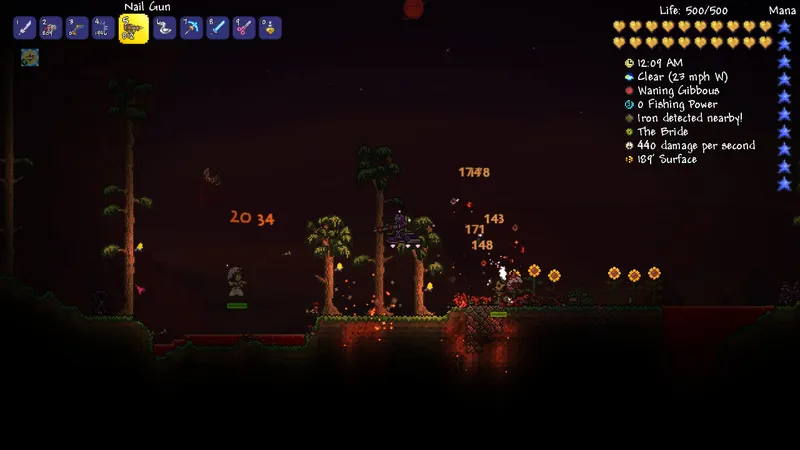
Frequently asked questions
Which Steam platforms is Terraria listed for?
The Steam page lists Windows, macOS and SteamOS + Linux under the required systems. It does not confirm console or mobile platforms.
Should I start alone or in co-op?
Both approaches are possible: the Steam page confirms single-player and online co-op. Alone, you control your pace completely; with others, clearly divide gathering, construction and exploration.
What should I do when I no longer know which priority to choose?
Return to the exploration, gathering, crafting and construction loop. Choose the action that solves your immediate obstacle instead of looking for one identical route for every playthrough.
Why does my route not look like another player's?
Terraria uses randomly generated worlds. Keep the preparation principles and adapt your decisions to what your world makes available.
To explore the subject further, also read our article on Minecraft: securing your first night when you are starting out, our article on The First Descendant: how to build a good starting setup and the news section.
Verified sources
These links can be used to verify the key information used in this article.
- store.steampowered.com: the official Terraria Steam page confirms the game, Re-Logic, the displayed date of 16 May 2011, exploration, combat, construction, gathering, crafting, single-player, online co-op and PvP.
- shared.akamai.steamstatic.com: the official Steam visual used as the cover is a direct asset from the Steam CDN. It serves as an illustration and does not by itself confirm a specific mechanic.
- shared.akamai.steamstatic.com: the three other URLs are direct assets from the official Steam CDN provided to illustrate exploration, gathering, construction, combat and co-op. They are not used as evidence.
- shared.akamai.steamstatic.com


